


Railroad tracks in and around Pittsburgh’s Rivers of Steel National Heritage Area aren’t just scenery, they’re the backbone of a freight corridor that has been moving the region’s story for nearly 150 years.
One of the most important lines is the formerPittsburgh & Lake Erie Railroad, chartered in 1875 and known as the “Little Giant” because the heavy tonnage it moved was far out of proportion to its modest mileage. Its original route ran northwest from Pittsburgh to Youngstown, Ohio, then expanded by leasing branches that stretched southeast along the Monongahela River through Homestead and McKeesport and along the Youghiogheny River to Connellsville, where it connected with the Western Maryland Railway.
apartment living to North Shore
The mission was clear: Haul coal, iron ore, limestone and steel between industrial centers and link the region’s mills to national markets.
Over time, the P&LE became part of the New York Central system, then regained independence in the 1970s before being acquired by CSX in the early 1990s, just as Big Steel’s local footprint was shrinking.
Portions of the old right‑of‑way from McKeesport to Connellsville were later abandoned and reborn as the Great Allegheny Passage, while key river and valley segments remained active freight lines.
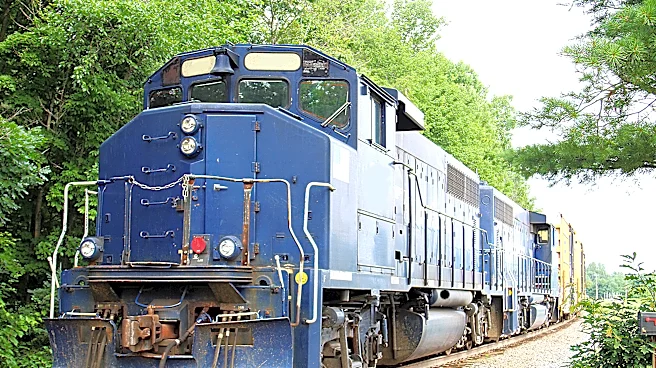
Today, CSX operates those remaining segments as part of a 20,000‑mile network that serves states east of the Mississippi and more than 70 ports, carrying bulk commodities and manufactured goods 24 hours a day.
For residents, that means the trains rolling past mill sites and riverfront terminals are the living remains of the system that once fed Big Steel — and now quietly keeps Pittsburgh plugged into the national freight grid.
This article by Gabby Sartori was created with the assistance of Artificial Intelligence (AI). Journalists were involved in every step of the information gathering, review, editing and publishing process. Learn more.
This article originally appeared on USA TODAY: From steel to shipping: How P&LE’s freight corridor still moves Pa.