




MIAMI — First, let's get this out of the way. This game really shouldn't be here.
Haiti should host the United States in Haiti. That is how the Concacaf Nations League is set up.
But Miami? A region home to around 500,000 Haitians?
It's not a bad second option.
If you know anything about Haiti, you know things have been hard there for quite some time, whether you look at the current crisis, the 2010 earthquake, the brutal dictatorship of François Duvalier and his son, or even farther back.
Soccer provides joy, and it has been doing so in waves in the last several years. After the women's national team made the 2023 World Cup, the men followed suit and returned to the Men's World Cup for the first time since 1974, playing three group matches in front
of sell-out crowds in the U.S., even with Haitians banned from entering the country.
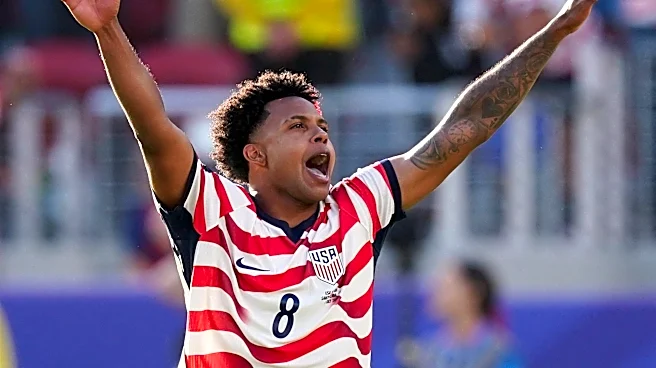
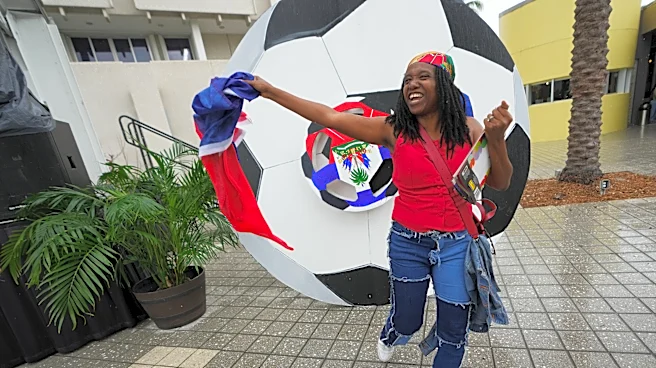
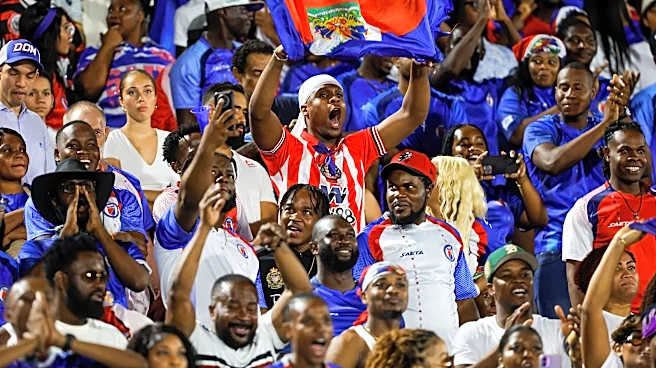
So, with Haiti preparing to host the U.S. in the first leg of a two-legged Concacaf Nations League quarterfinal series, the enthusiasm in South Florida's Haitian community is impossible to measure.
"This is the only thing we have going for us right now: football," said Carl Craig, a U.S. Air Force veteran who moved from Haiti to the U.S. as a teenager and has been part of the Haitian community in South Florida for decades. "The country is such a shambles right now, and we don't see any way out. The only thing that glues us together? It's soccer.
"We're going to enjoy this, and I think the American public will as well because you feel the fraternity that exists on the field or in the stands. It's going to be a beauty."
That it will be. Haiti was in South Florida already this year, playing one World Cup preparation match in Fort Lauderdale and another in Inter Miami's Nu Stadium, where Les Grenadiers will return Saturday.
But an official game?
"It's a dream come true," Craig said. Saturday will show just how many of his neighbors have been dreaming the same dream, with Haiti feeling very much at home during a time when that feeling has been hard to come by for Haitians - whether they be national team soccer players or come from a different walk of life.
When was the last time Haiti played on home soil?
Haiti can not host soccer matches because of the political instability and gang violence in the country.
There were difficulties even before the July 2021 assassination of president Jovenel Moïse, an event that created a power vacuum in a country where governmental authority already had been losing ground.
Belize's team bus was held up by masked gunmen ahead of a March 2021 World Cup qualification contest. Despite that incident, Haiti still hosted Canada in the next round of World Cup qualification, losing 1-0 on June 12, 2021.
Tak kadrowicze Belize zostali „przywitani” na Haiti.
— Michał Matlak (@matlak_michal) March 22, 2021
Na drodze do hotelu autokar został zatrzymany przez dużą grupę uzbrojonych mężczyzn. Czterech policjantów w eskorcie musiało negocjować z nimi dalszy przejazd.
O sytuacji powiadomiono już FIFA i CONCACAF.#CONCACAFpl pic.twitter.com/6b2NodQjXZ
Neither the men's or women's national team has been able to play on home soil since, with Haiti forced to seek a neutral site.
Concacaf's rules for the Nations League stipulate that if a member association can't host, it must seek a neutral site "located within the same region as the (host) and must be inspected and approved by Concacaf."
That regulation exists in part to keep countries from taking decisions like the one Guyana did in October 2012, when it decided to "host" Mexico at the "neutral site" of Houston, making revenue from the large crowd that turned up to see El Tri rather than playing in front of local fans.
For quite some time, Haiti was extended "soccer solidarity" from neighbors in the Caribbean. After securing World Cup qualification with Curacao as a home base, Haiti was hosting matches in Jamaica. Initially, they were also playing in the Dominican Republic, but political tensions and difficulties with documents led to Haiti looking elsewhere.
Haiti was noticeably well supported last month in a Nations League match in the Dominican Republic. Haiti's neighboring country.
But the sight of a full stadium cheering for Haiti didn't sit well with some Dominican politicians, many of whom have used fear of Haitian migrants on the campaign trail, similar to their American counterparts.
Why was Haiti allowed to play in Miami?
Even so, many Dominican clubs continue to extend a hand to their Haitian colleagues.
Haitian club Violette FC was set to host its home leg of the Caribbean Cup semifinal in Santiago de los Caballeros, Dominican Republic in October of this year. Yet, as the furor around the crowd at Haiti's 4-1 win over the DR continued, a Dominican ultranationalist group announced plans to rally at the game, and the game was postponed amidst that and other threats.
The Concacaf Council on Oct. 22 approved an "exceptional hosting arrangement for the Haitian Football Federation (FHF) due to the ongoing security situation in Haiti," allowing the federation and its clubs to "host" not only in the Caribbean but also in the country where the opposing team is based. That clears the way for games like Haiti hosting the U.S. in Miami or Violette playing Trinidad and Tobago's Club Sando in Port of Spain in Caribbean Cup competition.
For Haiti's players, it has the added benefit of allowing many to see friends and family and to feel something that feels like a true home game, rather than a sedate neutral site with few fans.
"It's amazing for me and for all of us to get the chance to play here. We've played home games kind of everywhere, and we've fought to get a game here," Fafa Picault, the veteran Haiti winger who grew up in Miami and won MLS Cup with Inter Miami in 2025, said Friday. "For me personally, it means everything because I grew up here and know every corner of the city. It's really nice to be back, see familiar faces.
"Once the whistle blows, it's lock-in time. We'll obviously have a lot of support, but the most important is what we do between the lines."
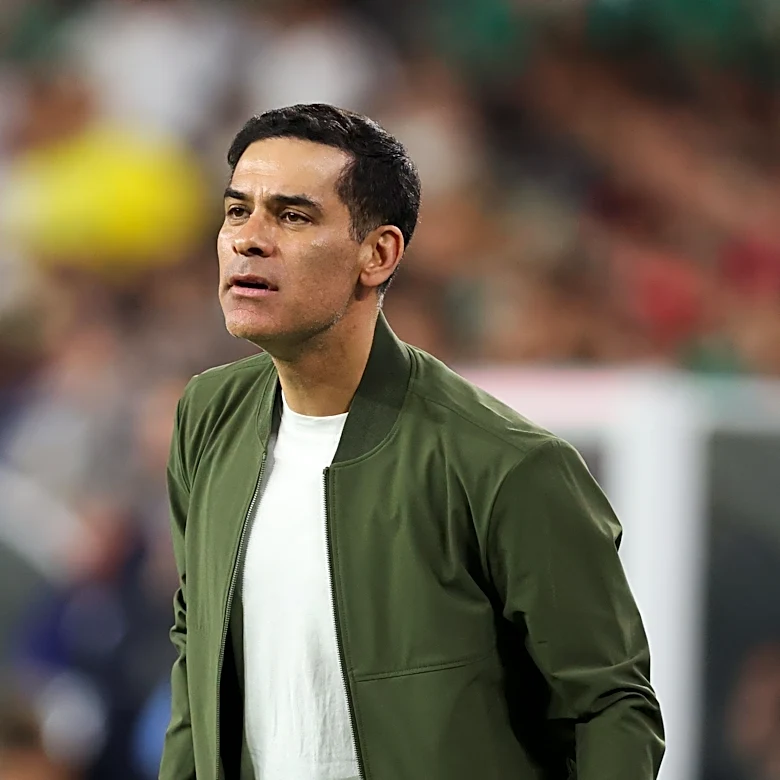
The game will be decided by the players. Haiti is missing a number of key contributors with three frequent starters in defense out because of injury and Wolves midfielder Jean-Ricner Bellegarde also not fit enough for the match. But Haiti manager David Badía believes his team can take advantage of the boost from the partisan crowd in the first leg.
"When you play at home and have an environment with Haiti fans, who are very loud, very powerful and really love the game, you’re playing with another player. Without a doubt, that’s how it is," Badía told USA TODAY Sports this week. "So, we hope to have a stadium that looks like the one we had in the Dominican Republic where Haitians were the vast majority of the crowd and they pushed you, they helped you and when you’re tired they push you from behind so you can get to those balls where you maybe weren’t getting to.
"I hope it’s tough for them and a push for us to have the 12th player."
Tickets were widely priced above $150 per seat but still sold out quickly, with fervor building around the official match taking place in central Miami.
Could Les Grenadiers of the future be in Little Haiti?
In Miami's Little Haiti neighborhood on Friday, racks of Haiti jerseys were out in front of several shops, with the shirts with "ISIDOR 18" printed on the back drawing extra interest. The Sunderland forward has been one of Les Grenadiers' biggest stars since committing to the team in March 2026.
Many of the latest players to start suiting up for Haiti were born in France, including Isidor and fellow attacker Lenny Joseph. But the soccer strength in the diaspora could be shifting.
Every night in Miami's Little Haiti neighborhood, dozens of kids gather at the Little Haiti Soccer Park to train at a facility named for Emmanuel "Manno" Sanon, who scored against Italy and Argentina in Haiti's only World Cup appearance and lived in Florida in later years.
The club, founded in 2014, calls itself "the only free soccer program in the state" and has nearly 200 children in its academy setup. "We don't charge kids to play because we believe opportunity shouldn't come with a price tag," said Gomez Don Laleau, the club's founder & president. "We want to develop the next generation of Haitian soccer players, but more importantly, the next generation of leaders."
Those leaders are looking to Isidor, Picault and recently retired Haiti stars like Ricardo Ade and Johny Placide as their idols. Having those players up close, with some being able to attend the contest, is a special opportunity
"Having Haiti play a home match in Miami is about much more than soccer," Gomez said. "It gives our people an opportunity to feel connected to our homeland, our culture, and our national pride. For our kids, seeing the national team play here makes their dreams feel closer and shows them that they can be part of something bigger."
The hope is that one day soon, Haiti won't need exceptions, it won't need neutral sites and it won't need to find anywhere but home to call home.
After Haiti stopped playing on home soil, the national stadium, the Stade Sylvio Cator, was overtaken by gangs with the federation forced out. This week, Haitian police said they have retaken the facility, leaving Salvadoran troops in charge of security there amidst a ramp-up of forces from the Central American country moving against gang targets. Elections in Haiti are scheduled for summer 2027.
Until then, the national teams and their success stories remain a bright spot where Haitians see themselves represented and find positive things to identify with.
If the team is actually coming to the neighborhood? All the better.
"It's a very exciting moment for Haitian football. For a long time, we've been suffering," Craig said. "With all the bad things going on in Haiti, not having a safe place to play the the home games it's almost like a miracle for us to be in the position to play against the United States."
It's a game that shouldn't really be here but perhaps ended up in the perfect place after all.
This article originally appeared on USA TODAY: Why is Haiti 'hosting' USMNT game in Miami? Les Grenadiers feel right at home