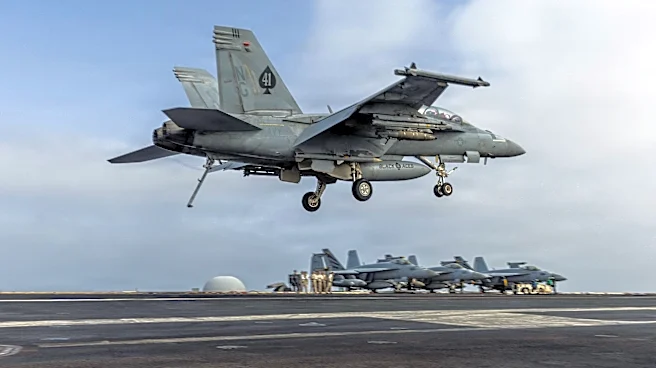


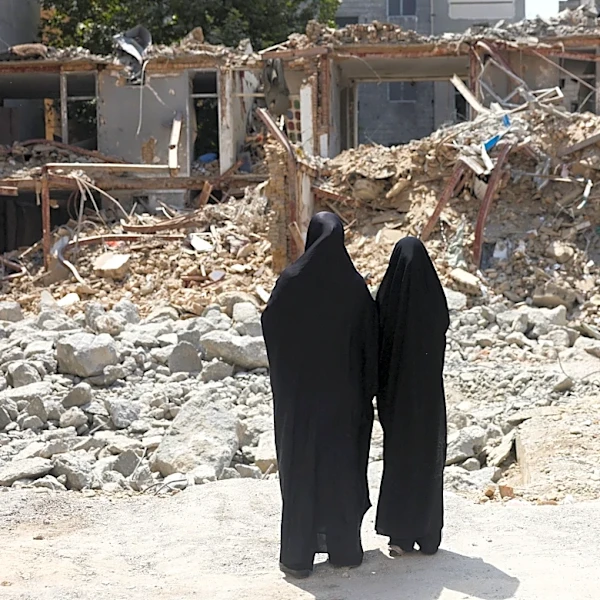
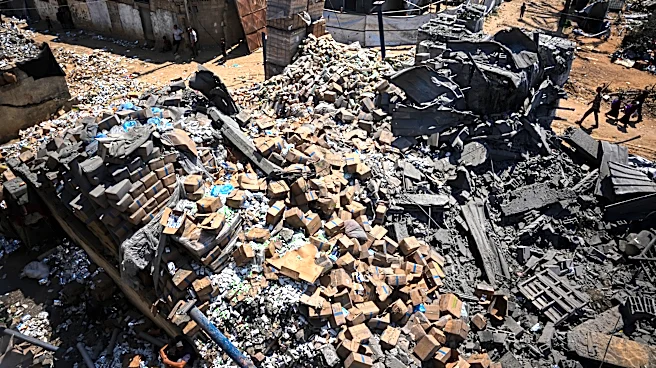
WASHINGTON – Bombs had been dropping for more than a week when President Donald Trump assured congressional Republicans and donors the war in Iran wouldn't last long.
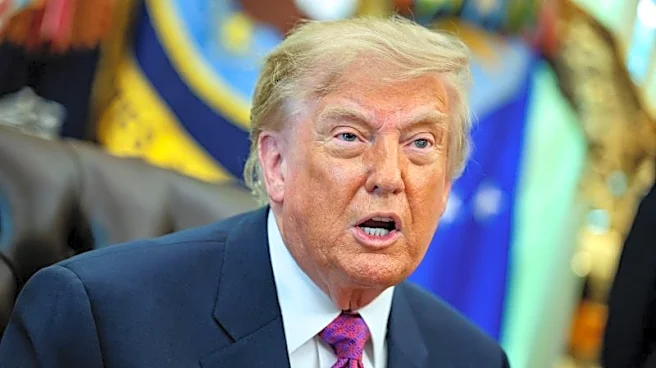
"We took a little excursion because we felt we had to do that to get rid of some evil," Trump told House Republicans during their retreat at his Doral golf club in Miami on March 9. "And I think it's going to be a short-term excursion."
Trump initially projected America's joint military operation with Israel would last four to five weeks. Not long after, he said the assault was substantially ahead of schedule.
The war turns six months old on Friday, Aug, 28. No end is in sight. With gas prices up and polls showing the war is unpopular with Americans, the United States now says it’s
changing its strategy altogether.
The Trump administration has traded its military offensive for an economic one. It put diplomatic talks on ice and is attempting to choke Iran's economy by threatening to sanction the country's trading partners.
Coming off a quick military victory in Venezuela, Trump raised expectations that the Iran war would be short and effective, said Michael Froman, chairman of the Council on Foreign Relations.
"It proved to be more complicated and more drawn out than he originally communicated," said Froman, a deputy national security adviser and U.S. trade representative for former President Barack Obama. "This administration has, I think, made some very strong statements and raised expectations and now is working to try and align reality with those expectations."
Shifting goals and unrealistic assumptions are among the reasons why the war has lasted longer than Trump told the American public it would, former U.S. officials and international experts say.

Trump said the United States entered the war to prevent Iran from developing a nuclear weapon. But at times, he implied the United States would like to see regime change in Iran. Later, the administration shifted its focus to reopening the Strait of Hormuz, which Iran closed after the war started.
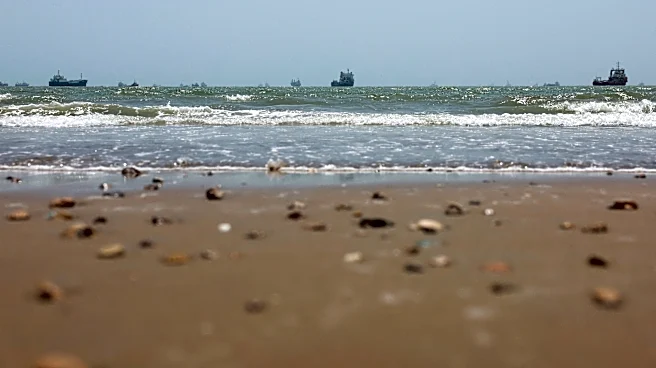
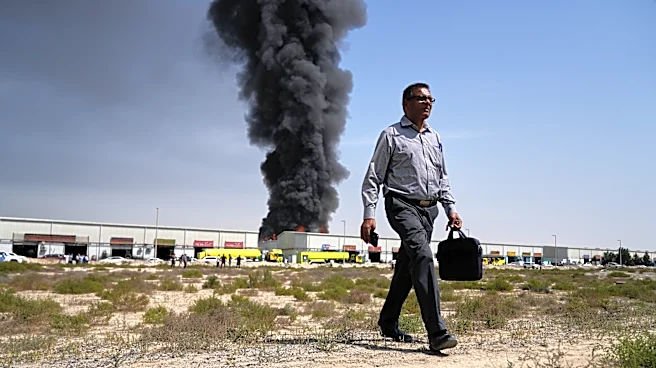
Iran has attacked American allies in the region, and the Strait of Hormuz is still blocked to all but a trickle of commercial traffic. Americans’ willingness to tolerate associated price hikes is also waning.
"A lot of things went wrong," said Alexander Downes, director of George Washington University’s Institute for Security and Conflict Studies, which researches security issues.
The sides are no closer to a resolution. A 60-day memorandum of understanding between the United States and Iran meant to guide peace talks expired earlier this month. Both countries have said negotiations are no longer taking place.
Underestimating Iran's resolve
Experts agree that one of the United States’ biggest mistakes was underestimating Iran’s leadership.
The Trump administration thought that if it took out Iran's top leaders and bombed the country for a few days or weeks, the regime would collapse or give in to U.S. demands, said Alan Eyre, a former U.S. diplomat who helped negotiate the 2015 nuclear deal with Iran under former President Barack Obama.
"Neither of those happened," he said.
The administration underestimated the new Iranian leadership’s willingness to take risks, said Elliott Abrams, a special representative for Iran and Venezuela in Trump's first administration.
"Attacking American bases, killing Americans is a gigantic risk, and I think there was not a full understanding that they would do that because they haven't done it," Abrams said.
Trump's military campaign succeeded in its main goal of destroying Iran's ability to make nuclear weapons, though the country maintains a residual drone and missile force that it’s using to intimidate U.S. allies in the region, said Fred Fleitz, a former CIA analyst and National Security Council chief of staff during Trump’s first term. He serves as vice chair of the Trump-aligned America First Policy Institute.
Iranian military leaders are "happy to burn the country down before they'll surrender," Fleitz said.
Tehran’s military may be compromised, but Iran has enough firepower to close the Strait of Hormuz and attack U.S. bases and allies in the United Arab Emirates, Saudi Arabia, and Qatar, Froman said.
Iran showed it can control the strait and create leverage over the world economy, he added.
"We have introduced a new weapon into Iran's arsenal," Froman said of the strait.
Failed diplomacy efforts
Diplomatic efforts have failed, too.
The administration "never really tried diplomacy with Iran," Eyre said. "Their concept of diplomacy was to present U.S. demands and wait for Iran to comply."
Key decision makers don’t have Middle East expertise either, Eyre said, referring to U.S. officials like Defense Secretary Pete Hegseth and Trump negotiators Jared Kushner and Steve Witkoff.
"It’s quite possible that our commander in chief is receiving inaccurate information because he’s surrounded by people who are not going to tell him hard truths, but who instead cherry-pick information and reports to reinforce his assumptions," Eyre said.
The United States’ shifting goals have also complicated diplomatic talks, said Downes, of the institute at George Washington University. The United States hasn't been clear with its demands, he said.
"If you concede on one thing, will that end the bombing or the war, or will more demands simply be forthcoming?" he asked.
To strike a deal, Downes said, each side must have some assurance that the other will comply. But Trump withdrew from the 2015 nuclear agreement negotiated by Obama while Iran was complying with its terms. He has also attacked Iran twice during ongoing negotiations.
"How does the U.S. assure the Iranians that it or the Israelis won’t come after them again even if they comply?" Downes said.
Former Secretary of State Hillary Clinton said the Trump administration’s tactical and strategic mistakes would become fodder for college courses like the one she teaches at Columbia University, she said at an Aug. 24 event hosted by the Hamptons Institute.
She praised intelligence gathering that allowed the United States and Israel to kill Iran's Supreme Leader Ayatollah Ali Khamenei, Iranian forces and clerics. But the Iranian regime did not collapse.
That's because the Islamic Revolutionary Guard Corps and its military intelligence arm, the Quds Force, run the country and its economy, she said. And they demonstrated during the Iranian protests earlier this year that they are willing to kill thousands of their citizens to stay in power.
"It did not have the promised effect that I think was promised to Trump and his major advisors," she said.
The White House said in a statement to USA TODAY that Trump’s approach to the war has been successful. He has been clear that Iran will never have a nuclear weapon, the statement said, and Iran’s economy has been crippled by economic sanctions and a blockade of marine traffic entering and exiting Iranian ports.
Trump changes tact
The Trump administration changed tack again, from military warfare to diplomacy to economic warfare.
On Aug. 24, the U.S. Treasury Department proclaimed it was shutting down every revenue source available to Tehran. Any nation that trades with Iran or facilitates its financial transactions is susceptible to secondary sanctions, Treasury Secretary Scott Bessent said at a news conference.
Trump has been having private conversations with his overseas counterparts so it doesn’t come to that, Bessent said. He said the administration was leaning into "quiet diplomacy" but did not provide specific examples.
The key to ending the war lies with China and India, the largest purchasers of Iranian oil, Clinton said at her event later in the day.
"The Chinese have the highest interest in getting this resolved, and that’s who I would be pressuring more than anybody else right now," Clinton said.
Chinese refineries have been the largest buyers of Iranian oil and have typically purchased it at a discount. But going after Beijing could prove tricky: Chinese President Xi Jinping will be the guest of honor at a White House state dinner on Sept. 24.
Trump may not be interested in confronting Xi, after spending so much of his first year in office in a trade war with China. Plus, the United States is currently in an unrelated trade fight with Canada.
Fear of a global financial meltdown in response to the administration's "economic onslaught" is real enough that Bessent said the United States is giving Iran's business partners rolling deadlines to cut off ties.
"Why would I want to blow up the global financial system?" Bessent said.

Trump has another daunting problem: The congressional midterm elections are just two months away.
U.S. public approval of the war has fallen to its lowest level since the early days of the war, according to a Reuters/Ipsos poll released earlier this week. Trump’s popularity remains at a record low, the same poll found.
The war is such a political liability for Trump and Republicans that the Iranians believe they have the upper hand and can continue to resist U.S. pressure, Downes said.
Six months after the United States started dropping bombs, Iranians are convinced, Downes said, that "Americans will crack before they will."
Francesca Chambers covers the White House and U.S. foreign policy. Follow her on X: @fran_chambers
Michael Collins writes about the intersection of politics and culture. A veteran reporter, he has covered the White House and Congress. Follow him on X: @mcollinsNEWS
This article originally appeared on USA TODAY: Trump's 'excursion' in Iran has lasted 6 months. What went wrong?