




Too many times, Kelsie Whitmore was so livid, she wanted to scream to the heavens.
Too many times, Whitmore was so depressed, she wanted to grab all of her baseball equipment, and toss it in the ocean.
Too many timea, she wondered, whether life was fair, deprived of her love and passion for baseball, simply because she’s a woman.
“Then, this happened,’’ Whitmore tells USA TODAY Sports. “I still can’t believe it.’’
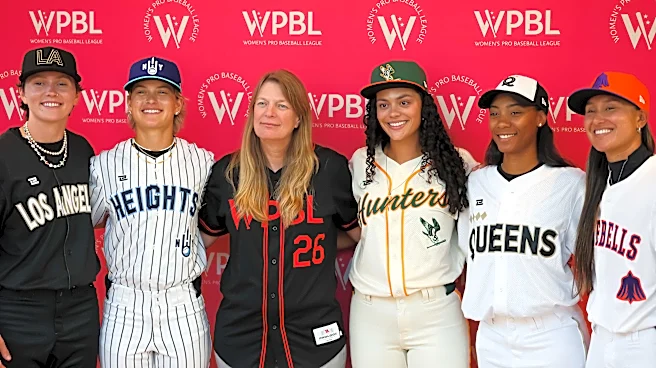
This is the Women’s Professional Baseball League, the first of its kind in more than 70 years, going back to the the All-American Girls Professional Baseball League, immortalized in the movie, “A League of their Own.’’
Their mantra: “This isn’t a league, it’s a movement."

This four-team league, which will play all of its seven-inning games
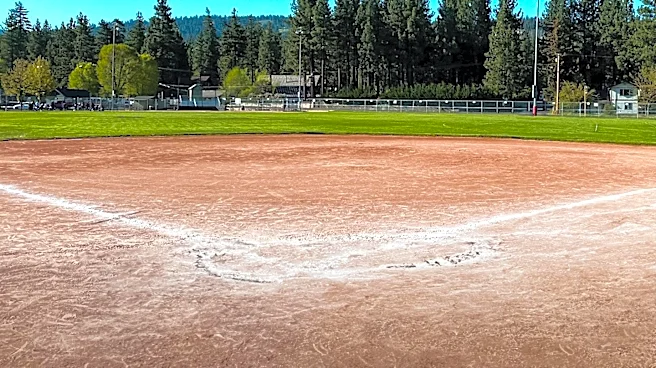
at Robin Roberts Stadium in Springfield, Ill., will begin its inaugural 30-game season Saturday.
“When I first found about it," Whitmore, 28, says, “I was in shock. I never thought a women’s pro league would ever exist, not in the midst of my career. I’m super excited, super grateful, that people like Keith would take a chance and see the value in it and invest in us. It’s going to open up so many doors and opportunities for young girls.
“I don’t think people realize how huge this is. There never has to be a girl go through the same drain as I did."
Whitmore, who played for the U.S. national team in the women’s baseball World Cup, grew up in Temecula, Calif. where she was always the lone girl playing baseball on boys’ teams. Little League. Pony League. Travel leagues. High School.
When she got to college, there was no place for her, and she wound up receiving a scholarship to play on the Cal State Fullerton softball team.
“I didn’t want to play softball," she said. “I was upset by it. I wanted to play baseball. Softball is a completely different sport. It’s like telling a tennis player to go play ping-pong.
“It’s like people had the belief we didn’t belong in baseball. But now, we arrived. I don’t have to feel alone anymore.’’
Keith Stein, the WPBL co-founder along with Justine Siegal, was emotional and wiped away tears watching the women’s first official workout Wednesday. He has long been an advocate of women’s sports, and his interest in a league was heightened by the documentary, “SEE HER BE HER,’’ on women playing baseball around the world by Jean Fruth and Jeff Idelson, former president of the Baseball Hall of Fame.
“I don’t think I had any clue about the magnitude what we were doing here," said Stein, a Toronto businessman. “I knew people wanted to see women who wanted to play this game. What I didn’t understand was how this league would resonate in a broader way, symbolize certain things people not even about baseball.
“A lot of people have been disappointed or angry for a long time, seeing young ladies not have the opportunities to play in a women’s league in high school or college or pro. We wanted to change that."
That opportunity finally is here, and for the first time since 1954, the first all-women professional baseball league opens play between the Los Angeles Queens and the New York Heights at 6 p.m. ET Saturday. The San Francisco Firebells and Boston Hunters will play Sunday. The six-week season will be televised on ESPN, with 11 games simulcast on the Scripps Sports Network.
The teams are filled with star players, from Mo’ne Davis, who pitched a shutout in the Little League World Series to Ayami Sato, considered the best female pitcher in the world who won six gold medals with Japan women’s national baseball team, and, of course, Whitmore, the pitcher/outfielder who won a silver medal at the Women’s Baseball World Cup when she was 16, and a gold at the 2015 Pan American Games.
“I feel incredibly grateful and happy that I can finally stand on the stage I once only dreamed about," Saito said in a text message conveyed by Fruth. “To be able to play on this stage, a dream that once felt far away but became something I could truly see and believe in because of the people who supported me, means so much to me.
“I believe there are many players in this league who have carried the same dreams in their hearts, and I feel so fortunate and happy to be able to play alongside them.’’
The teams also are being managed by former MLB stars. Matt Williams, a former five-time All-Star, four-time Gold Glove winner and 2014 manager of the year for the Washington Nationals, is managing San Francisco. Eric Young, a former All-Star who coached 14 years in the big leagues, is managing Los Angeles. Keith Foulke, the former All-Star reliever who closed out the 2004 World Series championship for the Boston Red Sox, will manage Boston. And Rachelle “Rocky” Henley, who founded the San Francsico Bay Sox girls baseball program and played for the barnstorming Colorado Silver Bullets, will manage New York.
Dave Stewart, the four-time 20-game winner and 1989 World Series MVP while becoming GM of the Arizona Diamondbacks, is an official advisor to the league.
Everyone realized the magnitude of this movement when the league had a tryout camp last August at Nationals Park in Washington, D.C. There were 600 women from 10 different countries who arrived, all paying their own expenses, just for the opportunity to play professional baseball.
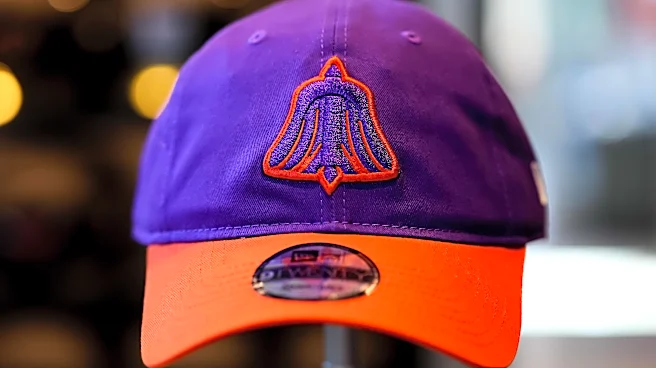
Now, here they are, with the first game at the 5,000-seat stadium already sold out. Their original inventory of 20,000 caps were sold out in August. They can’t keep enough merchandise on the shelves.
“We see the success we’re already having without a ball being thrown,’’ Stein said. “There’s money already coming in, but the money is completely secondary. I’m grateful to have the privilege to develop this league.
“There’s nothing in business that’s as meaningful as this. We want to leave a lasting impression, and help change people’s lives.’’
The WPBL is particularly gratifying for Fruth, who directed and produced the film, "See Her Be Her", traveled around the world to take photos of women playing baseball.
“The opening of the WPBL feels incredibly meaningful,’’ says Fruth, co-founder of two non-profit groups (Grassroots Baseball and See Her Be Her). “Over the past three years, making See Her Be Her has given me the privilege of documenting women's baseball around the world and witnessing firsthand the passion, resilience, and determination of the athletes who have continued to push the game forward.
“What I'm most proud of isn't the film, it's the women taking the field and making this league a reality. What they're doing is bigger than baseball. Their impact reaches far beyond the game.
“It's about equality. It's about representation. It's about showing the next generation that there is a place for them in this sport and helping them believe that anything is possible.’’
Sure, no one is going to be rich playing in the league. The top salary is $500 per game that includes lodging and meals. The minimum is $300 per game.
Yet, all that’s important is that these women are finally allowed to achieve their dream of playing professional baseball. Whitmore never got the opportunity to realize her dream of playing with the San Diego Padres, wanting to be the next Jake Peavy, but she did play with the independent league Oakland Ballers and toured with the Savannah Bananas.
It just never made sense to Whitmore that there were professional women sports in basketball (WNBA), hockey (PWHL) and soccer (NWSL), but not baseball. She was frustrated with MLB, wondering why it would sponsor and fund softball programs for girls and young women – but not for baseball.
“Women in baseball have been here all along," Whitmore said, “but we were always being mid-directed. It’s like, “Why do you have to play with men?’ Why can’t you play softball?
“Well, now, a girl doesn’t have to say there’s no path for me to play baseball. We don’t have to feel alone. I can look to my left, to my right, and not be the only girl. My goal is to play as long as I can and to help this league grow into something where young girls all over the world have a direction and a path to play baseball for a living.
“We have arrived.
“We are here.
“And we are staying here."
This article originally appeared on USA TODAY: New Women's Professional Baseball League is looking like 'a movement'