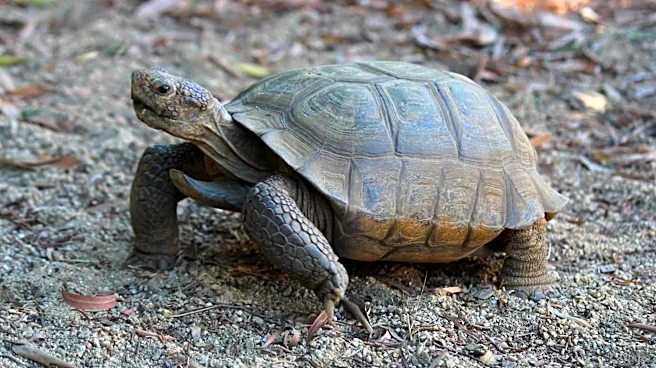

Mojave, the oldest animal at the San Francisco Zoo and a longtime ambassador for his species, has died at age 79, zoo officials announced.
The male desert tortoise was euthanized on Nov. 19 after animal
care staff determined that a spinal condition was affecting his quality of life, according to the zoo. A CT scan earlier this year confirmed the condition, and keepers and veterinary staff monitored him closely in the months that followed.
"When he began showing signs that the condition was impacting his quality of life, we made the very difficult decision to say goodbye," the zoo said in a social media post. "While we will deeply miss Mojave, we could not be more grateful for the impact he made here at the (Koret Animal Rescue and Conservation Center) and across the Zoo."
Staff members were able to say farewell before Mojave was euthanized, according to the zoo.
Mojave arrived at the San Francisco Zoo in 1997 and spent nearly three decades at the Koret Animal Rescue and Conservation Center, where he served as an ambassador for his species through the zoo’s Wildlife Theater and Nature Trail programs. The zoo said he touched the lives of thousands of visitors, volunteers and employees during his time there.
A familiar face at the San Francisco Zoo
His death came about six months after the zoo celebrated his 79th birthday in May.
At the time, the zoo said Mojave was its oldest resident and the second-oldest desert tortoise living under human care in California. He marked the occasion with some of his favorite foods, including dandelion flowers, strawberries and vegetables.
For years, Mojave was a popular fixture at the Koret Animal Rescue and Conservation Center, where visitors could see him through viewing windows at the facility’s main building.
The zoo said he played an active role in its educational programs, introducing generations of visitors to desert tortoises and the conservation challenges facing the species. In announcing his death, the zoo described Mojave as a beloved resident whose decades at the zoo helped highlight the ecological importance of desert tortoises in California.
Desert tortoises are endangered in California
The desert tortoise is the official state reptile of California and Nevada. The San Francisco Zoo said desert tortoises are a threatened keystone species that play a critically important role in California’s desert ecosystems.
Desert tortoises are native to desert regions of the southwestern United States and northwestern Mexico, where they spend much of their time in underground burrows, according to the zoo. The animals are skilled diggers and often hibernate in communal burrows.
In the wild, desert tortoises feed on grasses, flowers, cactus pads, and fruit. At the San Francisco Zoo, tortoises are given a diet that includes leafy greens, fruits, vegetables, and alfalfa hay.
The species is known for its longevity, according to the zoo. Wild desert tortoises typically live 30 to 50 years, though many hatchlings do not survive their first year. Under human care, they commonly live 50 to 100 years.
Desert tortoises are listed as threatened under the federal Endangered Species Act and classified as endangered in California because of sharp population declines, the zoo states on its website.
Habitat loss, disease, vehicle strikes, and the pet trade have contributed to falling numbers. The zoo said a respiratory disease was introduced into some wild populations when pet tortoises carrying the illness were released into the desert, causing further harm to the species.
This article originally appeared on USA TODAY: San Francisco Zoo's oldest animal, Mojave the tortoise, dies at 79