



Ella Beatty never thought she'd land the leading role of Lizzie Borden in "Monster: The Lizzie Borden Story".
Despite being the daughter of Hollywood stars Annette Bening and Warren Beatty
, the 26-year-old auditioned for the role of the troubled, axe-wielding daughter in the Netflix anthology series (now streaming) like everyone else. She made the self-tape with a friend from acting school, and believed no one would ever see it.But show creators Ryan Murphy and Ian Brennan saw something in Beatty that made her the perfect person to play the the first female killer in their "Monster" series. Now, as Beatty enters a spotlight of her own, she says the character felt somewhat instinctive.
"I felt that she was a bit of a wallflower who had never really
felt seen before. She's also, at least [from] the audition sides that I read, she was a little weird," Beatty tells USA TODAY. "I just got her right away and I knew how to love that person."
As the American legend goes, on Aug. 4, 1892 Lizzie Borden struck her stepmother Abby Borden with a hatchet 19 times and slashed her father Andrew Borden's face about 10 or 11 times. In the courtroom, an all-white, male jury decided to acquit Lizzie Borden, waiting an hour to make it seem like the decision was not made hastily.

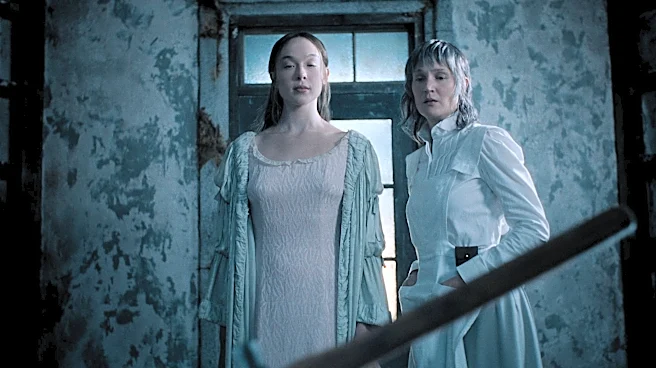
"Monster: The Lizzie Borden Story" takes hyperbolic liberties in depicting Borden's Victorian-era upbringing, the blood-drenched crime and Borden's "quiet, modest and well-bred” appearance that helped her get acquitted of the double homicide. The anthology series − known for its outsized, and heavily scrutinized, portrayals when characterizing killers like Ed Gein, Jeffrey Dahmer and the Menendez brothers − also explores the rumored lesbian tryst between Borden and housemaid Bridget "Maggie" Sullivan (Vickey Krieps).
"Associating femininity with violence, that doesn't roll off the tongue necessarily," Beatty says. "It's just an important story to keep interrogating and keep looking at and reexamining."
Below, Beatty discusses playing Lizzie Borden, where she drew inspiration from and depicting a 19th-century lesbian romance.

Question: How much obligation did you feel to honor Abby and Andrew Borden? How did you weigh the abuse, isolation and manipulation your character faced?
Ella Beatty: I felt a tremendous responsibility to the real person, to the story that I saw on the page, and also to my imagination as an actress. I thought all of those things were really important to try to maintain and meld if I could. I trusted that Ian and Ryan had created a story from the facts that fit their question or their interrogation and the themes that they wanted to look at. So I looked at everything, but I think most primarily, I felt my job was to create a character from what I saw in the script.
You previously starred in Ryan Murphy's FX series, "Feud: Capote vs. The Swans," with Chloë Sevigny, who also played Lizzie Borden in the 2018 film "Lizzie." What interpretations or portrayals of Lizzie Borden did you look to? Was hers one of them?
There are so many great ones. I have watched Chloë as Lizzie. She's an incredible Lizzie. The amazing thing about this story is that there's a reason it's so enduring. There are a lot of entry points to it and there's almost a theatrical tradition to it where people keep reinterpreting and re-imagining her story. ["Lizzie"] is the only one that I've been lucky enough to watch so far, but I know there are other incredible ones and I hope there will be many.
Did you ever get a chance to speak with Sevigny about how to take on this difficult role?
We messaged a little bit about it, and I just told her how much I loved her in it. She's such an incredible person. I love Chloë. She's such an incredible actress and just a truly nice, great human being. But everybody's interpretations of her is so different, which is so important and so magical. But I did of course, have to send her a message, and she's been so supportive.

The first two episodes highlight the romantic relationship between Maggie and Lizzie. How does this particular depiction honor and celebrate sexual liberation, particularly in the 19th century?
This season of "Monster" is really interested in the female perspective, and I think including an exploration of sexuality felt necessary. We're watching a person go on a really potent journey of self-discovery, and meeting this character, for Lizzie, totally changes her worldview and her self-perception, and her sexuality is a big part of that self-experience.
How did you and costar Vickey Krieps develop that rumored and imaginative romantic relationship between the two?
[Krieps] is such a genius and such an incredible collaborator. We loved each other right away. We laughed a lot and had a real spontaneity to our working relationship, but also we really loved to talk about scenes and get in there and try to figure out what was happening in this moment. She really was my partner in crime, no pun intended, in trying to unpick and unpack every moment, but also remain available to the chemistry of what was happening.

Did your parents, Warren Beatty and Annette Bening, help guide you through this role in any way?
I'm really lucky to have such a loving, supportive family. Sometimes we all probably absorb things through osmosis, and my parents are really incredible artists. So if I absorbed any of that through osmosis, I'd be very lucky. And they're just really loving.
Lizzie Borden marks the first female monster in the Ryan Murphy anthology series. What do you hope people will understand about the show as the series explores revenge, power and love?
People will have really intelligent takeaways that are much smarter than anything I could come up with, but I do think this show is an exercise in compassion in some ways. Also, the show is taking a stance. It's interested in saying, if she did it, why did she do it? I hope people have questions about her case, but also about female rage and repression: what it meant then, what does it mean now? What are the ways in which her story feels current? What are the ways in which her story feels in the past? I'm really curious to see what people say.
This article originally appeared on USA TODAY: Ella Beatty calls Lizzie Borden Netflix series 'an exercise in compassion'