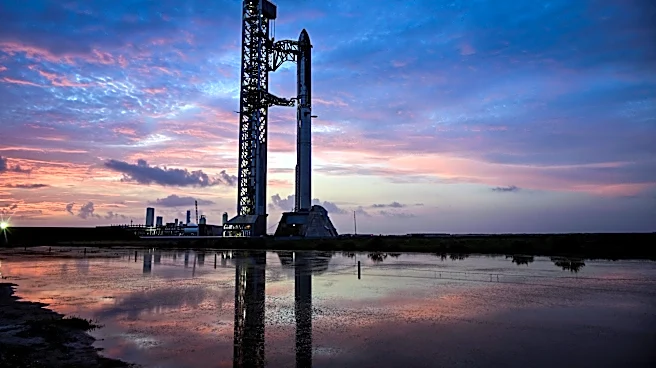









For just the third time in 2026, SpaceX's massive Starship rocket is on the cusp of launching in South Texas.
About two months have gone by since the world's largest rocket got off the ground in July from SpaceX's Starbase headquarters near the U.S.-Mexico border.
Now, tech mogul Elon Musk's commercial spaceflight company is preparing for one of Starship's most crucial test flights to date. If all goes to plan, the 14th launch since April 2023 could be the mission that sends Starship to orbit for the first time.
Want to watch all the action unfold live as the rocket embarks on its potentially historic Earth-circling mission in space? SpaceX will have you covered with a livestream.
Here's how to watch live as SpaceX launches its Starship rocket on
its 14th test mission since 2023, which it refers to as "flight 14."
Is Starship launching today? SpaceX targets flight 14
SpaceX is working toward a Monday, Sept. 28, launch of its Starship rocket, the company announced. The launch window is due to open from 8:15 to 9:30 a.m. ET, with the massive rocket getting off the ground from SpaceX's Starbase company town and headquarters near Brownsville, Texas.
How to watch Starship launch live
The launch will be available to stream on SpaceX's website beginning about 30 minutes before liftoff. SpaceX will also provide updates on social media site X.
Because the orbital flight is expected to last much longer than previous test mission, viewers could potentially be in for hours of live views from Starship as it orbits Earth.
"As is the case with all developmental testing, the schedule is dynamic and likely to change," SpaceX said on its website.
What is Starship?
Starship is the massive rocket that SpaceX, the commercial company founded by tech entrepreneur Elon Musk, has been testing since April 2023. Standing at 407 feet tall when fully stacked, the new iteration of Starship – known as Version 3, or V3 – is considered the largest and most powerful rocket in the world.
SpaceX is developing the rocket to be a fully reusable transportation system that can carry huge satellites and other payloads to space, meaning both the rocket and vehicle can return to the ground for additional missions.
Musk's vision has long been for Starship to be an interplanetary vehicle that takes humans to Mars, where they can establish a self-sustaining colony. While the world's richest man has indicated that SpaceX will focus on building a lunar city first, the company has already announced a human-led expedition to Mars' orbit – though it has not set a target date.
SpaceX is also under contract with NASA to develop a lunar lander configuration of its Starship, known as the Human Landing System, to ferry astronauts to the moon under the U.S. space agency's Artemis program.
See photos of Starship rocket launches
What is SpaceX planning for Starship's 14th flight test?
If all goes to plan, flight 14 could become the first time Starship reaches orbit.
Once again, the rocket's 236-foot lower-stage booster, known as Super Heavy, is due to land in the Gulf of Mexico – renamed in the U.S. under executive order as the Gulf of America – after providing the initial burst of thrust to get the upper-stage off the ground. SpaceX then expects Starship's 171-foot upper-stage to reach an altitude of more than 170 miles high, where it could complete six orbits of Earth during a mission that could last up to 10 hours.
SpaceX then plans for the upper-stage to make a water landing in the Pacific Ocean to the west of Chile.
Flight 14 could also mark the first time that SpaceX's Starship deploys 26 operational third-generation Starlink satellites following a series of test deployments on previous missions.
Eric Lagatta is the Space Connect reporter for the USA TODAY Network. Reach him at elagatta@usatodayco.com
This article originally appeared on USA TODAY: Starship could make history on next launch. Watch SpaceX mission live