


Let’s look at this through clear eyes, shall we? A little unavoidable for the soul.
There have been 76 games this seasonof ranked vs. unranked in the AP poll, and there have been all of six upsets.
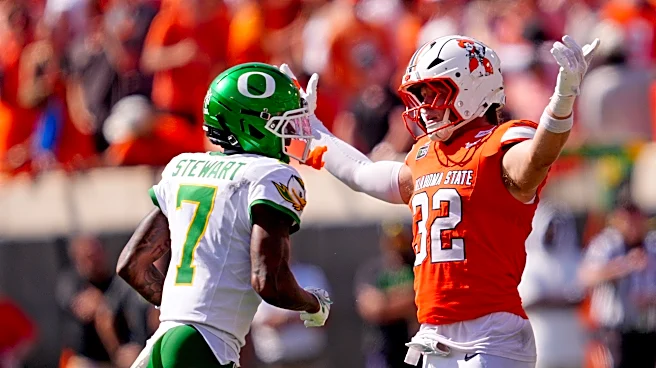
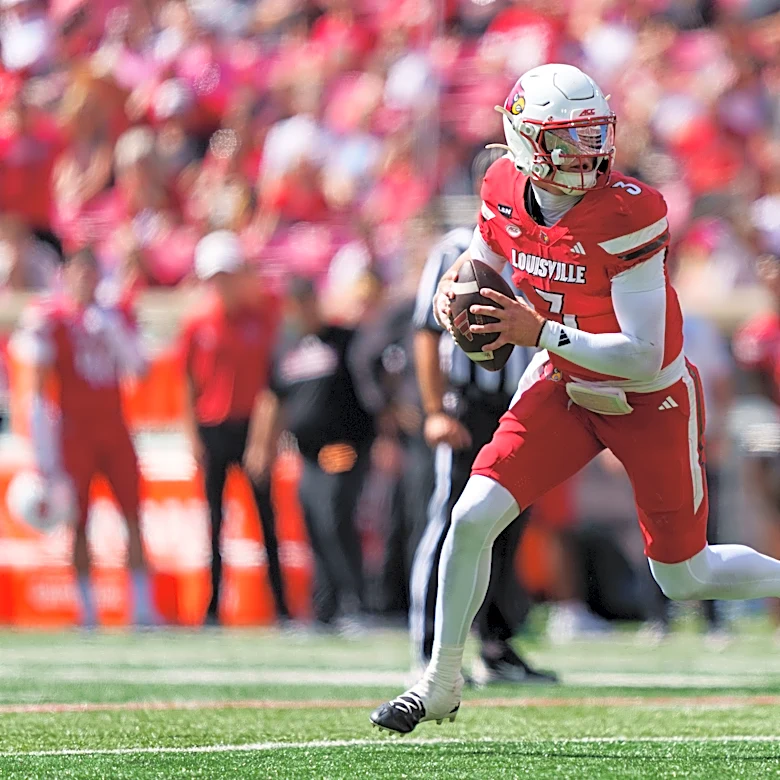
Michigan over Oklahoma, Oklahoma State over Oregon, Kentucky over Texas A&M, West Virginia over Virginia, Wake Forest over Louisville and Wisconsin over Penn State.
How many of those scant six games — all Power conference vs. Power conference — is even considered an upset now? Maybe Oklahoma State’s thumping of Oregon. Maybe.
Which leaves this burning question: Where are the Group of 5 (now 6) upsets of Power conference teams that made college football so unique for so long — and what has the NIL era done with them?
Think about this: The combined record
of the six teams that pulled off those aforementioned “upsets,” is 21-8. The combined record of the losers is 16-12.
That’s just another week in Power conference football, baby.
And that’s the problem. College sports — specifically, football and basketball — fed and grew for decades with the thought of the unthinkable. The unranked nobody beating the ranked somebody, and even if just for one weekend, shaking the landscape to its core.
Upsets in the NCAA tournament, for decades the foundation of the multibillion dollar show, are now few and far between. But it’s much worse in football.
Were it not for Notre Dame’s three losses to an unranked Group of 5 school in the NIL era — Northern Illinois (2024), Marshall (2023), Cincinnati (2021) — there would be all of two games since 2021 where a ranked Power conference school lost to an unranked Group of 5 school.
And I’m not sure App State over Texas A&M and Jimbo Fisher, and UCF over Cincinnati in 2022 count.
The NIL boom was supposed to even the field, raise the proverbial tide for all boats and allow more programs to reach the elite. Spend millions, buy a roster and away we go.
If only it were that simple.
It’s not so much that Power conference schools are raiding Group of 6 schools (they are, at an alarming rate), but a more damaging trend has arrived: Power conference schools raiding each other.
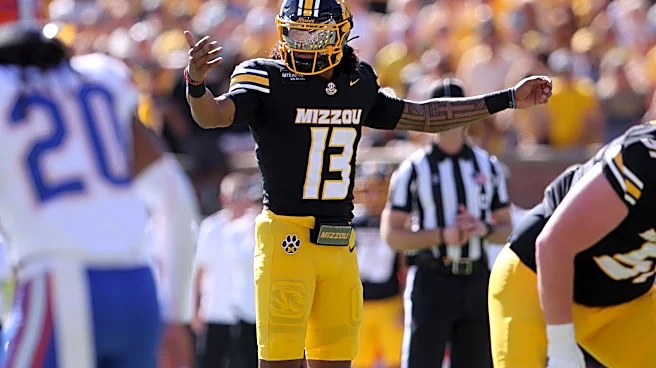
The best young offensive lineman in the game (Jordan Seaton) went from Colorado to LSU. The best returning edge rusher in the SEC (Damon Wilson II), went from Missouri to Miami.
Then there’s the most important position on the field: quarterback Darian Mensah won the ACC at Duke, and left for Miami, and Sam Leavitt led Arizona State to the College Football Playoff in 2024, and left at the end of last season for LSU.
Dylan Raiola gave up the starting job at Nebraska to be a backup at Oregon, and Josh Hoover left three years of developing at TCU for a one-season shot with defending national champion Indiana.
It’s like shopping in a human grocery store. I’ll take one of those and one of these — and any weakness or question of the past are immediately rectified. Unless you’re on the short end of it all.
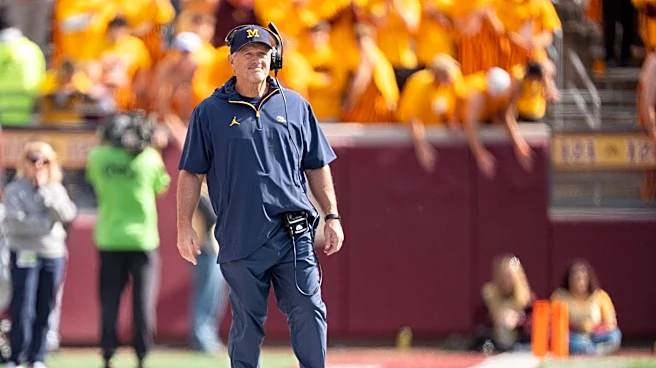
Even when there’s a true upset — Western Michigan over Michigan — Power conferences find a way to negate it. Meanwhile, fall Saturday uncertainty has become a frightening formality.
He with the most money, wins.
Or at the very least, has the best opportunity to plug holes with impact players and rise to compete with the 20 big-spenders of the sport. Good luck to the other 118.
“I realize we’re up there with a small group of schools who have (large budgets) for rosters,” Texas coach Steve Sarkisian told me this spring. “But we’re making drastic changes every day, every month, to this sport. And we’re losing what it’s all about.”
A little unavoidable for the soul never hurt anyone.
Matt Hayes is the senior national college football writer for USA TODAY Sports Network. Follow him on X at @MattHayesCFB. Listen to him daily, from 12-2 p.m., on 1010XL-Jacksonville.
This article originally appeared on USA TODAY: College football's biggest casualty isn't tradition. It's the upset | Opinion