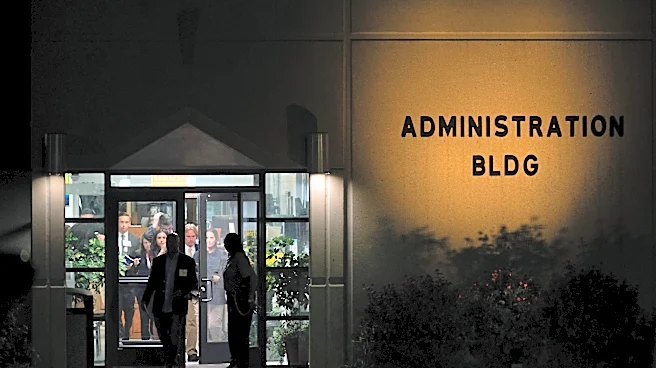






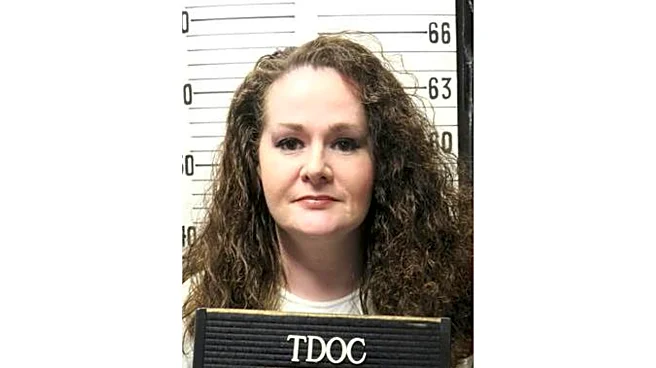
Minutes after 8 p.m. on Sept. 30, sitting in a dark room with the curtain shut, Christa Pike’s only lawyer inside the prison could hear her breathing despite receiving the state’s final round of lethal drugs.
The lawyer, Randy Spivey, demanded to call the rest of Pike’s defense team. To do so, he would have to leave the one place he could tell if she was dead or alive.
Spivey was led through a locked door. Then another. Then four more locked doors, he said. At about 8:22, after seven minutes away from the execution chamber, during which Pike was also separated from her spiritual adviser, Spivey reached the phone, he said.
Spivey was led back to the witness room after the call, and the rest of the legal team began trying to contact the people with
the power to order immediate lifesaving measures.
But the number for the Tennessee Supreme Court they were specifically given for emergencies went to voicemail. Their two points of contact in the governor’s office did not pick up the phone, attorneys said.
In the face of the silence, another attorney drove to the Tennessee Supreme Court to bang on the door.
The state’s lawyer in the prison had a cell phone the whole time, Spivey said.
Speedy access to lawyers, courts critical during executions
Pike’s attorneys were eventually able to get in touch with a clerk who handles Tennessee Supreme Court cases before the attorney who drove reached the court. They got a hearing before the Tennessee Supreme Court that ended a little bit after 9:05 p.m., roughly an hour after the second dose of pentobarbital had entered Pike’s body, Pike's attorneys said.
“While Christa was suffering, being tortured in the execution chamber,” said Stephen Ferrell, a lawyer representing Pike from Federal Defender Services of Eastern Tennessee.
Lawyers say state officials were slow to respond during a critical moment in the failed execution of Pike, and the struggle to get to a phone highlighted barriers that disadvantage the condemned.
Emails from the night obtained through a public records request to the Tennessee attorney general's office show Pike's attorney sent an email to a clerk at 8:32 p.m. advising him that they were filing an emergency motion. They appeared to send the filing at 8:36. The clerk responded by email confirming they had received the motion at 8:47.
They had a hearing before the Tennessee Supreme Court that began at 8:50 and lasted six or seven minutes, Pike's attorneys said. The hearing reconvened at 9:03 and ended after three to four minutes.
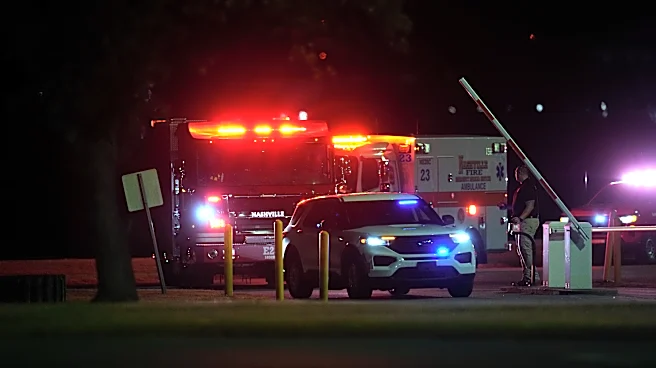
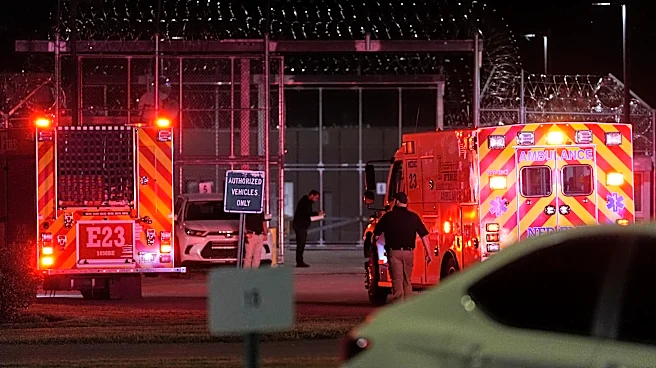
By the time the judges ruled, they noted that the issue was moot. An ambulance had been called to take Pike to the hospital.
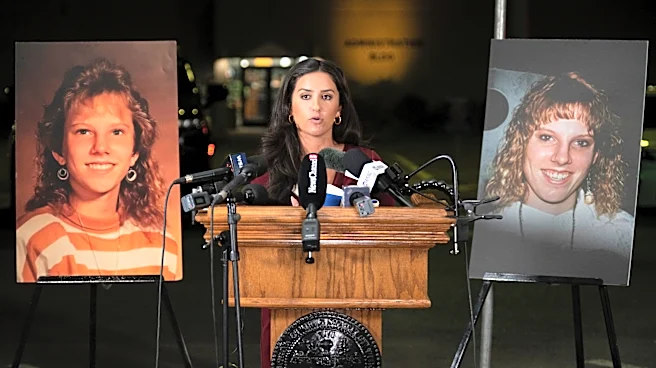
At a routine news conference after the failed execution, during which a Tennessee Department of Correction representative normally announces the person's time of death, no one from the department spoke.
A spokesperson for the Administrative Office of the Courts, which provides support to the state's court system, said the only voicemail left with the Appellate Court Clerk's Office from one of Pike's attorneys "provided notice of an incoming electronic filing that was immediately processed by the Clerk's office."
The spokesperson said the office's confirmation of the emergency motion was prompt.
The spokesperson also explained that rules of judicial conduct prohibit judges from communicating with attorneys for one party "outside the presence of the other party." This meant that "attorneys for Ms. Pike could not seek emergency relief by contacting the Court by phone without attorneys for the State also being on the line," the spokesperson said.
A spokesperson for Lee did not respond to multiple emailed requests for comment. On Oct. 1, Lee said his office acted “immediately” to order a third-party review of the failed execution, which he announced more than two hours after ambulances arrived at the prison to take Pike to the hospital.
A spokesperson for the Tennessee attorney general's office was told about the outline of this story, including that the office's designee at the execution had a cell phone and that office attorneys had access to more information than defense counsel during the execution. The spokesperson did not address those issues but said in a statement, "The Governor has appropriately called for an investigation. We need to know what happened."
The Tennessee Department of Correction declined to comment for this story when asked specifically about defense counsel's issues with phone access.
Attorneys have raised issues over phone access for years
Before Tony Carruthers’ attorney Maria Deliberato could call co-counsel with news that prison staff were failing to set an IV during his attempted execution, a state employee had to plug the phone in, Deliberato said.
Deliberato, senior counsel at the ACLU’s Capital Punishment Project, said inmates’ right to counsel is being violated during Tennessee executions.
“I can’t think of a time when a person needs a lawyer and access to the court more critically than when the state is trying to kill them, and it’s going horribly wrong,” she said.
Deliberato thinks she made two calls while pre-execution procedures were happening. Carruthers, who did not have a spiritual adviser, did not have any advocates with him while she made the calls. IV team members were prodding Carruthers in the meantime, Deliberato believes.
Unlike Spivey, Deliberato made the calls from an area beside the prison's death watch cells, which are outside the execution chamber, Deliberato said. State employees assisting in the execution initially led Deliberato through a locked door past the death watch cells, at which point she "forcefully" said she needed a phone right then. They returned to the area outside the death watch cells, plugged in a phone that was on the ground, waited for it to connect, and Deliberato made a call.
Eventually, the warden received a call on the phone mounted to the wall in the execution chamber. Carruthers’ execution would not proceed, he said.
Other attorneys have argued for better phone access for years. In 2018, Kelley Henry, former chief of the Federal Public Defender's office's capital habeas unit, sued to be able to reach a phone so she could alert a judge if something went wrong during an execution. U.S. District Judge Aleta Trauger ordered the state to give her "immediate access to a telephone during the time preceding and during the execution."
Ferrell said Pike’s legal team raised concerns about access to a phone to courts before the execution. While the Tennessee Supreme Court was “very troubled by the lack of telephone access,” it did “absolutely nothing to remedy the problem,” Ferrell said.
‘No one was allowing us to know any information’
Pike’s lawyers said attorneys from the Tennessee attorney general’s office were being given information they were not.
They learned that an ambulance had been called during the Tennessee Supreme Court hearing with the attorney general's attorneys, Ferrell said.
“The attorneys from the AG were in communication with what was going on in the prison,” Ferrell said. “We weren't. No one was allowing us to know any information except what came to the attorney general, and that was only coming in piecemeal.”
The attorneys from the attorney general's office initially argued against providing lifesaving care, Pike's attorneys said.
The attorney general's office declined to confirm this. In an email, a spokesperson for the office said it "does not direct TDOC or its employees in carrying out executions; the AG’s Office only provides advice and counsel to its clients. Any such advice and counsel to a client is covered by the attorney-client privilege."
This article originally appeared on Nashville Tennessean: Christa Pike lawyers say phone frenzy wasted time as execution failed