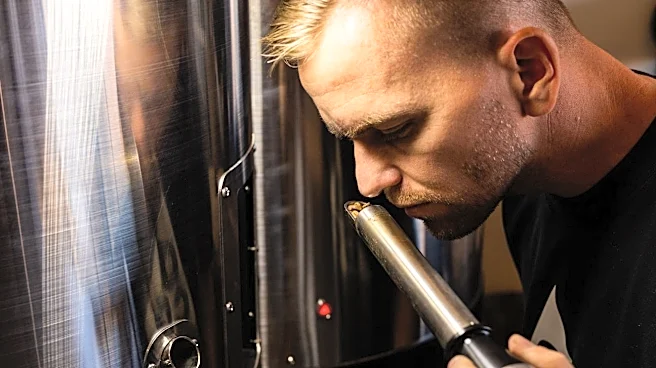

On a weekday morning at Moxie Coffee Co. in uptown Phoenix, the line to order a drink stretched from one end of the cafe to the other. After ordering, the waiting time to receive one’s drink was even longer.
But the horde of coffee enthusiasts inside the shop did not care. To them, the wait was worth it to try what the Global Coffee Awards said was best coffee in the United States.
Moxie is a relatively new coffee shop, opened in 2021 by Matt Heltzel, and its success is one of several indications that Phoenix has an appetite for high-quality coffee, even if it means waiting longer for a drink.
These days, it’s hard to go anywhere in Phoenix without passing a coffee shop. But just a decade ago, there was next to nothing, unless you knew where to look. For many years, downtown Phoenix was a place you went if you had to go to work, or maybe to a concert or a sports game on special occasions, and then you went back home to the suburbs. But in the last decade and a half or so, the city has entered what feels like its sophomore year, cementing itself as the artsy center of the Valley. And that is due in large part to the culture and community that has been fostered by the dozens of eateries, bars and, perhaps most importantly, the coffee shops that have sprung up around downtown.
And the coffee craze is not just relegated to downtown Phoenix. Its reach stretches to even some of the farthest corners of the Valley.
Cold brew is on the rise, especially in Arizona where the blazingly hot weather might make a cappuccino less appealing than an iced drink. But make no mistake, Phoenix coffee shops sell plenty of hot and cold drinks all year round.
“From the U.S. perspective, for specialty coffee, I think we have probably one of the best scenes in the country,” said Patrick O’Malley, the owner and founder of Infusion Coffee & Tea in Tempe.
The boom can be attributed in large part to a few revolutionaries who were among the first to bring specialty coffee to Phoenix.
As the city of Phoenix grows, so does its coffee scene
It’s not just independent local cafes that are on the rise in Phoenix. Coffee shop chains based in other states are increasingly adding Arizona to their rosters, from San Diego-based Better Buzz Coffee to Dallas-based La La Land Kind Café.
Some are even going a step further. In 2025, two Oregon-born coffee chains, Dutch Bros Coffee and Black Rock Coffee, relocated their headquarters to Tempe and Scottsdale, respectively.
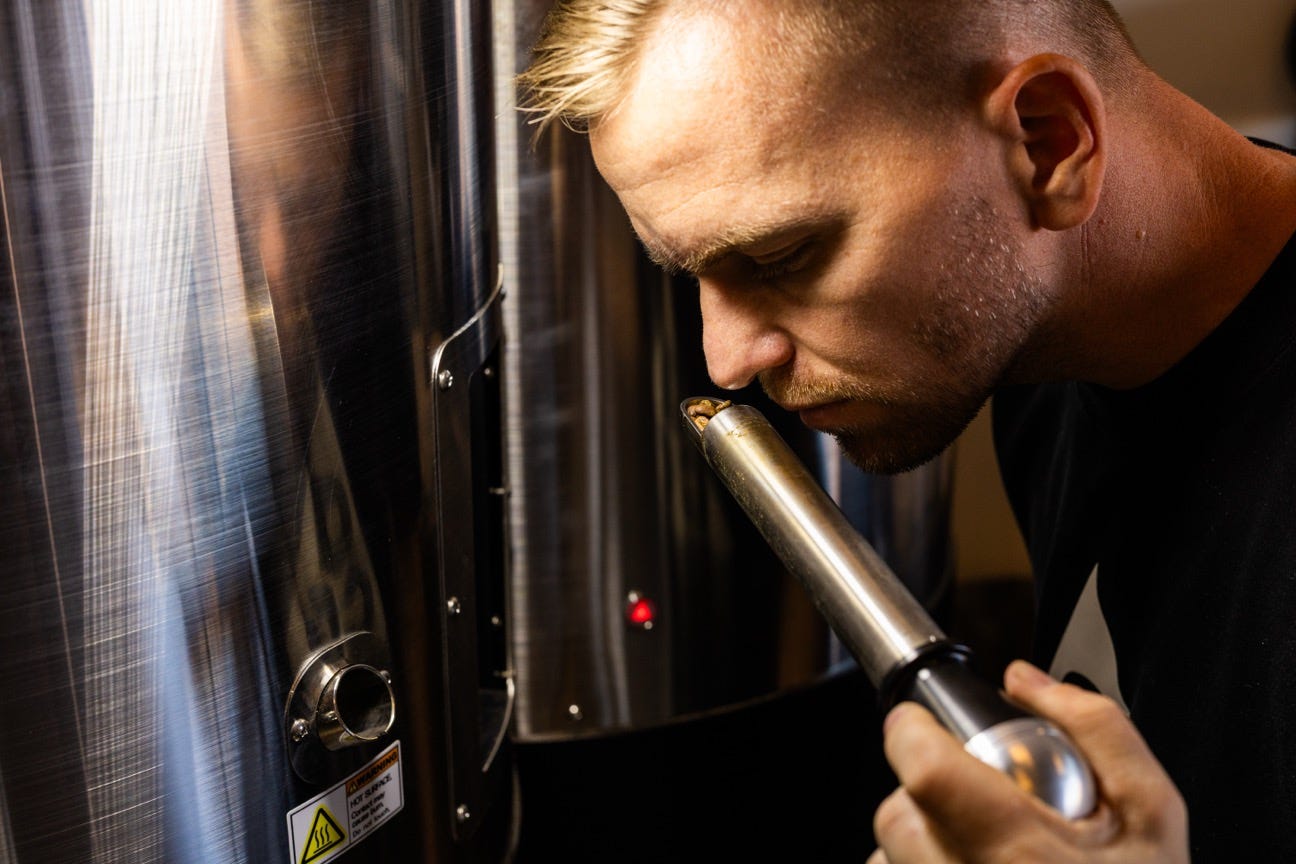
Even as more chains move into Phoenix, it is the local coffee scene that remains the heart and soul of the city.
“I think a lot has changed culturally in 20 years, especially toward convenience and drive-throughs and ordering ahead on your phone,” said Amy Silbershlag, co-founder of Cartel Roasting Co., one of the biggest players in Phoenix's local coffee scene. "These are all things that seemingly make our lives more efficient, but they remove the human connection component, and I think that is so, so important."
And that connection starts with a great cup of coffee.
What is specialty coffee?
Every morning at 9:30 a.m. on the dot, a group of five to 10 people gathers at Infusion Coffee & Tea for a daily quality check, conducted inside a room that resembles a high school science lab. On a table in the center of the room sit over a dozen mugs of freshly brewed coffee. Behind each mug is another cup full of water.
“Coffee is all about science,” O’Malley said. And it’s a scientific process that he takes very seriously.
O’Malley runs a tight ship at Infusion Coffee, ensuring that the quality control testing process goes equally smoothly every day. When he’s not at the café, he’s traveling the world, teaching baristas all over the globe about the science of specialty coffee as a licensed quality grader and instructor for the International Barista & Coffee Academy (IBCA).
O’Malley handed me two spoons and instructed me to dip the first into a mug, scooping up about a tablespoon of black coffee. He then told me to pour the contents from the first spoon onto the second and put that one into my mouth to taste. The first spoon is cleaned off in the water cup before going into the next mug for the next taste until every person in the room has tasted coffee from every mug to ensure it was brewed to perfection.
Specialty coffee is not just a trendy word that can be used by any coffee shop. When coffee beans are harvested, every crop must be graded on a scale of 100 before being shipped off to markets, with 100 being a scientifically perfect coffee bean crop.
Things like the rain and weather conditions, bean size and the ripeness level when harvested all go into determining a crop’s grade. To be called specialty coffee, the beans must be at least an 80 on the scale.
Low to medium grade coffee is cheaper to purchase. For low grade, think Folgers or a plain coffee from a gas station. Many cafes and brands sell medium grade coffee, and it’s perfectly fine and palatable. But those who call themselves true coffee connoisseurs pride themselves on their specialty ranking.
Think of it like a cut of beef. A ground chuck burger is perfectly filling and satisfying in its own right, but you can taste the difference between that and a USDA prime wagyu steak, cooked to perfection and juicy enough to not need any sauce. Specialty coffee is like a premium steak; the beans are roasted just enough, but not burnt, with a balanced and unique flavor profile that doesn't need milk or syrup.
It's the range of specialty coffee shops that make Phoenix really shine as a brew town.
The pioneers of specialty coffee in metro Phoenix

Julia Peixoto grew up in Brazil, where her family still makes a living farming coffee. The beans she serves at her café Peixoto Coffee come directly from her family plantation.
“I grew up watching my father, my grandfather and all my relatives farming coffee in Brazil, and that’s all I knew about coffee, was the agricultural side,” Peixoto said. “In 2012 when my grandfather passed away, I had this idea awakened in me that I wanted to carry on my family’s legacy beyond what they were doing in Brazil.”
“We originally thought we would just import the green coffee and distribute it, but the more we looked into it, we decided that if we really want to keep Peixoto alive, we needed to take control of every step of the process and put coffee in the cup of our consumers.”
Peixoto opened her first cafe in Chandler in 2015, followed by additional locations in Gilbert and downtown Phoenix.
Introducing new palates to specialty coffee means meeting people where they’re at, Peixoto said. Not everyone is ready for a cup of straight espresso. But if they were going to offer consumer-friendly drinks like lattes with syrups and creams, Peixoto said it was important to her to make sure that the ingredients did not detract from the coffee itself, but enhanced it. So they used only pure cane sugar and high-quality house made syrups.
She credits roasters like Cartel Roasting Co. and Press Coffee for popularizing specialty coffee in Phoenix in the early 2000s, which paved the way for her cafe dreams. Peixoto now has three locations in the Valley, including one in downtown Phoenix that is within a five-minute walk of at least three other coffee shops. She also supplies beans to a handful of other coffee shops in the Valley and sells retail bags to at-home baristas.
The Phoenix coffee scene is tight knit, with many small cafes sourcing beans from a few big name roasteries. In a community that close, when trouble arises, it affects everybody — such was the case after the 2025 jailing of Randall Denton, the founder of the former powerhouse roastery Xanadu Coffee Co., which had been another major player since the 2000s.
But the Phoenix coffee scene is nothing if not resilient. Dozens of cafes that previously purchased bean blends from Xanadu took their business to different local roasteries instead. Thankfully, metro Phoenix had enough people roasting specialty coffee to make such a switch possible. And that may not have been the case if not for two coffee pioneers who jumpstarted Phoenix's specialty coffee scene nearly twenty years ago.
2 cafes introduced specialty coffee to Phoenix
Jason and Amy Silberschlag opened Cartel Coffee's first location in Tempe in 2007.
“I think the industry as a whole was kind of on this cusp,” Amy said of Cartel’s early days. “(Specialty coffee) hadn’t really hit Phoenix.”
The couple was at first unsure if they wanted to go the roastery route or the cafe route. They said they'd been made to feel that they had to choose one or the other and were leaning, at the time, toward being solely a roastery. That’s when Jason was invited on his first ever “green buying” trip, during which he visited a farm in Guatemala to buy coffee beans fresh off the plant.
On the flight home, he met the founder of Stumptown Coffee Roasters in Portland, Oregon and learned that it was, in fact, possible to do specialty in-house roasting in a cafe setting.
“Our initial inspiration for opening was truly community focused, a way to facilitate community,” Amy said.
The original roaster still sits in the corner of the Tempe shop, even as Cartel has outgrown the initial space and built up extensions around it.

A year after the Silberschlags opened Cartel, Steve Kraus opened Press Coffee in 2008. He was aware of Cartel, but he said there weren’t many others doing specialty coffee in the U.S. at all, let alone in Phoenix.
“There was maybe 20,000 shops in the United States, and now they’ve grown exponentially across the world. In Phoenix it’s unreal how many have gone up,” Kraus said.
Phoenix Business Journal reported that between 2021 and 2026, Arizona's "coffee and snack shop" industry has grown approximately 7.7% annually, with the state's local coffee production growing 3.4% annually over the same period. There are over 2,000 coffee shops in Arizona as of 2026.
Kraus is a person who truly loves coffee. If he weren’t an entrepreneur, he’d be a fine teacher of all things coffee. Inside Press Coffee’s roastery location on Shea Boulevard, his eyes lit up as he walked me through a coffee bean’s entire life span. He keeps a potted coffee plant near his desk, its green leaves the brightest spot in the store. It’s not the most efficient way to grow coffee, inside a medium-sized pot in a Phoenix windowsill, but the plant is a reminder of his passion.

The beans that are actually served at Press are stored in massive bags and tins, each labeled with where in the world they were grown. Opening the top of a tin approximately the size of a grade schooler revealed thousands of raw coffee beans that had not yet been roasted. When Kraus scooped up a handful and invited me to smell, I inhaled an earthy, hay-like aroma, a far cry from the familiar, complex scent of dark brown coffee beans that I’m used to.
The cafe seating area is separated from the packing area by multiple roasters that are used to expertly roast coffee beans that are packaged for sale to other Press locations, as well as other cafes and restaurants and at-home baristas.
Kraus is passionate about what sets specialty coffee apart from everyday beans. But he hates pretension; everyone has to be introduced to coffee somewhere, he said, and he recognizes that for many, that means drinking Starbucks or another popular brand before making the switch to specialty-grade espresso.
“I want people to feel comfortable coming into our stores, asking questions, getting an understanding of the difference between what specialty coffee and what your traditional coffees are,” Kraus said. “What separates us from Folgers? What separates us from Starbucks? That was important to me.”
A coffee roaster is a physically big and expensive machine; it isn't realistic for every tiny cafe and coffee cart in the Valley to have their own in house. Kraus understands that, too. That's why he — and the other big-name roasteries in Phoenix like Cartel, Infusion and Peixoto, among others — happily sell roasted bean blends to hundreds of other cafes and restaurants in Arizona.
Songbird Coffee House, for example, does not roast its own beans, opting instead to purchase a blend from Infusion. But a coffee shop does not need to double function as a roastery to succeed. And it isn't just about the coffee.
Cafe culture is the heart of a close-knit community
Amy wasn’t a coffee drinker until college, when she was drawn to coffee shops as a place to hang out with friends and study. Her love for the drink was secondary to falling in love with cafe culture as a whole.
“We used to have a sign that said no laptops at the bar, because it was social,” Amy said. “Some coffees, like my go-to cappuccino, it’s meant ideally to be consumed in a ceramic mug in a few minute period, and what better way than while interacting with your barista or meeting someone new next to you?”
When Erin Westgate opened Songbird Coffee in the Roosevelt Row area in 2012, downtown Phoenix was a much different place. Many of her first customers were health care workers at a nearby mental health center. When ASU started growing its downtown Phoenix campus, Songbird became a study hub for students.
“This area appreciates what small businesses do,” Westgate said.
Songbird has 12,000 followers on Instagram. They host community events such as craft workshops, meditation groups and pop-up markets. They recently added a trinket box. And everyone loves the adorable resident cat, Inky Bob — he even has a formal holiday in the city of Phoenix alongside his furry pal Daisy the dog, who is also a regular at Songbird.
“I think people realize the critical role that coffee shops in general play in the communities where they are,” Amy said. “They’re a community meeting space, and I really think it’s magical that you can walk in somewhere and not know anything about anyone you’re about to meet, except that you’re both there because you love coffee.”
The rise of coffee shops represents a new kind of meeting space, similar to a neighborhood bar, but where people can mingle any time of day without the need for alcohol. That's the reason that Gabe Hagen and his husband Jesse Shank opened Brick Road Coffee in Tempe in 2021 — they wanted to create a safe space for the LGBTQ+ community that wasn't a gay bar.
Before opening the now-iconic Tempe coffee shop, Hagen was burnt out after working in banking for fifteen years. He wanted a change of pace and thought it would be fun to go into the coffee business. But since he had no previous coffee experience, he thought it'd make the most sense for him to franchise a larger coffee brand, rather than start from the ground up. But in early talks with an out-of-state coffee franchise, he said, he mentioned plans to host fundraisers for LGBTQ+ organizations like one·n·ten and was told he would have to make sure the fundraiser didn't conflict with the brand.
"I was like, raising money for kids might conflict with your brand?" Hagen said. "That was a wake-up call."

Hagen and Shank realized that if they wanted to open a coffee shop that was loud in its support for the LGBTQ+ community, they would have to do it themselves.
"There's a misconception in general that these communities are small or quiet, or that if I reach out to the (LGBTQ+) community, there's not enough of them to support my business if other people are driven away by someone's existence," Shank said. "Some business owners fall into that trap. But the fact is, the community is huge."
In Brick Road's early days, the space was not as "in your face" as it is today. Hagen said he started out decorating with subtle rainbow colors and using slang that only those in the community would pick up on. But after a few months, the local LBGTQ+ community latched onto the coffee shop. More pride flags went up on the walls and friendships formed naturally among the regular customers. Today, Brick Road Coffee's calendar includes nearly daily events, from crochet meetups to poetry slams to book clubs to social mixers. And for Hagen and Shank, offering that safe space is even more fulfilling than simply selling coffee.
"They just need a place to gather. I don't give a (expletive) if they buy something. I want them to be there. I want them to be able to connect with each other," Hagen said. "Sure, I could sell an extra latte ... but I'm paying the same whether a chair is going to sit empty or not."
Brick Road roasts its own coffee in-house at its Mesa location. And while Brick Road doesn't outsource its beans, Hagen said that his friendships with other cafe owners have helped him out of tough situations numerous times, from lending equipment when his broke to simply offering him and Shank advice, one business owner to another.
"At the end of the day, I don't care if people come to Brick Road or just go to our local coffee scene," Hagen said. "It's such a beautiful community. I will never look at Infusion or even Press or Cartel, the bigger players, like they're competition. That's our power in Arizona, is using our locally owned community coffee shops as our own big box coffee chain. Whichever one you're closest to, just go to a local one. Skip the green aprons."
"And the windmill," Shank added.
Reach the reporter at eddie.fontanez@azcentral.com. Follow @ERFontanez on Instagram.
Support local journalism. Subscribe to azcentral.com today.
This article originally appeared on USA TODAY: Move over, Seattle. How Phoenix became the most exciting coffee city