


Kalshi is expanding its presence in professional sports with partnerships involving five of Major League Baseball's most recognizable franchises — including four located in states where traditional sports betting remains illegal.
The federally regulated prediction market announced Tuesday that it has entered exclusive, multi-year partnerships with the Atlanta Braves, Boston Red Sox, Los Angeles Dodgers
, San Diego Padres and San Francisco Giants.The agreements represent another significant step in prediction markets' push into mainstream sports, even as Kalshi remains locked in legal battles across the country over whether its sports event contracts should be regulated exclusively as financial products at the federal level or also be subject
to state gambling laws.
The geography of the new partnerships is particularly notable.
Traditional online sports betting remains illegal in California — home of the Dodgers, Padres and Giants — as well as Georgia, home of the Braves.
Massachusetts has legal sports betting, but a state court issued a preliminary injunction in January preventing Kalshi from offering sports event contracts there without complying with state gaming laws.
The five deals therefore span states where traditional sports betting is either prohibited or where Kalshi's sports contracts have faced a direct legal challenge.
The partnerships will give Kalshi a presence through in-stadium advertising, digital and radio promotions, branded spaces and fan activations, according to the company's release. Financial terms were not disclosed, and MLB declined to comment on the announcement.
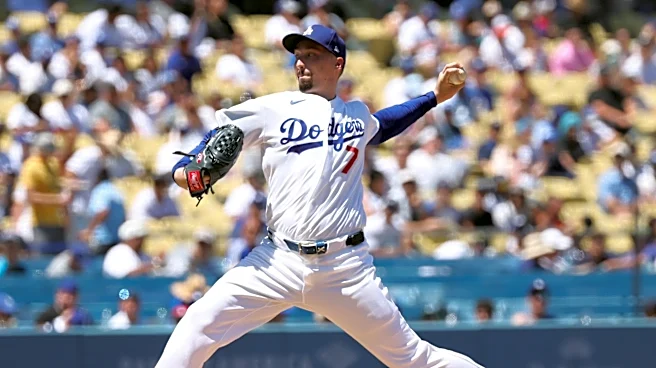
The Dodgers' agreement includes Kalshi-branded LED signage throughout Dodger Stadium, naming rights to the Gold Glove Bar and fan activations in Centerfield Plaza.
"The idea is that fans are already engaging with their favorite teams on Kalshi, so it only makes sense to extend that fandom to some of the most beloved baseball teams in America," Adam Barrick, Kalshi's head of sports partnerships, said in the company's announcement.
Kalshi said baseball activity on its platform has increased dramatically over the last year. Nearly 13 billion baseball-related contracts have been traded in 2026, according to Fortune, up from roughly 355 million over the same period last year.
The company could eventually establish an even larger relationship with baseball.
Kalshi is in discussions with MLB about a potential league-wide partnership, Fortune reported, citing a person familiar with the company's plans. MLB previously announced an exclusive partnership with Polymarket in March.
The five agreements come amid a broader race among prediction markets to establish relationships with professional sports organizations. Polymarket recently partnered with the New York Yankees, while Novig signed a multi-year agreement with the New York Mets in July. Polymarket also struck a deal with Major League Soccer in January.
MLB itself has also become more involved with the emerging industry. The league entered into a memorandum of understanding with the Commodity Futures Trading Commission (CFTC) in March intended to facilitate information sharing surrounding the integrity concerns of baseball event contracts.
Is Kalshi legal in the United States?
Kalshi's expansion has unfolded alongside a complicated legal battle over who has the authority to regulate sports prediction markets.
Kalshi does not operate as a traditional sportsbook or under state sports betting licenses. Instead, it is a federally regulated Designated Contract Market (DCM) overseen by the CFTC, where customers buy and sell event contracts tied to real-world outcomes.
Those events increasingly include sports.
Kalshi's belief is that its sports contracts are derivatives regulated under the federal Commodity Exchange Act and therefore fall solely under the CFTC's jurisdiction.
Several states disagree.
State regulators and attorneys general have argued that putting money on contracts tied to the outcome of sporting events is no different than sports wagering, regardless of how the products are structured or labeled. Under that interpretation, Kalshi would need to comply with individual state gambling laws, including licensing requirements and other regulations imposed on traditional sportsbooks.
That disagreement has produced a growing collection of lawsuits — and conflicting court decisions.
Kalshi scored a significant victory in April when the U.S. Court of Appeals for the Third Circuit sided with the company in its dispute with New Jersey. The appeals court concluded that Kalshi was likely to succeed in showing that its sports-related event contracts qualify as "swaps" under federal law and that the Commodity Exchange Act preempts New Jersey from regulating them under its gambling laws.
Kalshi hasn't enjoyed the same success everywhere.
In addition to the Massachusetts case, Nevada has prevailed at the federal district court level. A judge dissolved an earlier injunction protecting Kalshi from state enforcement after concluding that sports event contracts are not swaps subject to the CFTC's exclusive jurisdiction.
New York has become another major battleground. Attorney General Letitia James sued Kalshi in July, alleging the company operates an illegal gambling operation.
New York has sought a temporary restraining order and at least $36 billion in damages.
The federal regulator has responded aggressively to the growing state challenges.
This month, the CFTC exercised emergency authority after New York filed its lawsuit, ordering Kalshi to continue operating in accordance with the Commodity Exchange Act's Core Principles. The agency said federal law requires it to provide a uniform national market in derivatives transactions.
The CFTC has also intervened in or challenged state efforts to regulate prediction markets elsewhere.
The result is an unusual legal landscape.
Kalshi is a federally regulated exchange operating under CFTC oversight. Courts including the Third Circuit have supported its argument that federal law supersedes state gambling regulation. Other courts and state regulators conclude otherwise.
Until higher courts or Congress more definitively settle that conflict, whether states can regulate or prohibit Kalshi's sports event contracts will remain an open legal question.
For now, those challenges haven't stopped prediction markets from moving deeper into mainstream professional sports or teams from doing business with them.
Kalshi's five new MLB partnerships are the latest evidence of both.
This article originally appeared on USA TODAY: Kalshi partners with MLB teams in latest prediction market marriage