






A letter summoned the 8-year-old to meet with an immigration officer. His uncle, who had cared for him since the boy’s father was deported more than a year ago, did not want to break the law, according to the child’s school district. So he brought his nephew to the appointment this week.
He left without him.
The Haitian third-grader, who has not been identified by name, is now somewhere in the federal shelter system for migrant children – separated from the uncle who took him in, from his classroom at Fay Elementary in San Diego’s City Heights neighborhood, and from the friends who have grown so frightened for him that the district has sent crisis counselors to their school. No one, his school district says, can tell them where he is.
"While immigration
policy decisions are often framed as matters of law and enforcement, their real-world consequences are increasingly being experienced by children whose lives, education and emotional well-being are disrupted through no fault of their own," San Diego Unified School District officials wrote to the secretaries of Homeland Security and Health and Human Services in a letter Nov. 6.
In a statement to USA TODAY, a Department of Homeland Security spokesperson said U.S. Immigration and Customs Enforcement found that the boy’s uncle "was not part of either family unit he had been living with" and "could not establish legal guardianship of the minor." As a result, the agency said, it determined that the boy was an unaccompanied minor.
"Out of an abundance of caution and to ensure the child’s safety, ICE determined it was best to remove the child from the household and place him in the care of the Office of Refugee Resettlement," the spokesperson said. The department added that the boy’s father had been deported to Mexico by U.S. Customs and Border Protection.
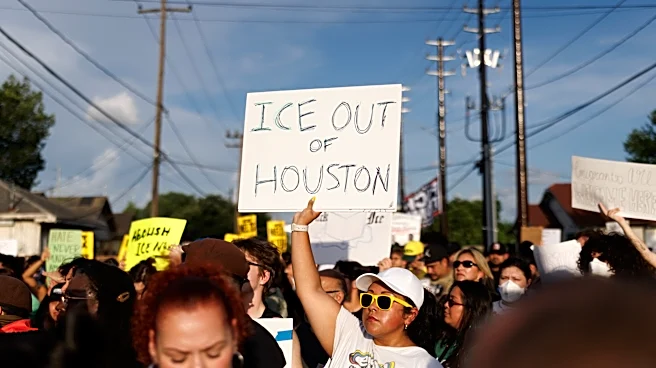
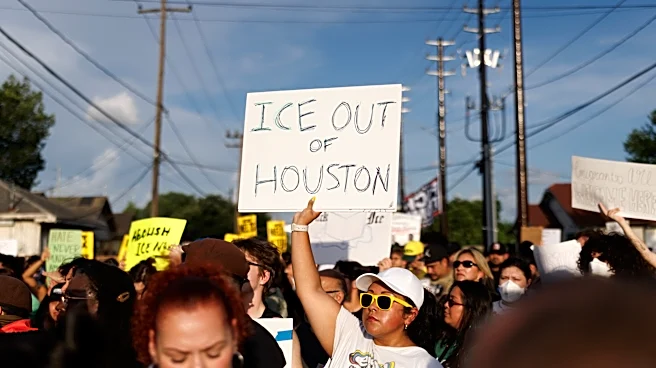
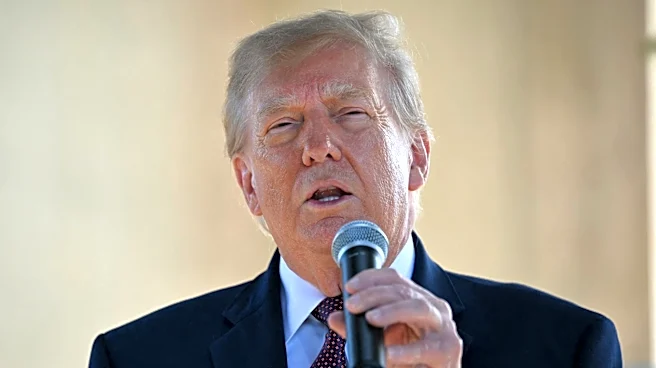
The third-grader is now among the thousands of children who have been swept up in President Donald Trump's push to deport immigrants on a massive scale – an enforcement campaign that has drawn mounting public outrage and is increasingly ensnaring the youngest and most vulnerable in the country.

The federal government does not publish comprehensive data on children in immigration custody. But more than 8,000 children were arrested and detained by immigration authorities between January 2025 and July 2026, according to data from the Deportation Data Project, which analyzes federal enforcement records. As of Nov. 5, 1,620 children were in the custody of the Department of Health and Human Services as unaccompanied minors, according to the agency's data.
Those are children who, in the eyes of the law, are alone in this country. They are under 18, have no legal immigration status and have no parent or guardian here to care for them.
For years, they were mostly children encountered at the southern border, often after weeks on the road without a mother or father. Their care belongs not to immigration agents but to HHS’s Office of Refugee Resettlement, a child welfare agency. Under the 2008 trafficking law, immigration authorities generally have 72 hours to hand them over, and ORR shelters them in group homes and foster care until it can vet a parent or relative to take them in.
But as the Trump administration has pushed immigration enforcement deep into the country’s interior, advocates and attorneys say a growing number of children who were living with parents or relatives in the United States are being pulled into that system and classified as unaccompanied.
The administration’s policies "render children and their caregivers enforcement targets," Kids in Need of Defense (KIND), a nonprofit that represents unaccompanied children, wrote in a policy brief in January.
Once in federal shelters, children are waiting far longer to go home. The average stay rose from 35 days in October 2024 to 185 days in November 2025, according to ORR data cited by KIND, as the administration tightened requirements for sponsors and began sharing their information with immigration enforcement. Relatives like the boy’s uncle can still apply to take a child in, but advocates say that has become far harder.

Other children are being held alongside their parents. Trump reopened the family detention center in Dilley, Texas, in early 2025, ending a Biden-era pause on detaining families. In July, 207 people were in family detention, according to ICE data, and they had been held an average of 28 days since October – longer than the roughly 20 days generally allowed under the Flores settlement, which governs the treatment of children in immigration custody.
School officials in San Diego wrote that the boy previously had Temporary Protected Status, a humanitarian designation that for more than a decade shielded hundreds of thousands of Haitians from deportation and allowed them to live and work in the United States. The protection was first granted after the earthquake that devastated Haiti in 2010, and was renewed over the years as the country’s crises deepened. The country's president, Jovenel Moïse, was assassinated in 2021, and gangs now control much of the capital of Port-au-Prince. The State Department warns Americans not to travel there.
The Trump administration, however, argued that Haiti no longer met the conditions for the protection. After the Supreme Court cleared the way in June, TPS for Haitians ended on July 27.
Its loss has reverberated deeply in Haitian communities across the country. In Miami’s Little Haiti, the largest Haitian enclave in the United States, the streets have grown quiet and business owners say they have lost workers and customers. In Springfield, Ohio, home to as many as 15,000 Haitians, ICE has detained dozens and ordered hundreds more to wear GPS ankle monitors. In August, a 20-year-old college student there took his own life about a month after ICE fitted him with an ankle monitor. His family said the device left him feeling ashamed and humiliated.
In their letter, San Diego Unified officials and the unions and city leaders who signed it asked the administration to keep children in custody as close as possible to their home schools and to consult school districts before relocating students. They urged the agencies to place children with approved relatives or foster families near their schools whenever possible, and to publicly track how children caught up in immigration custody fare in school.
"Every child deserves stability, dignity, and access to education," they wrote.
Help is available for persons considering suicide. Call or text 988 to connect with the 988 Suicide & Crisis Lifeline. Support is also available via live chat at 988lifeline.org.
This article originally appeared on USA TODAY: Haitian third-grader taken into federal custody after immigration check-in