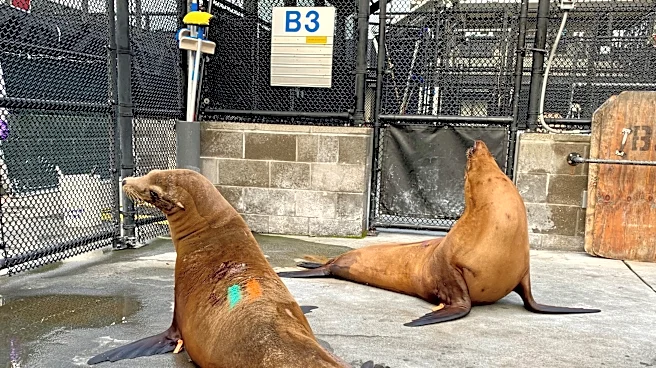








An adult female California sea lion named Sundrift was recently released back into the wild after being treated for domoic acid poisoning during the largest domoic acid outbreak in The Marine Mammal Center's 51-year history.
Sundrift spent about a month receiving care at the center's Sausalito hospital, where she was treated for domoic acid poisoning, malnutrition and pneumonia. She was among more than 300 California sea lions rescued for care this year as the center documented 328 cases of domoic acid toxicosis.
The majority of cases have occurred since July 1, with Monterey, Santa Cruz and San Mateo counties emerging as the primary hotspots for response activity. The outbreak is well above normal levels, as The Marine Mammal Center typically
rescues 75 to 90 animals annually for domoic acid poisoning across its approximately 600-mile California response range.
The surge in sick animals placed significant demands on the center's largely volunteer response teams. Rescuing a single sea lion experiencing neurological symptoms can require four to six trained responders, a carrier crate weighing 50 to 100 pounds and, in some cases, a walk of more than a mile along the beach. Because the toxin affects the nervous system, affected animals can be unpredictable and difficult to handle safely.
Domoic acid is a naturally occurring toxin produced by certain species of microscopic algae, including Pseudo-nitzschia. The toxin can accumulate in fish and shellfish and cause illness in marine mammals that consume contaminated prey.
Sea lions suffering from domoic acid poisoning may exhibit lethargy, disorientation, unusual behavior, twitching, tremors and seizures. Veterinary teams treat affected animals with anti-seizure medication and fluids while their bodies clear the toxin. Some animals recover, while others suffer irreversible neurological or cardiac damage. Necropsies have also revealed chronic cases involving permanent brain lesions and heart damage.
According to the center, the timing, intensity and unpredictability of domoic acid outbreaks have changed in recent years. Significant toxic events are now occurring under a wider range of ocean conditions and outside historically predictable seasonal windows. Scientists are continuing to study why these outbreaks occur and whether changing ocean conditions are influencing their frequency, intensity and timing.
California sea lions are considered a sentinel species, meaning their health can provide important clues about the condition of the marine environment. Because they consume many of the same types of seafood eaten by people, information gathered from affected animals can also help public health officials assess potential health risks. Domoic acid can also cause serious illness in humans who consume contaminated seafood.
While response activity peaked in late August and early September, rescue numbers and hotline calls had dropped significantly by October, returning closer to normal seasonal levels.
The Marine Mammal Center urges the public to stay at least 150 feet away from stranded or distressed marine mammals, keep pets leashed and away from affected animals, and never attempt to touch, move or return a marine mammal to the water. People who encounter a sick, injured or disoriented marine mammal between Mendocino County and San Luis Obispo County can call the center's response hotline at 415-289-SEAL (7325).
This article originally appeared on USA TODAY: Sundrift sea lion returns to the wild after recovery