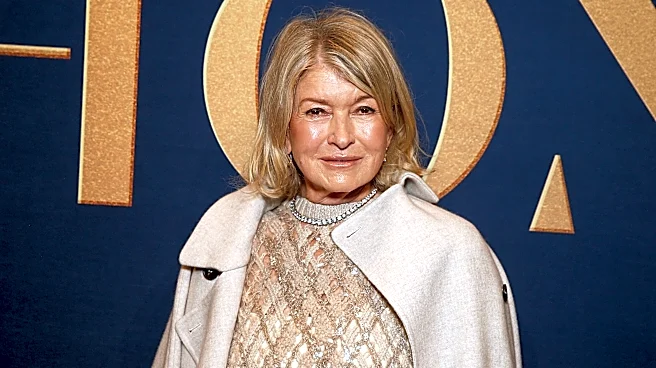



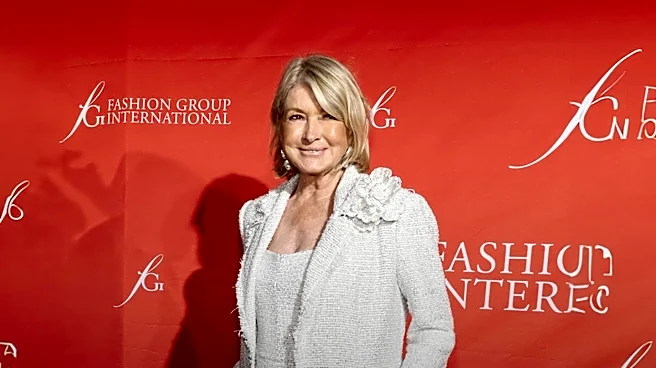



Martha Stewart is getting a lot of attention – and not in a good way.
The lifestyle mogul is addressing backlash after she seemingly dressed as a person experiencing homelessness for Halloween.
In a now-deleted post from Oct. 31, Stewart posed in torn jeans, a cream cardigan and a black knit cap while holding up a handwritten cardboard sign in the picture reading, "I AM HUNGRY HELP ME!!"
Online users reposted the image across social media, with commenters calling the costume “tone deaf,” “insensitive” and “out of touch.” It’s sparking a conversation about when Halloween costumes go too far and where to draw the line on satire.
David Shoemaker, a Cornell University professor who studies ethics, moral psychology and humor, says the costume would probably
be in poor taste if anyone wore it. For Stewart, who has 5.9 million Instagram followers, it rings as “being out of touch with ordinary people.”
“I can only read this attempt as a kind of unfunny mockery of the homeless,” says Shoemaker. For what are they being mocked? For being homeless? Where exactly is the funny in that?”
Stewart deletes post, apologizes
In a statement shared via Instagram Sunday, Nov. 1, Stewart apologized and acknowledged her earlier response "didn't go far enough."
"It's hard to admit when you've really screwed up," she wrote. "I know many people are suffering economically. Wearing a costume like I did was insensitive and not funny. I am very sorry."
The homemaking expert first broke her silence on the outrage in an earlier Nov. 1 statement, telling People magazine that she only meant to "bring more awareness to the very serious subject of homelessness." She also said she now feels "distressed" that her costume had "offended" people.
"I’ve spent decades teaching others how to celebrate Halloween – sharing fun, festive recipes, providing unique craft ideas and giving tips on entertaining and hosting to make the most of one of my favorite holidays of the year," the Emmy-winning TV host added.
"I am distressed that my Halloween costume yesterday, which was intended to bring more awareness to the very serious subject of homelessness, has offended people, which was never my intention," the gardening pro said.
“Homelessness continues to remain one of America’s greatest challenges and ongoing crises, something that I care deeply about and I have spent a significant amount of time and effort supporting charities that combat this ongoing social epidemic," the former model wrote. "I am committed to continuing to make a difference.”
USA TODAY has reached out to a representative for Stewart for comment.
When Halloween costumes go too far
Commenters online criticized Stewart for what they viewed as being out of touch with the reality of average Americans.
“This is preposterous, and I know y'all probably think I'm like woke master 3000, but dressing up like a homeless person has never been funny to me,” user @zariaosi posted on TikTok. “You're exploiting this deep level of human suffering that most people will never have to endure, and using it as a point of humor.”
"As someone who experienced homelessness for years, I can tell you there's absolutely nothing funny about this,"@guyfelicella wrote on X. "Go figure. Another multimillionaire mocking and punching down on people experiencing homelessness."
Every year, there are out-of-touch Halloween costumes and ones that attempt to push the box on humor but ultimately fail. Some veer into cultural appropriation, when someone dresses as a culture that isn’t their own without respecting the culture they’re benefiting from, such as dressing in Native American attire or Blackface. Others have drawn ire for being sexual in a way that’s insensitive, like dressing as a sexy baby or sexy "Handmaid's Tale" based on the Hulu series about rape victims.
Brad Fulton, professor of management and social policy at Indiana University Bloomington, says costumes often have built-in imbalances when the wearer can take it off at the end of the night, whereas the people it depicts cannot.
“Humor crosses into punching down when the person making the joke has more wealth, power and status than the people it depicts, and when the laugh depends on their hardship rather than on the conditions that cause it,” Fulton says.
Shoemaker says that if a costume like Stewart’s was meant to highlight income inequality or raise awareness, then doing it on Halloween, which is meant to consist of playful costumes, was “utterly wrongheaded and tone deaf.”
“It’s very hard to find anything funny in these cases,” Shoemaker says. “Those who do tend to be callous and lack empathy, failing to see how there is much more to be sympathetic about than be amused by such tragedies.”
‘These sort of depictions only reinforce stereotypes, stigma’
More than 745,000 people experienced homelessness in the United States on a single night in January 2025, according to the Department of Housing and Urban Development. As temperatures drop heading into the holiday season, people living outdoors face a heightened risk of hypothermia (abnormally low body temperature), according to the Centers for Disease Control and Prevention.
Depictions like Stewart’s reinforce stereotypes and stigma around those who experiences homelessness and what they look like, according to Mary Kenion, chief equity officer for the National Alliance to End Homelessness.
“These sort of depictions only reinforce stereotypes, stigma and take away from the real stories of human trauma behind the folks that are experiencing homelessness,” Kenion says.
Colette Auerswald, a professor of public health at the University of California, Berkeley, previously told USA TODAY that homelessness and unstable housing have no one look. It could mean sleeping in a car, couch surfing for extended periods of time or relying on shelters.
Kenion says that while Stewart’s actions were “insensitive,” her apology came across as “genuine and authentic.” She hopes advocates can funnel the conversation away from Stewart’s costume.
“We've got to use this as an opportunity to focus on the real issue, and that is that not everyone has the ability to afford a place to call home,” Kenion says.
Paris Close contributed reporting.
Rachel Hale’s role covering Youth Mental Health at USA TODAY is supported by a partnership with Pivotal and Journalism Funding Partners. Funders do not provide editorial input. Reach her at rhale@usatoday.com and @rachelleighhale on X.
This article originally appeared on USA TODAY: Martha Stewart's Halloween costume struck a nerve. Why it missed the mark