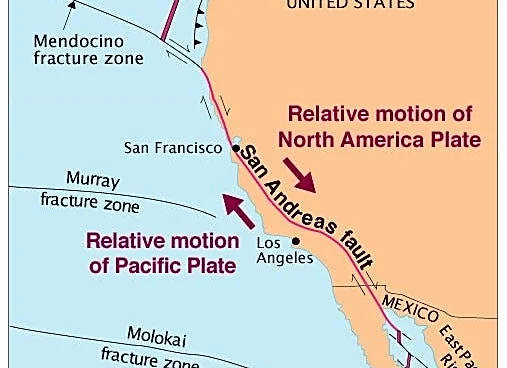

The San Andreas Fault stretches nearly 800 miles across California and has been responsible for some of the state's most destructive earthquakes. But where exactly is the fault, and why do scientists continue
to watch it so closely?
From the massive 1857 Fort Tejon earthquake to the devastating 1906 San Francisco disaster, the fault has shaped California's history and remains one of the nation's most significant seismic threats.
In this explainer, we break down where the San Andreas Fault runs, how it works, and what experts say could happen if a major earthquake struck today, including the potential impacts on millions of Californians, critical infrastructure, and the economy.
This article originally appeared on USA TODAY: What to know about the San Andreas fault and its risks