






El Niño isn't just a weather disaster – it can also have a disastrous impact on the world economy. And the powerful 2026-27 El Niño could be the most expensive one yet.
When it forms, El Niño triggers wide-ranging changes in weather and climate patterns that result in a potpourri of global disasters, including devastating floods, crop-killing droughts, plummeting fish populations and an uptick in tropical diseases worldwide, experts say.
The current El Niño could result in "trillions of dollars in economic losses" around the globe, said climate scientist Christopher Callahan of Indiana University in an email to USA TODAY.
There are plenty of examples showing how El Niño costs stack up. The 1982-83 El Niño led to $4.1 trillion in global income
losses, while the 1997-98 El Niño cost about $5.7 trillion, according to a 2023 study co-authored by Callahan and Dartmouth University's Justin Mankin.
Those costs accumulate over years after an El Niño. "Our previous findings suggest that the economic impacts of El Niño last for at least five years. We find that these events cause persistent reductions in economic growth in many tropical countries long after the physical event itself has faded. I expect that this event will have similarly persistent effects," Callahan said.
It is possible that this event will be costlier than previous events, Callahan explained, because it is projected to be a "generationally strong El Niño."
"Ocean temperatures in the Pacific have already broken all-time records over the observational time period (the last ~80 years or so) and they are likely to continue doing so through the rest of the calendar year."
El Niño costs already starting and won't go away any time soon
"We are already starting to see some impacts," Callahan said. "Wildfires have been raging in Indonesia, the Peruvian fishing industry has been disrupted, and coastal flooding has already started in California."
He added that the total economic toll of these events is hard to count up at the moment, and that it will become clearer over the next few months.
"We don’t know exactly how bad they will be," he said. "However, based on the findings in our 2023 paper, combined with forecasts of this event, we can conclude that this event will likely lead to trillions of dollars in economic losses globally over the next several years."
How does El Niño impact the global economy?
El Niño tends to slow down global economic growth and cause trillions in losses, primarily because it triggers disruptive weather patterns that impact agriculture, infrastructure and supply chains.
"El Niño is a major driver of global weather and climate patterns,” said World Meteorological Organization Secretary-General Celeste Saulo, in a recent statement. “The footprint of an El Niño travels far beyond its origins in the Pacific Ocean, impacting agriculture, energy supplies, trade, water resources, supply chains, and livelihoods across entire regions.”

Will there be direct economic impacts in the US?
According to Callahan, the economic impacts are likely to be greatest in tropical countries such as Peru, Ecuador, Brazil, Indonesia, the Philippines, and so on. These countries are most strongly affected by the extreme climate conditions induced by El Niño.
"However, we do expect some impacts in the U.S. We have already seen high sea levels across the West Coast induced by El Niño, and the resulting coastal flooding is likely to continue through the winter."
"There are also very clear forecasts for a record rainfall winter in California, meaning a high likelihood of damaging inland flooding from extreme rainfall."
In addition, global effects on food prices and food production may affect the U.S. via rising food prices, Callahan said.
How El Niño costs stack up
It’s important to recognize that the trillions in losses are not mainly from immediate disaster damage. Mankin and Callahan found in their research that these events are a persistent drag on economic growth after they occur.
The hazards from El Niño, like droughts, floods, heat waves, and wildfires, trigger immediate damages, but the lasting costs come from what they do to the foundations of growth, such as:
- Agricultural losses that carry into later seasons
- Interrupted labor
- Interrupted schooling and childhood development, which surfaces in the workforce years later
- Disruption to commodities markets and the transport sector
- Investments that never happen because of the shock
What is El Niño?
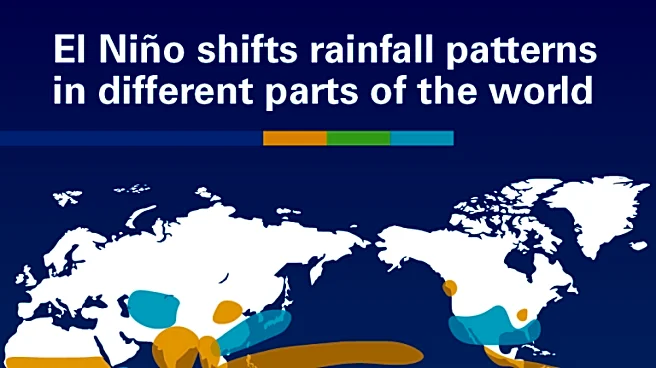
El Niño is a natural climate pattern where seawater in the central and eastern tropical Pacific Ocean is warmer than average. El Niño and its counterpart, La Niña, can influence storms and weather patterns around the world, including hurricanes.
El Niños occur on average about every three to five years and vary in strength, according to the National Oceanic and Atmospheric Administration.
In the United States, El Niños typically result in wetter, warmer winters for the West Coast and along the nation's southern tier, as well as a milder hurricane season for the Atlantic seaboard, which occurred in 2026.
Doyle Rice is a national correspondent for USA TODAY, with a focus on weather and climate.
This article originally appeared on USA TODAY: 'Generationally strong El Niño' set to cause trillions in damages