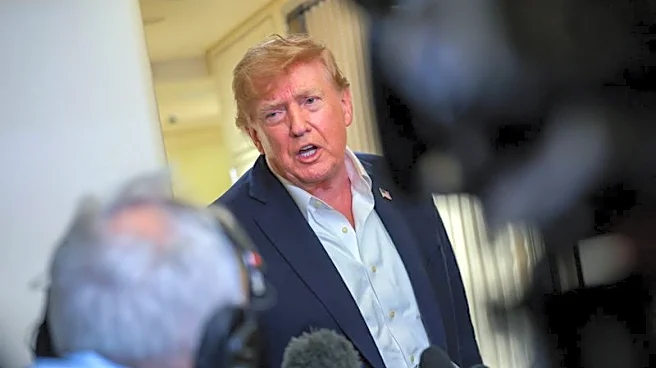


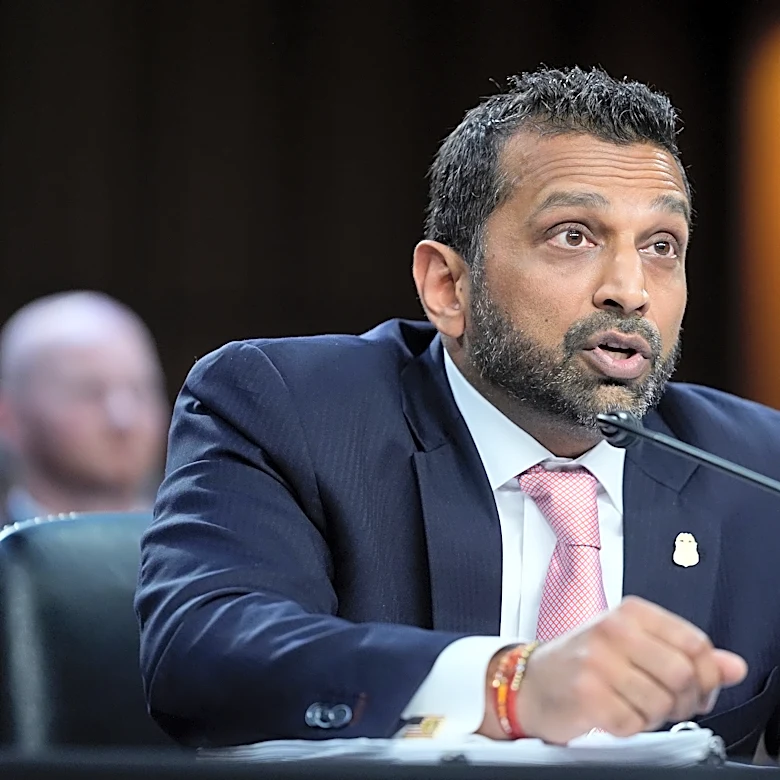




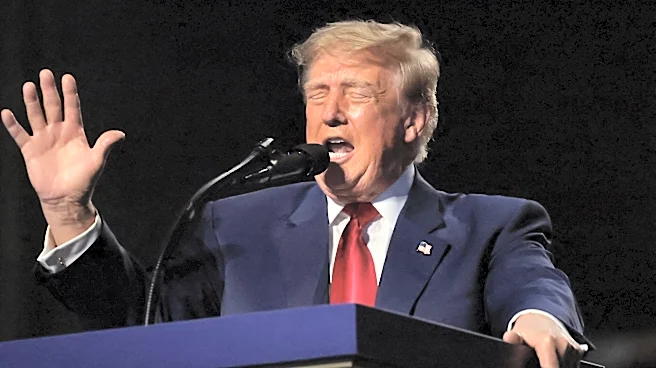

In a major blow to his administration, the Supreme Court blocked President Donald Trump's executive order restricting mail-in ballots.
Trump has said he wanted to end mail-in voting, but voting by mail is already widespread throughout the United States, and he lacks the authority to end a practice.
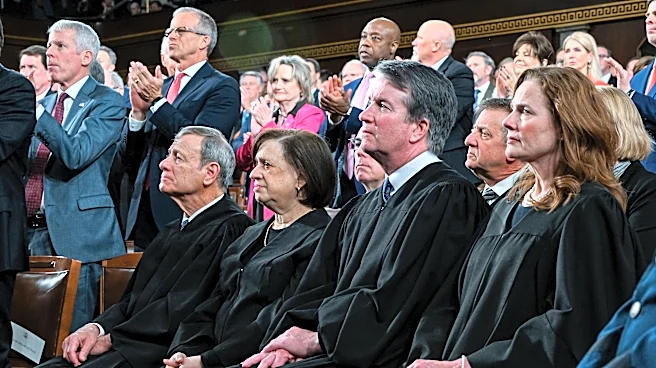
On Sept. 15 in a 5-2 decision, the Supreme Court declined Trump's plan to let the U.S. Postal Service screen mail-in ballots after they are received by state officials. Justice Brett Kavanaugh agreed with a lower court's decision to block the order, writing that changing election procedures so close to the midterms would be "arbitrary and capricious."
Nearly 30% of Americans who voted in the 2024 presidential election used a mail-in ballot, according
to a USA TODAY analysis of data from the U.S. Election Assistance Commission. That’s an increase from just under 24% in 2016. Trump won in both years.
Since Trump started casting doubt on the 2020 election, he and many of his supporters have questioned the integrity and security of mail-in ballots.
Bernard Fraga, a political science professor at Emory University in Atlanta, said last year that mail-in voting is "extremely secure" and said "only a tiny, tiny fraction of ballots cast are even suspected of being somehow invalid."
"It’s polarized in recent years," Fraga said. "But historically, mail-in voting was more and more popular among older voters who tend to lean more Republican."
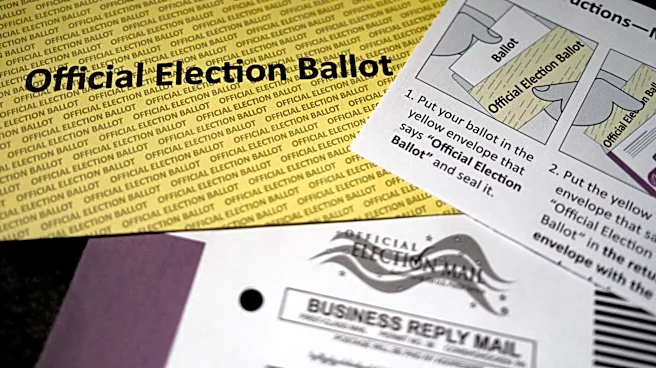
Here are some fast facts on mail-in voting, which many states call absentee voting, and how Americans are using the option.
Mail-in voting rose from 2016 to 2024
Mail-in voting has become increasingly popular over the past two decades. From the 2016 presidential election to the 2024 election, the number of mail-in ballots increased by 44%.
Can't see our graphics? Click here.
Historically, states that have restricted mail-in ballots have allowed them for specific populations of people, and then they started expanding access, Justin Levitt, a professor at Loyola Law School, told USA TODAY last year. For example, Texas allows people who are disabled, are due to give birth or are older than 65 to use mail-in ballots, regardless of whether they'll be near a polling place on Election Day.
The highest rates of mail-in ballots in 2024 were in the western part of the country, where states such as Oregon and Washington send all voters mail-in ballots, and only a small fraction choose to vote in-person on Election Day.
From 2016 to 2024, there was a notable increase in mail-in ballots in Pennsylvania, which passed a law allowing no-excuse absentee voting in 2019. The rate of mail-in ballots in Arkansas increased from about 29,000 per 100,000 voters in 2016 to about 34,000 per 100,000 voters in 2024.
Mail-in voting is now more popular among Democrats
In the 2008 presidential election, there was only a slight difference in the popularity of mail-in voting by political party, according to a survey-data analysis by Charles Stewart, director of the MIT Election Data and Science Lab. About 18% of Democrats voted by mail, compared with just under 19% of Republicans and 24% of independents.
By 2012, Democrats were outpacing Republicans 23%-19% in choosing mail-in voting, and 21% of independents voted by mail, according to the data from Stewart. That trend has continued in presidential elections since. In 2024, 37% of Democrats voted by mail, compared with 24% of Republicans and 30% of independents.
Why mail-in ballot use spiked in 2020
More than 69 million people cast mail-in ballots during the 2020 presidential election, an all-time record, because of widespread concern about contracting COVID-19 in crowded polling places. Many state legislatures made it easier to get mail-in ballots that year to protect public health.
Though skeptics of the results of the 2020 election often cast doubt on mail-in voting, expertswidelyrated the 2020 election as secure. The Brennan Center for Justice at New York University called it "one of the most secure elections in our history."
Portions of this story originally published in September 2025.
Contributing: Christopher Cann, USA TODAY
This article originally appeared on USA TODAY: After Supreme Court mail-in vote ruling, see how many Americans use it