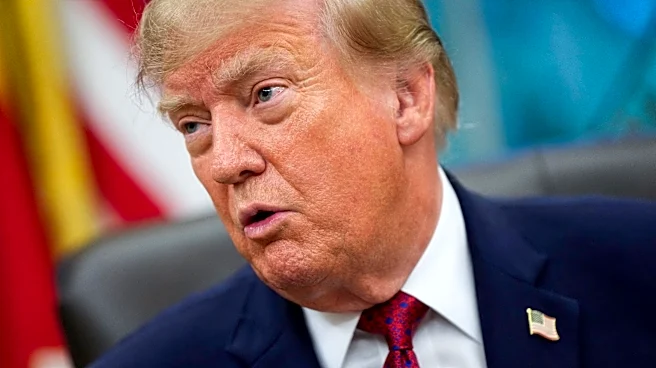





Speculation is already turning to the post-Trump era, which will arrive just two years from now. President Donald Trump is down at the moment – his party just lost the House and the Senate – but he has already proved he should never be counted out as the force shaping his party. As British Prime Minister Harold Wilson liked to say, "A week is a long time in politics."
Where Trump stands at the end of his term will depend partly on events. Many presidents have recovered from midterm disaster to leave office with their public standing on the rebound or, failing that, to benefit from a kinder reassessment later.
Mark Twain supposedly said (though he almost certainly didn't) that "history doesn't repeat itself, but it rhymes." No two presidents or their
eras are exactly alike, but dominant figures tend to leave familiar patterns that may offer a template for what lies ahead.
A worse midterm election than Trump's

The first thing to note about the most significant presidents of the 20th century – a list I'd narrow to Woodrow Wilson, Franklin Roosevelt and Ronald Reagan – is that their influence was, in some ways, most fully felt after they left office.
Wilson departed in 1921 deeply unpopular, with the economy in a shambles and the Republican Party, fresh off Warren Harding's landslide, seemingly restored to its old dominance. Yet Wilson's progressive vision, though set back by World War I and his immediate GOP successors, endured and prepared the way for Roosevelt's New Deal revolution in the 1930s.
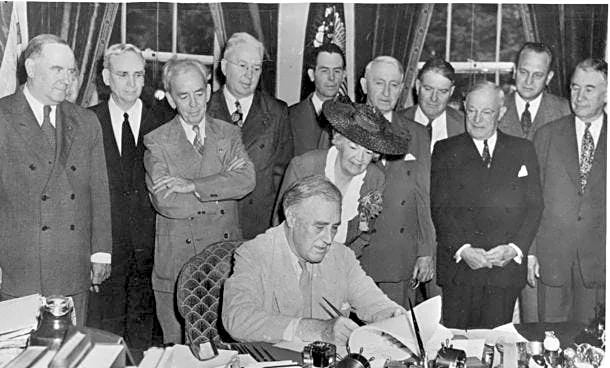
Today the conventional wisdom, and most historical narratives, portray Roosevelt as the grand strategist of the powerful New Deal coalition. But that wasn't fully evident at the time. The coalition's durability depended on several contingent events, without which the FDR story might have ended differently. Roosevelt's Democrats lost 72 House seats in the 1938 midterm elections, far more than the 40-plus Trump's GOP gave up on Nov. 3.
But for the gathering storm of war in Europe, FDR might not have run for a third term in 1940 and added the role of war leader to his story. Had America somehow avoided World War II, his reputation might well be radically lower than it is today.
In fact, numerous revisionist histories make a credible case that much of the New Deal was economically counterproductive. It's also forgotten today that during FDR's second term, the American left was deeply unhappy with him for being too moderate.
Those are speculative contingencies. The actual historical record offers a wider perspective. Though the liberal historian Richard Hofstadter wrote in 1948 that Roosevelt's passing "left American liberalism demoralized and all but helpless," the New Deal coalition in fact expanded after FDR's death – first with Harry Truman's surprise upset in 1948, then with growing Democratic strength across the country through the 1950s and early 1960s.
Reagan shifted the ground and set the course

Reagan set out to end the dominance of FDR's New Deal coalition. But even after two landslide victories, his coalition proved fragile, and Bill Clinton swept it away at the presidential level in 1992.
Clinton quickly ran into trouble, though, thinking he could return to the old liberalism, and the 1994 midterms that ended four decades of Democratic control of the House was sometimes called "Reagan's third landslide." Clinton had to move to the center to win reelection, embracing a number of conservative priorities that he cleverly dressed up as "triangulation."
"Triage" might have been the more accurate term.
Near the end of Clinton's second term, the liberal journalist Richard Reeves wrote that "Reagan, in fact, is still running the country. President Clinton is governing in his shadow, trying, not without some real success, to create a liberal garden under the conservative oak."
The point is that Reagan shifted public opinion to the right in a way that constrained his successors.
Barack Obama nodded to Reagan's success, but his attempts to become the anti-Reagan made only limited headway. (Does anyone put Obamacare on a par with FDR's Social Security or Lyndon Johnson's Medicare?)
Many thought Obama's impressive 2008 victory heralded a generation of Democratic dominance. Two massive midterm defeats ended that dream. Then the most improbable thing happened: Out of the blue, Trump became his successor.
Just as liberals pined for another FDR for two decades, Republicans from 1988 to 2016 pined for another Reagan, and most pretenders to his aura failed miserably.
Trump never tried to be another Reagan, and he has ended Reagan's reign of the Republican mind. As the world's dominant political figure for a decade now, Trump has likely transformed the Republican Party in lasting ways. Whether he has assembled a durable coalition for future victory – one that deserted the GOP this election – is much less certain.

Shifts in political direction are seldom perfectly linear, as the aftermath and legacies of Wilson, FDR and Reagan demonstrate. The MAGA coalition may look like a crumbling Jenga tower right now, but even a collapsed stack can be reassembled into a sturdy cube.
Trump is only the second president to serve nonconsecutive terms, and it would be a mistake to count him out. As always in human affairs, much depends on skill, contingent events and luck. One thing is certain: Trump has been such an unusual political figure – an "n-of-one," as social science statisticians might say – that we'll be thinking and talking about him for decades to come.
But being talked about doesn’t make a president great. The real test is whether the next Democratic president ends up governing in Trump’s shadow, as Clinton did in Reagan’s. If so, Trump will have earned a place near the inner reaches of the presidential pantheon.
Steven F. Hayward is a visiting professor at Pepperdine University's School of Public Policy and the author of the two-volume chronicle "The Age of Reagan."
This article originally appeared on USA TODAY: Like Reagan, Trump will define the GOP for decades | Opinion