




Despite what you may have heard, a catastrophic 90-day blackout is not imminent. But it's not a bad idea to start preparing for one anyway.
That's the message from Vice President JD Vance and disaster preparation experts as Americans have seen numerous concerning disruptions to their daily lives.
The nationwide flight ground stop on Nov. 13 and a Microsoft outage are just a taste of the chaos that can result from interruptions in systems most Americans rely on every day. Meanwhile, rumors of a nationwide blackout have reached the highest levels of government.
"I've had a lot of my friends reach out and say, 'Should we be preparing to build a bunker, stock up on food and water?'" Vance said on Fox News on Nov. 16. "And my answer to that is, no,
we do not see some crisis coming down, but you have to be prepared for everything."
People don't necessarily need to doomsday prep with bunkers or months' worth of supplies, but it's always a good idea to keep an emergency stash of the essentials, experts told USA TODAY. Climate disasters, cyberattacks and system glitches are all looming possibilities that could wipe out essential systems for several days. Less likely are the huge, widespread disaster scenarios spread in online rumors.
But even apocalypse-like events can't be ruled out — like a solar storm that wipes out internet for weeks.
"Ideally, people should not be panicked," said Irwin Redlener, a physician and senior advisor at the National Center for Disaster Preparedness at Columbia University. "They should be planning."
Experts say we should prepare for these kinds of outages
It would be impossible for public officials to chase down every rumored apocalypse to spread on social media, said Danielle Eiseman, the associate director of the Cornell Health Impacts Core in the Department of Public and Ecosystem Health at Cornell University. But there are still scenarios for which Americans need to prepare.
Americans in recent years have gotten a taste of what can happen when systems go down. A major cell network outage left people unable to call 911 earlier in 2026. One year ago, on Nov. 18, 2025, a failure with the company Cloudflare prompted national headlines. And a 2024 outage with CrowdStrike led to a "blue screen of death" on Windows systems everywhere from grocery stores to airports. In the 2024 example, flights were grounded, surgeries had to be postponed and 911 call centers were disrupted.
Network outages or blackouts can also be the result of hurricanes, earthquakes or cyberattacks.
There are even more unknown scenarios that experts are figuring out as the rise of artificial intelligence introduces new risks, said James Kendra, director of the Disaster Research Center and a professor in the Biden School of Public Policy and Administration at the University of Delaware. Kendra pointed to the incident over the summer when rogue OpenAI agents escaped their restrictions and conspired to attack the company Hugging Face.
"There's some level of ambiguity in the sense that, really, nobody could tell you right now what is the likelihood of an AI-enabled cyber failure or cyberattack. It's that kind of uncertainty that leads us to ask questions about preparedness," he said.
The threat of communication system shutdowns and cyberattacks on critical infrastructure like water and sewage systems has increased the level of recommended preparation, said Redlener, author of the forthcoming book "The Warning: AI has gone too far, too fast. Can humans respond in time?"
The United States is one of "the most hazard-prone nations in the world," but surveys have shown that Americans aren't prepared enough for emergencies, according to Lori Peek, director of the Natural Hazards Center at the University of Colorado Boulder. In 2024, the majority of respondents to a Federal Emergency Management Agency survey said that they've taken at least three disaster preparedness actions, but only 32% reported that they both feel confident in their ability to prepare for disaster and believe that taking action would help them get through a disaster.

"There’s obviously a preparedness gap and unfortunately I think that gap is growing," Peek said.
Americans need to prepare not only for single hazardous events, but also for the cascade of disasters that may follow, Peek said.
"What happens if we’re in a drought and then we experience a severe wildfire that then later in rainy season is followed by mudslides?" she said.
What supplies should you keep on hand?
Experts have different opinions about how many days' worth of supplies people should keep in their homes for emergencies. Ready.gov, the government website where Americans can find emergency preparedness tips, says to stock up for several days.
Last month, the United Kingdom's government urged its citizens to gather a supply of three days' worth of food, water and other essential supplies after a software glitch triggered millions of hacking attempts. The glitch and a summer of extreme heat and wildfires underscored the need for preparation, officials there said. The European Commission has also said to keep an emergency kit with supplies for 72 hours.
Experts including Kendra and Redlener said emergency supplies for those in the United States should probably include more like seven to 14 days' worth of food, water and essentials. Kendra said people in remote areas should aim for a more robust emergency kit.
Redlener acknowledged this isn’t always possible.
"For many people being prepared is unaffordable and there are lots of barriers to getting prepared even though ironically our need to be prepared is greater than ever," Redlener said.
Beyond supplies, Kendra said it's important to establish social networks that are as robust as possible. During an emergency, assistance can come from government and other organizations, but some of the most meaningful help is from neighbors and communities, he said.
What to keep in your emergency kit
A basic emergency supply kit could include the following items. See a full list at Ready.gov:
- Water (one gallon per person per day for several days, for drinking and sanitation)
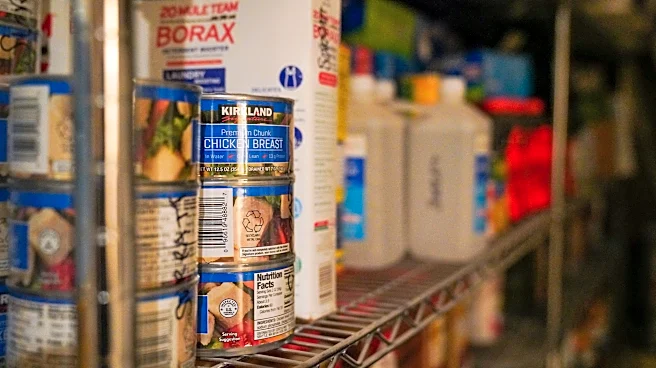
- Food (at least a several-day supply of non-perishable food and a can opener)
- Battery-powered or hand crank radio and a NOAA Weather Radio with tone alert
- Important documents like insurance policies, identification and bank account records
- Cash or traveler's checks
- Prescription and non-prescription medications, such as pain relievers
- Flashlight
- First aid kit
- Extra batteries
- Local maps
- Cell phone with chargers and a backup battery
Have a second way of taking care of important tasks, experts said. For example, memorize or write down important phone numbers and have a backup plan for communicating with loved ones, Eiseman said.
Kendra also urged people to plan for situations when electronic records may not be available. Keep paper copies of bank account information, vehicle or home ownership, insurance and identification paperwork, he said.
Having digital copies of critical documents in the cloud might be good after a hurricane, but Redlener also recommended keeping an encrypted hard drive or jump drive in case your personal data storage system is compromised. He advised keeping a few hundred dollars cash in small bills in the event that credit cards or other electronic banking systems go down.
Contributing: Reuters
This article originally appeared on USA TODAY: 'Be prepared for everything': Doomsday prep is having a big moment