







The Mississippi and Alaska Senate races are too close to call, and that could remain true for days or even weeks as ballots continue arriving and Alaska heads toward a potential ranked-choice tally in mid-November.
The two battleground states will decide just how large Democrats' incoming Senate majority is. Already, Democrats plus Independents who caucus with Democrats have secured 54 of the total 100 Senate seats. Republicans are hoping to stall any further Democratic wave in the upper congressional chamber, where senators keep their seats for six-year terms.
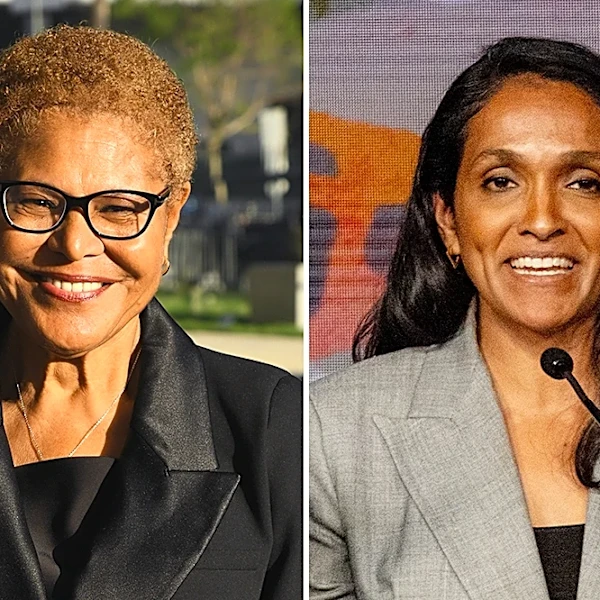
In Mississippi, Democratic challenger Scott Colom is running neck-and-neck with incumbent Republican Sen. Cindy Hyde-Smith. With nearly 950,000 votes counted as of 2:40 p.m. ET on Nov.
4, Colom was leading by fewer than 100 votes in results posted by the Associated Press.
That leaves a lot of room for the results to swing one way or the other based on mail-in ballots that are still coming in.
As long as mail-in ballots were postmarked by Election Day, they can arrive and be counted for an additional five days in Mississippi. The race is so close that the state may also need to sort out which ballots that were provisionally cast should actually be counted under the law.
"That might take us a very long time – days and weeks – to figure out exactly who the winner is in that very, very close election," David Becker, a former DOJ voting rights lawyer who runs the Center for Election Innovation & Research, said on a call with reporters Nov. 4.
Becker added that the candidate who's ultimately behind in Mississippi could go to court and ask for a recount, which could slow things further.
In Alaska, Democratic candidate Mary Peltola is challenging incumbent Republican Sen. Dan Sullivan in a race that is also very tight. In results last updated at 12:26 p.m. ET, Peltola was leading by fewer than 1,000 votes, with more than 210,000 votes counted, amounting to about 74% of the total votes, according to the AP.
The specific nature of Alaska's voting system, where many ballots come in from remote precincts, makes getting results in the state take longer in close races. The state also has a significant population of military voters, whose ballots can arrive up to 15 days after Election Day, as long as they were postmarked by Election Day.
Election officials will have to wait "for some time" for votes to come in from remote areas, Becker said.

If no candidate gets more than 50% of the vote, Alaska's ranked-choice voting system comes into play, which could mean further delays. Under state law, the ranked-choice tally wouldn't start until Nov. 18.
"So it might be the second half of November where we get a really good sense of that," Becker said.
This article originally appeared on USA TODAY: Why Alaska and Mississippi Senate results could take days, even weeks