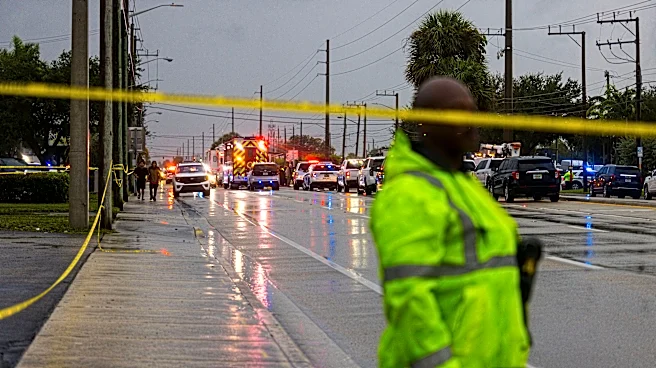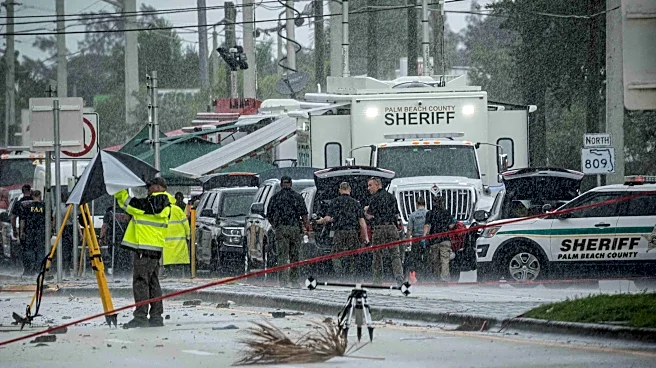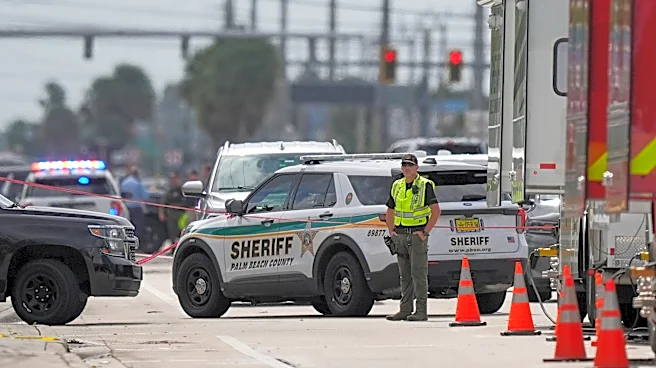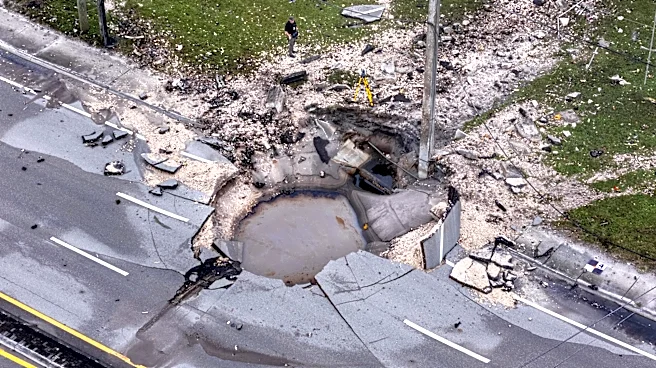





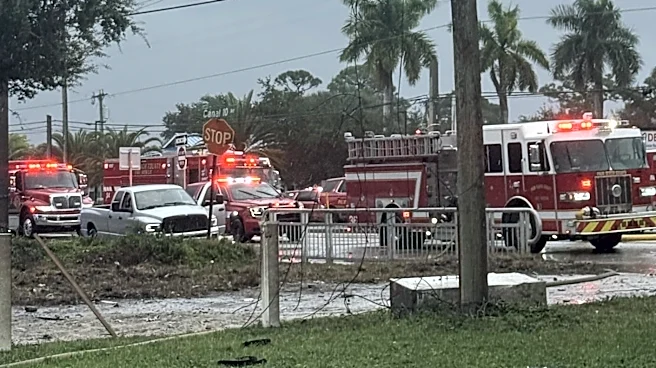

Federal investigators have found a portion of one engine from the wreckage of a business jet that crashed in South Florida as excavation work continued at the crash site on Nov. 5, the National Transportation Safety Board said.
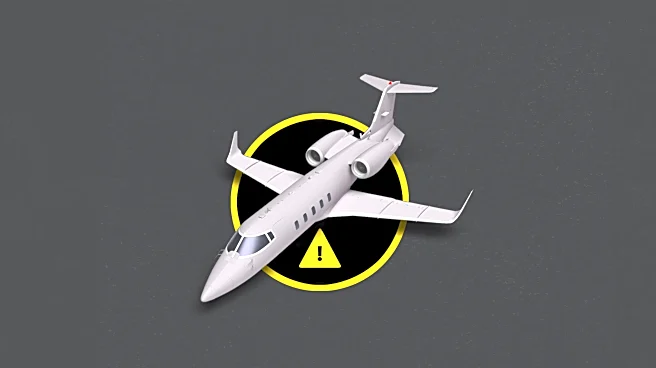
The Learjet 60, which departed Austin, Texas, and was bound for the Bahamas, slammed into a community on Nov. 1 in Palm Beach County. Authorities said all seven passengers and two crew members were killed, while one person on the ground suffered a leg injury.
The crash scattered debris across the area, sparked fires and forced the evacuation of hundreds of residents living near the impact site. The NTSB began excavation work late Nov. 4 and continued into Nov. 5, uncovering part of an engine and additional debris located
beyond the main crash site, the agency said in an update.
The NTSB said debris was also found on the roofs of nearby homes and buildings. All recovered wreckage will be transported to a secure location for further examination as investigators work to determine what caused the crash. The agency urged residents who may have discovered aircraft debris to contact the NTSB rather than keep, move or dispose of any items.
"Even small pieces of the wreckage may contain important evidence that could help investigators determine what happened," the NTSB said in a statement on social media. "Recovering all available wreckage is critical to the investigation and helping to determine the cause of the crash."
Despite the initial progress, determining what caused the crash will likely take time. The NTSB generally aims to complete an investigation within one to two years, according to its website, but certain factors can affect that timing.
'Significant' evidence found in fatal jet crash
The latest update comes after investigators spent days removing water from the impact crater, which filled with rainwater after severe weather moved through the area when the jet went down. NTSB member Thomas Chapman previously said investigators expected to find critical aircraft components buried within the crater.
The investigation has already uncovered what Chapman described as a "very significant bit of evidence," suggesting parts of the aircraft may have separated before impact.
During a Nov. 3 news conference, Chapman said investigators located most of the jet's left elevator, a component on the tail that controls the aircraft's pitch. Chapman said evidence gathered so far also suggests the jet may have been out of control before the parts detached.
Another key focus of the investigation is the search for a cockpit voice recorder, also known as a black box. Chapman previously said records indicate such a device had been installed on the aircraft at some point, but investigators have not yet determined whether it remained aboard at the time of the crash.
Weather conditions are also expected to play a major role in the inquiry. The Learjet went down as heavy rain and thunderstorms moved through South Florida, and investigators are examining how conditions may have affected the flight.
Crash rattles community, fuels scrutiny of final moments
The crash sent shockwaves through a nearby mobile home community, where residents reported hearing a thunderous boom, feeling their homes shake and briefly losing power. Some residents initially feared they were under attack as flames and smoke rose from the wreckage.
In the days following the incident, family members and friends identified the nine victims as a Texas family of four and their nanny, a couple who were "full of joy and adventure" and two beloved pilots, sparking an outpouring of grief.
The crash has also raised questions about what caused the crew to lose control of the aircraft and prompted some criticism of the pilots. Members of the aviation community have cautioned the public against rushing to judgment before investigators complete their work.
"Let people investigate, learn, and share the facts," NASA Administrator Jared Isaacman wrote on social media. "Be respectful to those who perished and the families who carry their memories."
Experts told USA TODAY that investigators will closely examine the thunderstorm the Learjet encountered, every piece of recovered wreckage and the co-pilot's final communications with air traffic controllers. They noted that the aircraft's crew may have had little margin for error in the challenging conditions.
Contributing: N'dea Yancey-Bragg and Dinah Voyles Pulver, USA TODAY
This article originally appeared on USA TODAY: 'Important evidence': NTSB finds engine piece in Florida Learjet crash