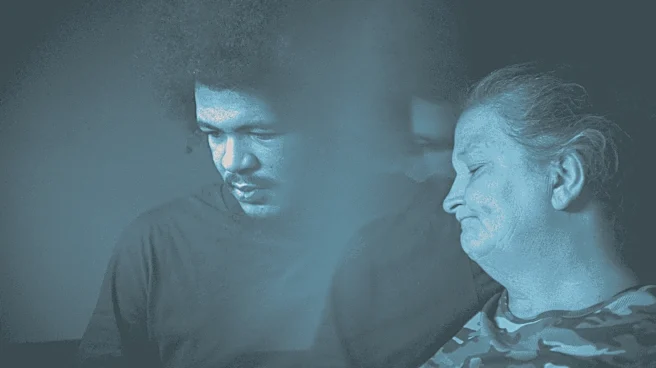




As a young Nat Arnold played at a new basketball court in his Greenville, South Carolina, neighborhood in August 2016, he overheard rummaging in the woods. When he turned to look into the neighboring area, he saw a clown, wearing white face paint and a red nose, peeping from behind a tree.
After he reported the sighting to his mom, Donna Arnold, she shooed him away. But when the family started hearing clanking chains, squealing and moaning outside their door later that day on Aug. 20, she raised her concerns to the Greenville County Sheriff's Office.
Law enforcement initially ridiculed her, and when they arrived at the scene didn't find any clowns. As more residents reported sightings, police officers began to patrol the neighborhood regularly,
with the property manager cautioning kids to follow the 10 p.m. curfew.
After spending three weeks haunting Greensville, the clown panic spread to two dozen other states, including Alabama and Pennsylvania. Videos of clowns charging at cars, walking aimlessly into open fields and clinging to buses with outstretched grins and bulging eyes began to inundate online feeds and websites. With many of the sightings happening in low-income, rural towns, it started to raise questions, including why these areas were targeted, who was behind the clown mask and should Americans be afraid?

"Clown Panic," a new Hulu documentary (streaming now), attempts to address this. The Ed Perkins project spends nearly 90-minutes breaking down the 2016 clown mania and its ties to school security threats, violence and a phenomenon called moral panic, or a concept that refers to a level of anxiety based on an exaggerated or false belief of danger.
"When that anxiety builds and builds and builds, it's like a pressure cooker and at some point, it blows," Perkins tells USA TODAY of moral panic surrounding the clown mania.
A decade after clown sightings haunted social media feeds and small towns, USA TODAY details the legitimacy of clown sightings and determines whether a clown panic will happen again.
When did the clown panic begin?
The clown craze first creeped into Greenville, South Carolina, as reports of uncanny clowns luring kids into the woods made headlines in August 2016.
Then, in Flomaton, Alabama, students reported receiving messages from a Facebook user named "Flomo Klown." The account allegedly made a terrorist threat in September 2016 using a gun emoji, prompting local schools to go under lockdown. Makayla Smith, the woman behind the clown-themed account, was later sentenced to five years probation.
In Reading, Pennsylvania, a man stabbed a 16-year-old boy, with a clown mask pushed above his forehead. Avery Valentin-Bair was convicted ofthird degree murder and aggravated assault in the stabbing death of Christian Torres and is serving a 22.5 to 50 year sentence.

The clown sightings rarely infiltrated "white picket fence" America. Benjamin Radford, the author of "Bad Clowns," tells USA TODAY that these instances occurred in disadvantaged communities because they're "less insulated" from social trends compared to major cities like Beverly Hills or Manhattan.
"It is significant that the original clown sightings began in a rural area," Radford says.
Pop culture and the internet's influence
During the 1980s,clowns reportedly kidnapped children in Arizona, New Jersey and several other states, according to a 1991 article from the Desert News.
But in 2016, the clown craze reached a fever pitch as social media blurred the lines between choreographed appearances and unnerving sightings. As the hysteria spread across the internet, "It" author Stephen King had to even issue a warning.
“Hey, guys, time to cool the clown hysteria,” King tweeted on X, formerly known as Twitter. “Most of em’ are good, cheer up the kiddies, make people laugh.”
King is partially at fault here. Film adaptations of his 1986 horror novel brought the clown Pennywise, who infamously lured Georgie into a sewer drain, to the big screen. While Ronald McDonald and Bozo the Clown presented gleeful portrayals of clowns, Art the Clown in the "Terrifier" franchise erased that. And the clown-masked antagonist Twisty in "American Horror Story" did little to encourage families to hire the trickster figures at birthday parties.
When was the last major clown sighting?
On Aug. 3, anIllinois teen wearing a clown costume stabbed a 78-year-old man at a East St. Louis, Illinois, bus stop. The 15-year-old was arrested and charged on Aug. 6 for the murder of John W. Allen, which state police called a "random attack."
Before his arrest, video of the teen had circulated online, including one where the boy, wearing a black and red clown getup, approached someone's home, peered into the Ring camera and whispered, "I'm looking for you."
Should I be scared of clowns?
The short answer is no. Although some people suffer from coulrophobia, or the fear of clowns, the American Psychiatric Association doesn't recognize it as a phobic disorder and most people can avoid triggers like circuses and entertainment that may feature a clown.
Radford, for one, has befriended a handful of clowns.
"They're hardworking professionals who try to do good and they're as annoyed as anybody about the clown panic because it sort of made their profession look bad," Radford says. "The bigger threat is somebody fearing clowns and firing a gun into woods, maybe shooting a homeless person or kids or whatever else, right? The much bigger threat to me is the fear."

The fear, not only originates from the news reports of terrorizing clowns and pop culture, but also because clowns, covered in white face paint and a polka dot suit, have anonymity. When it comes to who is behind the mask, Radford says examples include "bored teenagers," often in the South and the Midwest, or social media influencers putting on a prank for clicks.
The 2016 clown craze lasted for a couple months, before it petered out around Halloween. Although arrests discouraged people from dawning clown attire in subsequent years, Radford believes it doesn't signal an end.
"2016 was the big capital C, capital P, clown panic," Radford tells USA TODAY. "But these moral panics, they recur and they go on and on. So it would not surprise me at all if there is another clown panic."
This article originally appeared on USA TODAY: The truth about killer clowns – Should you be scared?