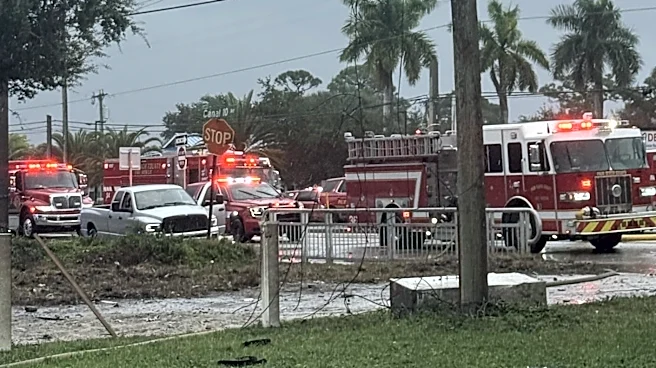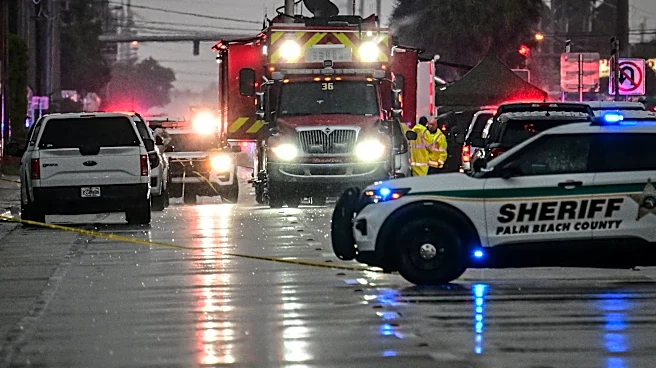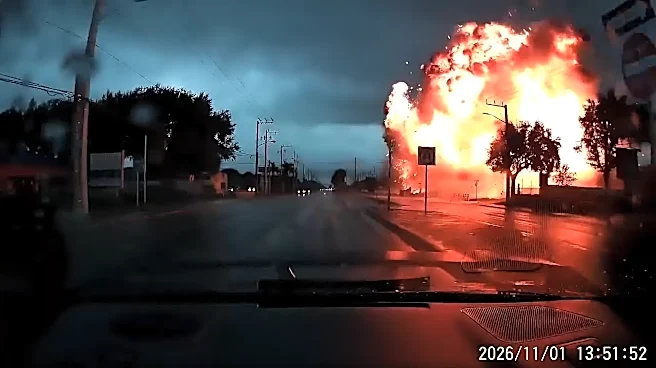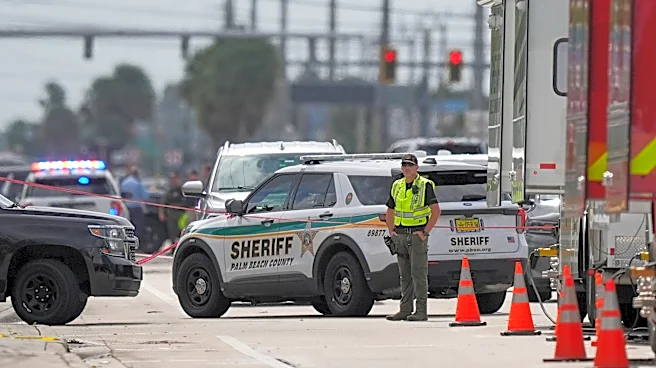







Federal investigators are hoping to finally assess the site where a business jet slammed into a South Florida community as the fourth day of the investigation into the deadly crash gets underway.
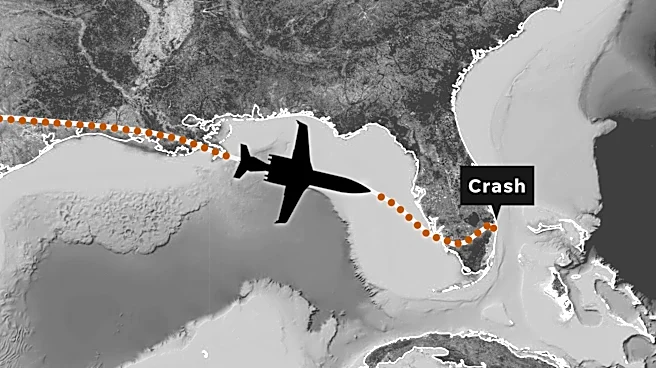
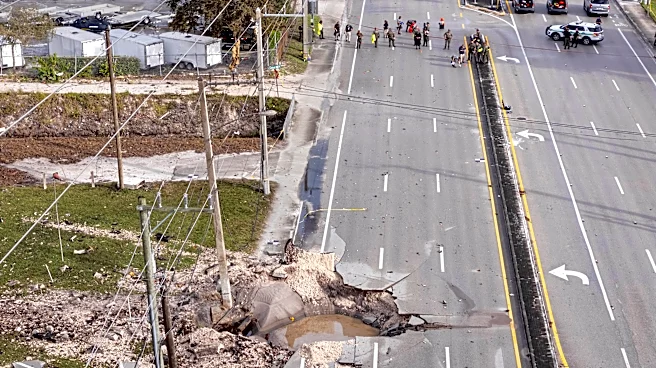
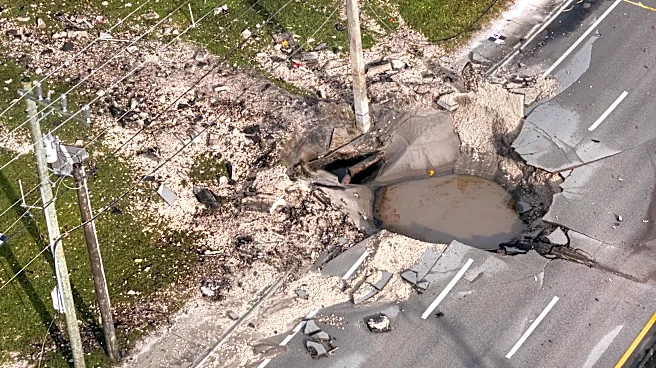
The Bahamas-bound Learjet 60 crashed in Palm Beach County on Nov. 1 as heavy rain and thunderstorms moved through the area, according to AccuWeather, causing the impact crater left behind to fill with water. National Transportation Safety Board member Thomas Chapman said at a news conference that investigators had begun to remove water from the crater and believed they will be able to access it on Nov. 4.
“We expect to find critical airplane components in the crater," he said.
Despite the initial progress, determining what caused the crash will likely
take time. The NTSB generally aims to complete an investigation within one to two years, according to its website, but certain factors can affect that timing.
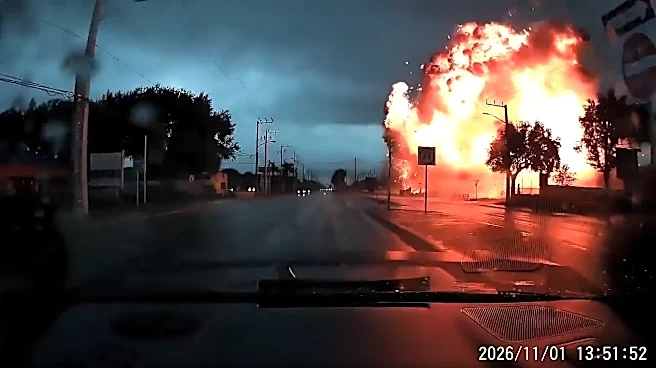
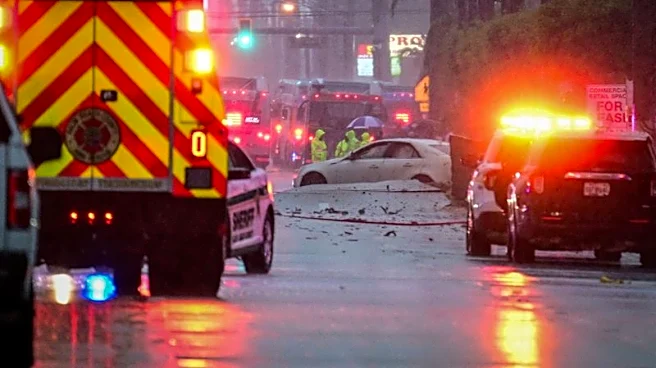
The fiery crash sent shockwaves through a nearby mobile home community, leaving residents scrambling to evacuate from their homes and wondering whether they were under attack. Witnesses described a thunderous boom that shook homes, briefly knocked out power and sent neighbors rushing outside.
A harrowing audio recording of one person in the cockpit making a desperate mayday call and another reciting The Lord's Prayer during the flight's final seconds has rocked the nation. About 35 seconds after the initial distress call, the final cockpit transmission came: "We're out of time."
In the days following the crash, loved ones identified the nine people killed on board as a Texas family of four and their nanny, a couple who were "full of joy and adventure" and two beloved pilots, sparking an outpouring of grief. The tragedy also sent questions swirling about what caused the flight crew to lose control of the aircraft and prompted some criticism of the pilots, which led members of the aviation community to caution against a rush to judgment.
"Let people investigate, learn, and share the facts," NASA Administrator Jared Isaacman said on social media. "Be respectful to those who perished and the families who carry their memories."
Here's the latest about the investigation into the fatal jet crash:
Minute by minute, what happened to the aircraft?
The NTSB said the Learjet 60 departed Austin-Bergstrom International Airport at 10:37 am ET and was headed to North Eleuthera Airport in the Bahamas when trouble began about two hours into the flight. Here's what happened in the plane's final moments:
- 12:47 p.m. The Learjet is at an altitude of about 35,000 feet when the crew reports “light clear ice that is manageable and moderate turbulence.” The crew says the outside air temperature is -47 degrees Celsius, or -52.6 degrees Fahrenheit.
- 12:48 p.m. The crew reports the aircraft is encountering precipitation and requests a new altitude of 37,000 feet. Air traffic control in Miami Center clears the aircraft to climb.
- 12:48:28 p.m. About 30 seconds later, the crew declares Mayday and says the plane is descending 10,000 feet per minute.
- 12:48:33 p.m. The crew says: “We are in an overspeed condition,” reporting a descent of 20,000 feet per minute. (An overspeed condition occurs when an aircraft exceeds its maximum permitted speed.)
- 12:48:53 p.m. “We’re going to crash into the ground,” the crew says.
- 12:49:08: p.m. “We are descending 22,000 feet and we are banking 60 degrees,” the crew says. (Banking 60 degrees means the aircraft is rolling steeply to one side.)
- 12:49:22: p.m. “We’re out of time,” the crew says. It is the last transmission from the aircraft.
- 12:50 p.m. The aircraft crashes.
All times are approximate. Aircraft position and flight data are from Flightradar24; communications and their approximate timing are based on Miami Center audio archived by LiveATC.net and reproduced in this timeline video.
Who were the victims of the Florida plane crash?
April Honnen, who works for East Coast Jets, identified Captain Jeff Gregory as the pilot. Honnen said in a statement on social media that Gregory worked for East Coast Jets in 2016 and 2017 "before pursuing other opportunities."
Family members identified Nathalia Filgueiras, 20, as the copilot. Giulia Filgueiras said her sister Nathalia wanted to be a pilot since she was 12, and "showed any girl could do what it takes," thePalm Beach Post, part of the USA TODAY Network, reported.
Family members identified the passengers as Adam Robinson, 45; his wife, Helen Sharp, 40; their children, Charlie, 4, and Emma, 2; the children's nanny, Anita Maria Cetina; and another couple, Rachael Reed and Charmi Fehr.
"We are deeply grateful to the first responders, investigators, and the Palm Beach County community for their care, and to everyone who has reached out with love," the families of the passengers in the crash said in a joint statement on Nov. 2. "Our hearts are also with the families of the pilots, who are grieving alongside us."
Investigation has uncovered 'very significant' evidence
The NTSB, the agency leading the investigation into the crash, began documenting the scene and combing through the wreckage of the aircraft in the wake of the crash. The search has already turned up a "very significant bit of evidence," which suggests the plane was breaking up before crashing, Chapman said during a press conference.
"Yesterday the majority of the aircraft’s left elevator was located in three pieces within a range of about 1.3 to 3.8 miles away from the accident site," Chapman said Tuesday. "Those items are being retained for analysis."
The elevator, he said, is a control surface located on the tail which controls the up and down pitch of the aircraft. Chapman noted that evidence also suggests the jet may have been out of control before the pieces fell off.
As the probe continues, another key item investigators are looking for is the cockpit voice recorder, also known as a black box. Chapman previously said records indicate such a device was installed on the aircraft at some point, but investigators don’t know whether it was still on board before the crash.
Chapman also told reporters weather conditions at the time of the crash will also be "a major concern of the investigation." He said the NTSB was working to allow displaced residents to return to their homes but did not specify when that could happen.
Contributing: Ramon Padilla, Jennifer Borresen, Stephen J. Beard, Veronica Bravo, George Petras, Natalie Neysa Alund, Christopher Cann and Thao Nguyen, USA TODAY; John Bisognano, Tom Elia and Arianna Otero, The Palm Beach Post
This article originally appeared on USA TODAY: A shocking jet crash leaves authorities searching for answers