





If Jenna Ortega ever enthusiastically shows you a stick, there's a meaningful life philosophy behind it.
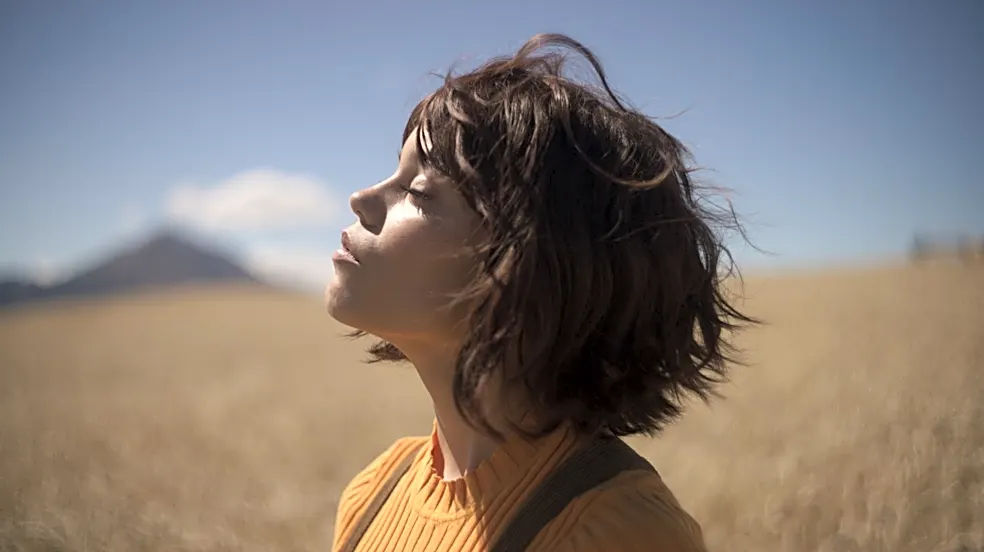
The "Wednesday" sensation plays a relentlessly optimistic robot in Taika Waititi's new science-fiction film "Klara and the Sun," in theaters Oct. 23, a role that allows her to show a completely different side of herself. Ortega, 24, is most closely identified with her dark, moody performance as Wednesday Addams, so much so that fans assume she's like that in real life. But there's a bit of Klara in her, too.
"I do like to freak out over really small things in my day-to-day life, because it's what brings me joy," Ortega tells USA TODAY. "It's important to be curious and excited in your environment. I may be walking and really love a stick and decide
I'm putting that stick in my bag, and I'm going to show my friends a stick that I just found because it's that important to me. That's something that I think Klara would do. You have to remember to be excited about things."

Based on Kazuo Ishiguro's 2021 novel, "Klara and the Sun" takes place in a future where realistic androids known as Artificial Friends can be purchased for companionship. One of these "AFs," the childlike, hopelessly naive Klara (Ortega), is taken home by a mother, Chrissie (Amy Adams), to befriend her dying daughter Josie (Mia Tharia).
Ortega, who made the movie between seasons of "Wednesday," found it a "refreshing and different" project. "My favorite thing about my job is stepping into different types of shoes, and seeing the world from a different perspective."
And Klara's shoes are about as far from Wednesday's as possible: The robot is bursting with positivity and hope, like the opposite day version of Wednesday's deadpan pessimism.
For the "Beetlejuice Beetlejuice" actress, a character who "so desperately wants to see the good in everything" not only felt important to put out into the world, but was joyful to embody. "It was quite exciting and sweet for me to live in that mindset for a few months."

But the part required Ortega to be hyperaware of what feelings she was conveying at any given time. After all, Klara's emotions technically aren't real and largely exist to be perceived by humans, so they always needed to be right there on the surface.
"'I'm making this face because I want you to see that I'm happy,' is sort of the intention behind everything, or 'I'm confused,' or 'I'm worried about you,'" she says. "It was weird because you really had to be aware of your muscles and movements in a way that I hadn't had to be. Usually, your job is to forget and try not to think about yourself."
When the trailer for "Klara and the Sun" dropped, some fans of the book objected to its tone, feeling the comedic style Waititi is known for from films like "Jojo Rabbit" and "Thor: Ragnarok" didn't fit the novel's contemplative nature. The director, though, argues that when adapting a book, "You've got to make it your own, and put it in your own voice." The novel's author also encouraged him to take liberties.
"Ishiguro talked to me early on in the process and said, 'Look, I've written the book, but it's a completely different thing to what a film could be. … It could actually be detrimental to a film if someone stays too loyal to the book,'" Waititi says. "So I got that freedom and permission."
Because Ortega's title character is an older model of AF, she spends the early part of the movie fretting over whether she'll be purchased. It's a feeling that may resonate with young actors hoping to land a life-changing role while wondering whether there's a place for them in Hollywood.
Ortega, a former child star who was acting for years before breaking out with "Wednesday," felt "a touch of that" when she was a kid. "A lot of roles for child actors are to play the younger version of somebody, or the daughter of somebody, and there weren't a lot of lead roles being given to people of color."
The same way Klara has no idea how the world works, Ortega was also very much an outsider, unaware of what to expect from Hollywood. "We knew nothing about this job and everything that it encompassed," she says. But while there were early struggles, Ortega sometimes wishes she could recapture the spunk of her younger self.

"Honestly, when I was a kid, I was quite cool in my confidence – very unwavering, very ambitious," she says. "I knew that things weren't easy for me, but I wasn't gonna let that get in my way. Sometimes, I look back at the things that I said, or the way that I carried myself, and it's like, 'You've got to get back to that.'"
While "Klara and the Sun" was published in 2021, some of the story's themes reflect more recent concerns about AI replacing human workers, including in Hollywood. Waititi is "concerned for the welfare of people who work in the industry" because of AI, noting "a lot of jobs are in danger."
Ortega agrees, but like Klara, she's staying optimistic.
"I would like to have faith in the masses that we continue to be invested and interested in other people – real people – and in creative, original ideas," she says. "At the end of the day, everyone is asking for more authenticity, and you're going to find that in each other, not the computer."
So should fans expect Ortega to continue gravitating toward roles that break from her "Wednesday" image? The Emmy nominee wants to be "intentional, moving forward, in making sure that there's some diversity in my roles," but adds that what's most important is "the character and the message," as well as the people she works with.
So horror devotees who were introduced to Ortega in bloody slashers like "Scream" and "X" need not fret: She hasn't renounced her scream queen crown.
"I still really love horror," she says. "I do!"
This article originally appeared on USA TODAY: Jenna Ortega on moving beyond her 'Wednesday' image and embracing optimism