







A chemical spill in Toledo, Ohio, released a hazardous material into the air, leading officials to issue evacuation orders and warn of a potential explosion risk.
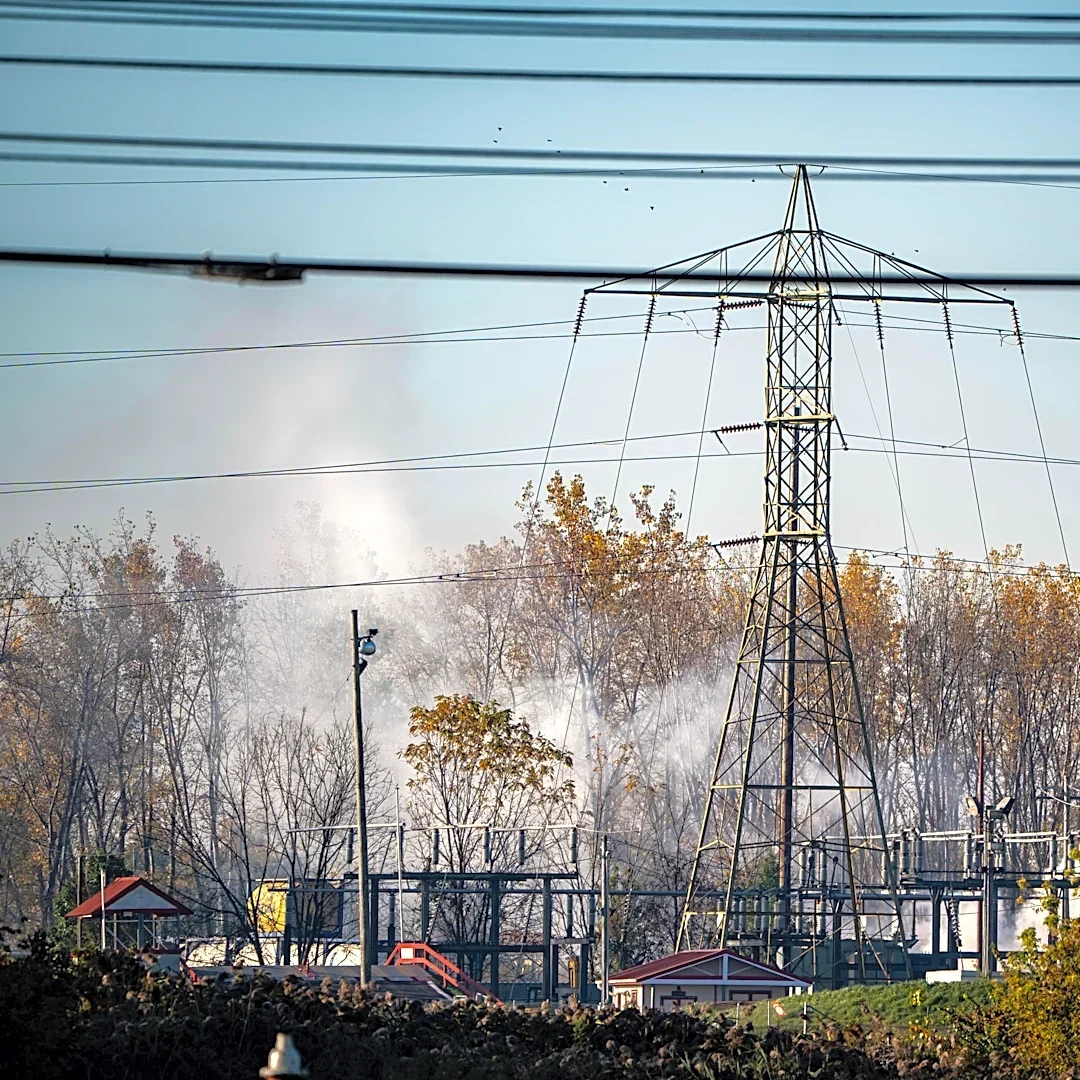
On the night of Oct. 20, a chemical tank at the MC Tank Transport terminal in north Toledo began leaking glycidyl methacrylate, an industrial coating product that is stored as a liquid but has been released into the air as a gas, Toledo Mayor Wade Kapszukiewicz said at a news conference on Oct. 21.
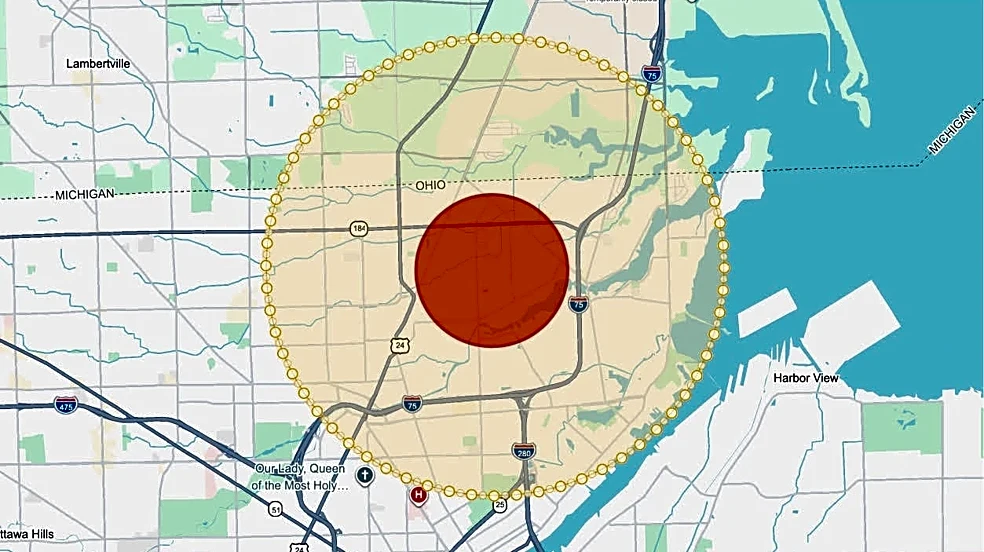
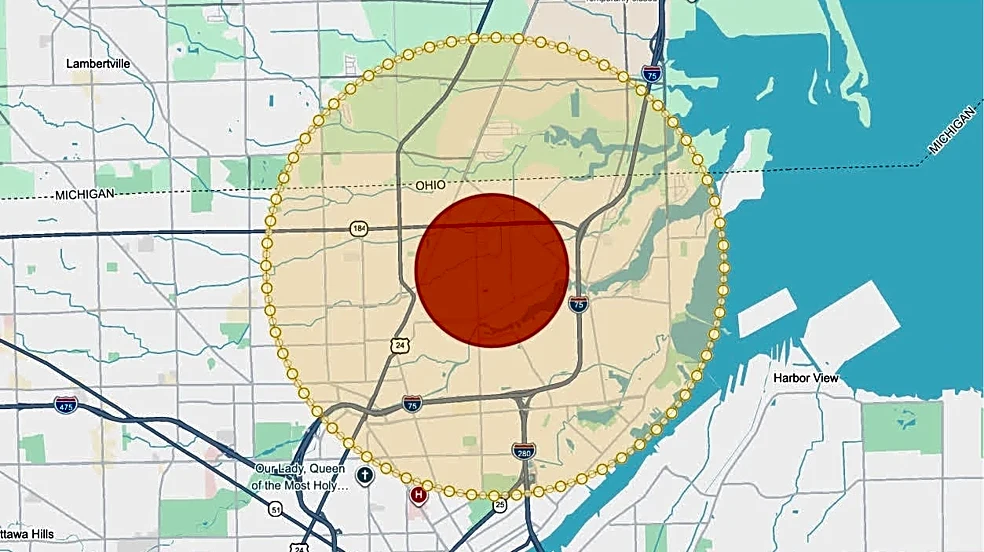
Officials issued evacuation orders for hundreds of residents in a 1-mile radius and a larger area received shelter-in-place orders. City officials said the chemical can cause irritation of the eyes, nose, mouth and skin, while overexposure could lead to more serious symptoms like nausea and vomiting.
Lucas County Regional Board of Health Commissioner Karim Baroudi said the chemical is toxic and a carcinogen in long-term exposure, but downplayed the immediate risks to nearby residents.
"It's mostly an irritant at this point," Baroudi said. "It's really toxic if you touch it, if you ingest it. Now we're trying to determine how much of a toxicity is in the air that people are breathing so that we can give better guidance."

Authorities warned that the damaged tank was still emitting the toxic chemical on the morning of Oct. 21 and has "the potential within 12 hours of the incident to be explosive," Kapszukiewicz said. As a result, crews had not yet approached the tank.
Here's what we know about the toxic chemical and its potential health effects.
What is glycidyl methacrylate?
Glycidyl methacrylate is an industrial chemical used to make certain plastics, paints and coatings perform better, according to a statement from MC Tank Transport Inc.
The chemical is stored as a colorless liquid and gives off a fruity odor, according to the National Center for Biotechnology Information.
The tank that stores the glycidyl methacrylate in Toledo has a 5,500-gallon capacity, the mayor said. MC Tank takes the chemical, stores it briefly at its Ohio terminal and then transports it, Toledo Fire and Rescue Battalion Chief Michael Posadny said. According to the company's website, it specializes in liquid bulk transport.

What are its health impacts?
Glycidyl methacrylate is most toxic in liquid form, city officials said. Touching the liquid can cause first degree burns and severe eye damage, according to the National Center for Biotechnology Information.
In Toledo, residents near the site are at risk of exposure to the chemical's vapors, which still carry potential health risks. Symptoms of exposure include irritation to the eyes, nose, mouth and skin. Overexposure can lead to headaches, dizziness, extreme tiredness, nausea, vomiting and respiratory issues, the city said.
Kapszukiewicz said residents beyond the evacuation and shelter-in-place zones may taste "something unnatural," but said that's not an indication of a toxic level of exposure.
"There is a difference, though, between an annoying or unpleasant taste in your mouth or smell, and a dangerous or toxic amount of exposure," Kapszukiewicz said. "There is no question that we're all kind of smelling and sensing something in the air. That doesn't necessarily mean that it is something that is harming us immediately. There are levels of exposure to something like this."
What should you do if you're exposed to the chemical?
Anyone exposed to the vapors of glycidyl methacrylate should leave the contaminated area and take deep breaths of fresh air, according to the National Oceanic and Atmospheric Administration and the U.S. Environmental Protection Agency.
Those experiencing symptoms such as mild eye, nose, throat or skin irritation should shower or rinse the impacted area and contact a medical professional, according to the City of Toledo. Those experiencing serious symptoms such as difficulty breathing, nausea, vomiting, dizziness or confusion should to go the emergency room or call 911, officials said.
Baroudi, the local health commissioner, said at a news conference that residents who experience irritation in their eyes or heavy breathing should "just take a shower for now."
Contributing: Jeanine Santucci, USA TODAY; Lauren Cohen, Akron Beacon Journal
This article originally appeared on USA TODAY: What to know about hazardous material released by Ohio chemical spill