







An international team of nutrition experts has released a global food pyramid for the first time – and it looks different from what Americans have been told to eat.
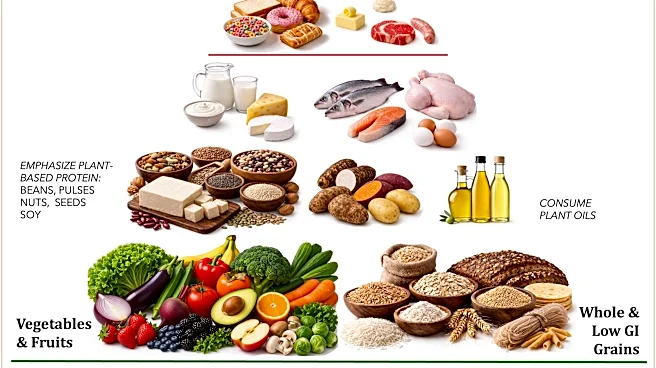
The International Food Guide Pyramid was developed following an analysis of dietary guidelines from Canada, Germany, Australia, China, the Netherlands, the United States and the Nordic countries by 22 "prominent nutrition scientists" from around the world. That, plus a review of more than 250 scientific publications, resulted in a food pyramid that highlights plant-based sources of protein and fat, limits animal products and stresses the importance of consuming the right kind of carbs.
This picture is very different from the one introduced by the U.S. Department of Agriculture under
Health and Human Services Secretary Robert F. Kennedy Jr. in January, which was based on "modern nutrition science" and federal health data, according to the agency.
“Despite what people often hear, there’s actually substantial agreement in nutrition science about the foundations of healthy eating,” Karen Della Corte, nutrition scientist, assistant professor at Brigham Young University and lead author, said in a news release. “We wanted to bring those shared principles together and translate an extensive body of scientific evidence into a coherent and practical food guide pyramid.”
See the international food pyramid

The pyramid, published online in the peer-reviewed journal Advances in Nutrition on Sept. 23, focuses on three fundamental pieces of advice.
1. Make plant foods the foundation of a healthy diet: The foundation of this pyramid is reminiscent of the past, with a focus on vegetables, fruits, whole grains, and legumes. It emphasizes plant-based proteins, but it does not exclude animal sources. Animal-source foods like seafood, poultry, eggs and yogurt are incorporated in smaller amounts.
2. Choose healthier sources of fat and protein: Poultry and fish are preferred over red meat, which research shows raises cholesterol and the risk of heart disease, and dairy is suggested in modest amounts. Suggested plant-based protein sources include beans, pulses, nuts, seeds and soy. Preferred fat sources include nuts, seeds, and, despite the popular push against seed oils, unsaturated plant oils. Unsaturated fats from sources like olive, canola, soybean, sunflower, peanut and other plant oils are preferred over animal-based fats, such as butter, lard, and beef tallow.
3. Prioritize carbohydrate quality: "Carbs" aren't a dirty word in this pyramid, but it does prioritize choosing the right ones. It suggests whole-grain, low-glycemic foods and carbohydrate sources rich in dietary fiber, intact plant cells and micronutrients, such as oats, barley, whole-kernel wheat products and brown rice. It also suggests limiting sugars from low-nutrient foods, such as soda or candy. Eat refined grains, red and processed meat, butter, salt and traditional "junk food" like chips and sugary sweets sparingly.
The authors said these general rules can be modified to fit different dietary restrictions, such as vegetarianism and veganism, and to reflect the location and culture in which people cook and eat.
International guidance versus RFK Jr.'s American food pyramid

The United States stopped using the pyramid model for dietary guidelines in 2011 when it moved to a visual that more closely resembled a dinner plate. The RFK Jr.-led Department of Health and Human Services returned to the familiar relic of the '90s and 2000s when it released new guidelines in January, effectively turning it on its head.
Grains, which were once the foundation of the suggested diet when the first pyramid was adopted in the 1990s, were moved to the smallest group at the bottom. Instead, the guidance focused on protein, dairy, fruit and veg and "healthy fats" as foods that should be eaten in abundance.
The new pyramid emphasized several foods historically recommended in moderation, specifically red meat, whole-fat dairy and trans and saturated fats. These categories align with the messaging RFK Jr. has favored as part of the "Make America Healthy Again" movement, which promoted beef tallowand pushed against added sugar.
The pyramid still capped saturated fat at 10% of your daily calories and suggested getting "healthy fats" from naturally occurring whole-food sources, such as avocado. It also limited sugar to 10mg per meal.
Recommendations around alcohol consumption also notably changed. Instead of an acceptable numerical limit on drinks per day, which had been up to one for women and two for men, it says simply to minimize consumption.
While several health organizations applauded some aspects of the new guidelines, such as an emphasis on more whole foods and fewer processed ones, some recommendations drew caution.
"Several aspects of the 2025-2030 Dietary Guidelines are poised to promote healthy diets and reduce disease risk," Karen Peterson, associate director of the Michigan Nutrition Obesity Research Center and chair of nutritional sciences at the University of Michigan's School of Public Health, previously told USA TODAY. "However, advocating consumption of red meat and high-fat dairy food without specific guidelines for portion size and servings can easily counter consumers' efforts to simultaneously keep energy intake from saturated fats below 10%."
These warnings were echoed by the new pyramid's authors, who said, "There is a major concern that certain dietary recommendations, such as those linked to protein prioritization and dietary fat, may promote dietary patterns associated with adverse cardiometabolic outcomes, increased environmental burden, and reduced affordability for large segments of the population."
This article originally appeared on USA TODAY: The first global food pyramid vs. RFK Jr.'s. They look nothing alike