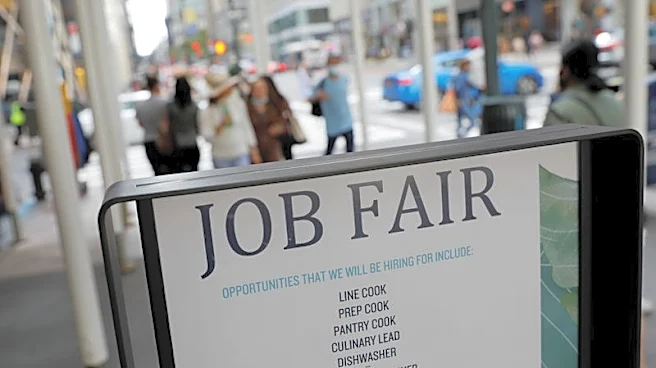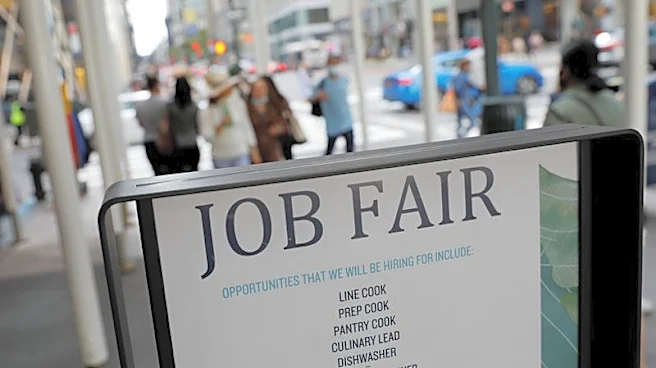







The U.S. unemployment rate ticked lower in July, a decline that would be considered good news if economists weren’t saying that it is falling for “the wrong reason.”
The unemployment rate is a function of how many Americans are looking for work but can’t find it. After holding steady at 4.3% for three months, it fell to 4.2% in June and to 4.1% in July. Pointing to a declining labor force participation rate, analysts said the unemployment rate was likely falling not because more people were getting hired, but because many had stopped applying to jobs all together.
After the Bureau of Labor Statistics’ July jobs report showed not only did the U.S. economy shed 23,000 jobs in July, but that the labor force participation rate fell further, those
concerns compounded.
“While the unemployment rate is falling, that is mostly for the wrong reason — not enough workers,” Fifth Third Commercial Bank’s chief U.S. economist Bill Adams said in a note after the report’s release.
While experts remain split on the reasons behind the departures, Adams previously told USA TODAY a sustained decline in the workforce is a troubling sign as it could slow U.S. economic growth.

Who is leaving the workforce?
In July, 264,000 people left the workforce. That’s after 720,000 left in June. Over the last year, 1.318 million Americans have made their exit.
As a result, the labor force participation rate fell to 61.4% in July – its lowest reading since February 2021, and if you exclude the lows seen during the COVID-19 pandemic, the lowest rate in five decades.
Over the year, participation is down across the board with a few exceptions, meaning many Americans of different ages, sexes and races are making the same choice to leave the labor market.
While it remained stable at 69.2% from June to July for men age 20 and over, that group’s participation rate is down from 70% in July 2025.
The labor force participation rate for women age 20 and over fell from 57.9% in June to 57.7% in July. It is down from 58.6% at the same time last year.
Teenagers’ participation also declined. The rate for those ages 16 to 19 fell from 35.4% in June to 34.9% in July, now down from 35% in July 2025.
Why are people leaving the workforce?
Because choosing to leave the labor force is a personal decision, there could be as many reasons for leaving as there are exits. But experts have some theories.
The first has to do with burnout. Following a year of historically weak job growth in 2025 which provided limited opportunities, some job seekers — tired of getting ghosted by employers or after several rounds of interviews with no offers to show for them — may have simply given up.
"That’s worth thinking about when you see people demoralized and not wanting to work," Michele Evermore, a senior fellow at the National Employment Law Project, told USA TODAY.
She added people may also be taking time away to acquire new skills, learn a trade or return to school as they feel employers' expectations shifting amid the rise of artificial intelligence.
Another theory is that shrinking labor force participation could be a result of workers rejecting return-to-office mandates amid high caregiving costs. A Catalyst survey earlier this year found some women left the workforce in response to such mandates when they needed to care for family members at home.
Additionally, older workers are retiring. The participation rate for employees 55 and older fell to 36.9% in July, marking a 21-year low.
“Immigration compensated for the aging of the workforce in the first few years of the post-pandemic expansion, but that’s not happening anymore,” Adams said in the note.
Reach Rachel Barber at rbarber@usatoday.com, follow her on X @rachelbarber_, and subscribe to her newsletter "Making More of Your Money" here.
This article originally appeared on USA TODAY: Unemployment rate is falling, but for 'the wrong reason,’ experts say