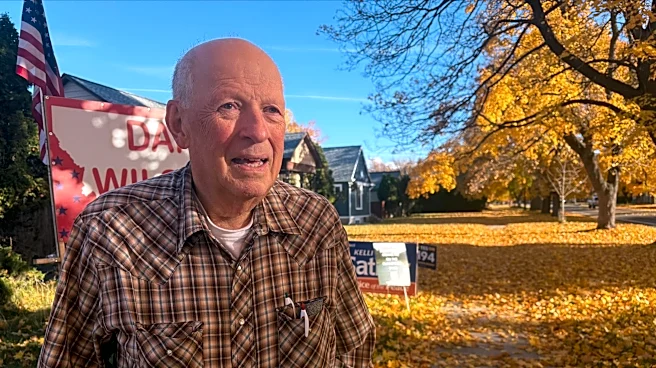




MISSOULA, Montana – Wally Congdon is done with Donald Trump.
The 69-year-old cattle rancher, a member of the Montana Cowboy Hall of Fame, voted for Trump in 2024 amid frustrations with the Biden administration’s immigration agenda. He also supported Rep. Ryan Zinke, a Republican retiring from Congress this year.
Two years later, turmoil in the Middle East has sent diesel prices soaring to record highs. Fertilizer costs have skyrocketed, too. The president's trade wars, including with neighboring Canada, are raging. And Trump has repeatedly moved against the wishes of many of his GOP allies to import more foreign beef, undercutting domestic producers like Congdon, who raises highlander cows about 30 miles east of his home in Missoula.
"We've had
enough of this crap," Congdon said. This fall, he wants to send a Democrat to represent him in Washington instead.
Independent-minded voters like Congdon are part of what has made the race for Montana's western congressional district unexpectedly competitive – and it's not alone. Similar dynamics are playing out in other congressional races across the country, putting into play red-state districts that Republicans earlier this year considered for months to be relatively safe bets.

While farmers and ranchers have historically been a reliably conservative voting bloc – and there's no indication that's fundamentally changing – there has been wide acknowledgment among the agricultural community that the Trump administration’s mercurial policies are taking a toll. Even if the whiplash has just a marginal impact in swing districts, it could make a difference in the midterms.
In Montana, Democrat Sam Forstag, a union leader and former smokejumper who has notched Congdon's vote, is in a neck-and-neck race against Aaron Flint, a Trump-endorsed veteran and conservative radio host. Montana hasn't elected a Democrat to the House since 1994, but in September the nonpartisan elections handicapper the Cook Political Report moved the district from "likely Republican" to "lean Republican." Earlier this month, the race became even closer when Cook shifted it to a "toss-up."
"I'm very depressed to tell you Montana 1 is listed as a toss-up," Republican House Speaker Mike Johnson told a group of Republicans at a Flint campaign event in the city of Bozeman last week.

In an interview with USA TODAY, Flint agreed that farmers and ranchers are hurting. He even broke with Trump recently, opposing his foreign beef import efforts.
Still, Flint argued, livestock producers were much worse off during the Biden years. He touted his endorsement from the Montana Stockgrowers Association, the state's most powerful ag lobby, and promised to loosen regulations.
"They know that I'm going to be somebody who’s going to have their back," Flint said.
Farmers facing 'ridiculous' prices
A convergence of issues is uniquely testing the loyalty of farmers and ranchers to Republicans this election cycle.
For one thing, Trump’s penchant for tariffs has hiked supply costs while threatening the export markets that producers rely on to make a living.
Steve Sheffels, a wheat farmer and the president of the Montana Grain Growers Association, said he hasn't bought a new combine since 2013. Trump’s steel tariffs have made replacing many pieces of equipment that people like him need more expensive.
"The price of parts at the store is ridiculous," he said.

Conflicts overseas have made life even harder lately in cattle country. The war in Iran has disrupted shipments through the Strait of Hormuz, a critical chokepoint for global oil markets. The regional tumult has dramatically raised the price of both fertilizer, which often requires natural gas to make, and diesel, the fuel on which America’s farms largely run.
Sheffels said a friend of his was paying about $3,500 a week just for fuel during the winter wheat harvest this year.
Trump's foreign beef fixation
It’s all happening as ranchers are already trying to recover from a yearslong period of shifting weather patterns, including severe drought, that have worsened pasture conditions and left lingering impacts.
As the overall U.S. beef and dairy cattle herd hit a 75-year low, prices went up, making groceries more broadly expensive for Americans. In hopes of making staples like steak and hamburger more affordable, Trump signed a decree in September to ease tariffs on 300,000 metric tons of foreign beef imports to be sold below market value. It followed a similar move in February, when he lifted tariffs on beef from Argentina.

Both decisions angered livestock producers and congressional Republicans alike.
Ben Peterson, a rancher in the roughly 100-person town of Judith Gap, Montana, said he likely lost about $5,000 due to the pricing pressure Trump's latest announcement put on the cattle market. Other ranchers told USA TODAY in August they, too, were losing hundreds of dollars per cow at the auction barn.
Peterson, a Democrat, lives in the eastern part of the state, where Montana's other Republican congressman, Troy Downing, is cruising to reelection. He was skeptical that the recent instability would push many ranchers to vote for Democrats.
Disillusionment with Trump, though, has clearly grown among livestock producers, he said.
"They're more likely to just sit out," he said.
A last-minute scramble

With the midterms in sight, Trump and Vice President JD Vance have been barnstorming the campaign trail in red states, including with trips to Montana.
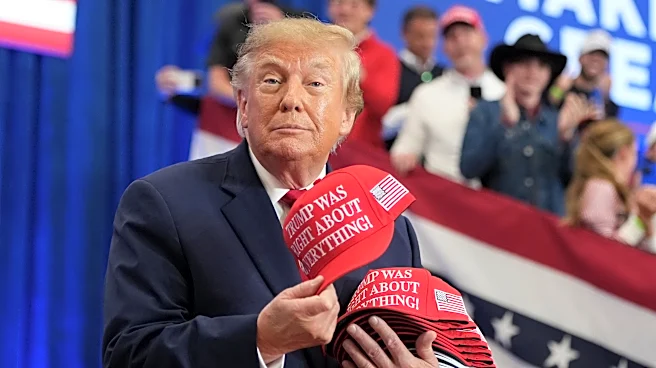
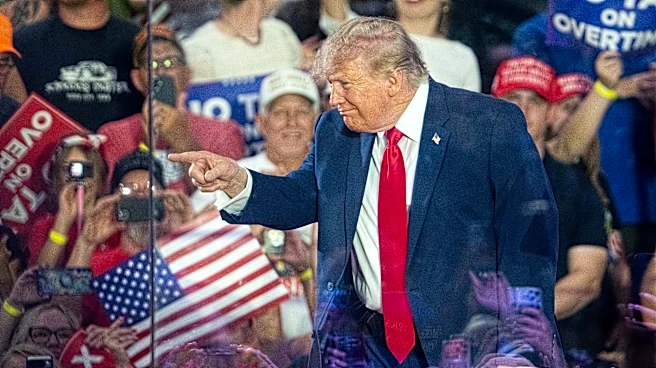
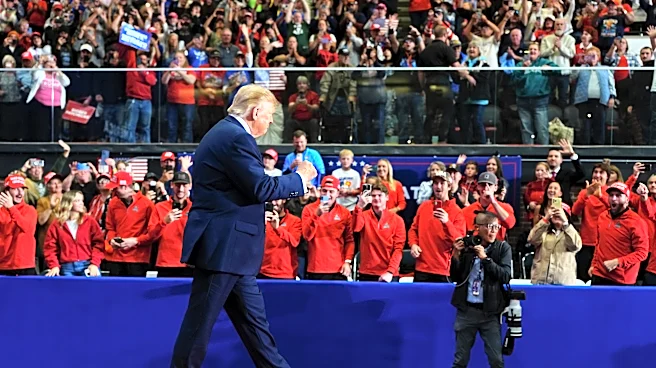
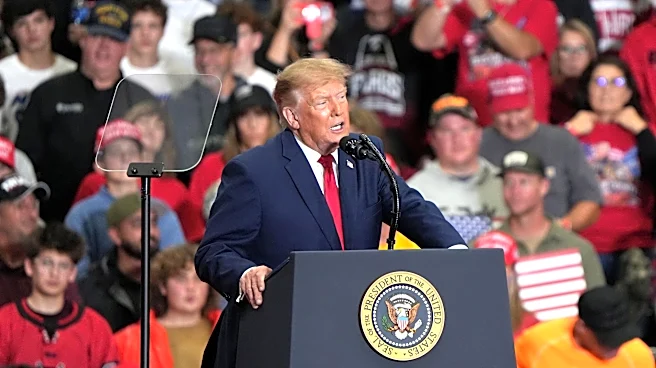
During an Oct. 14 rally in Bozeman, Trump stressed that he and GOP lawmakers passed legislation last year to eliminate estate taxes for family farms. He also suggested that Chinese President Xi Jinping promised he'd be "doubling up on his purchases from the farmers."
"We're never going to let our farmers get hurt," Trump said.
In recent weeks, the White House announced a flurry of new agricultural policies. Among them was an $8 billion Department of Agriculture program offering one-time payments to offset high diesel costs from this fall’s harvest. The president also penned an order to loosen rules on off-road, cheaper diesel. And top federal officials are reportedly working toward a detente in the trade war with Canada.
Walter Schweitzer, president of the Montana Farmers Union, likened some of those measures, however, to "pissing on a forest fire."
Zachary Schermele is the congressional correspondent for USA TODAY. Reach him by email at zschermele@usatoday.com and on Signal @zachschermele.02. Follow him on X at @ZachSchermele.
This article originally appeared on USA TODAY: A Montana rancher voted for Trump. But now he's had enough