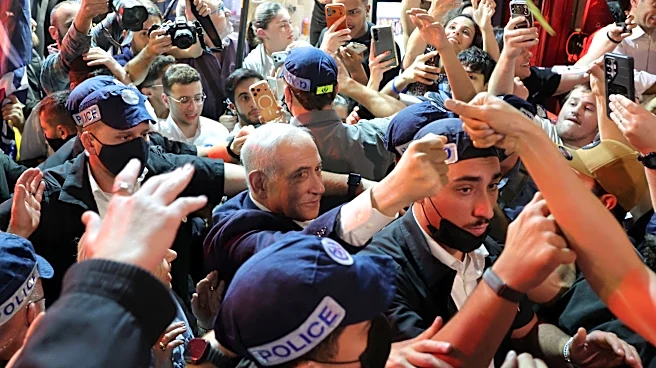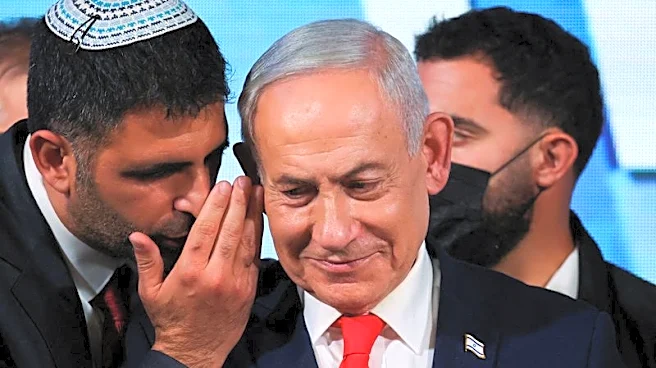







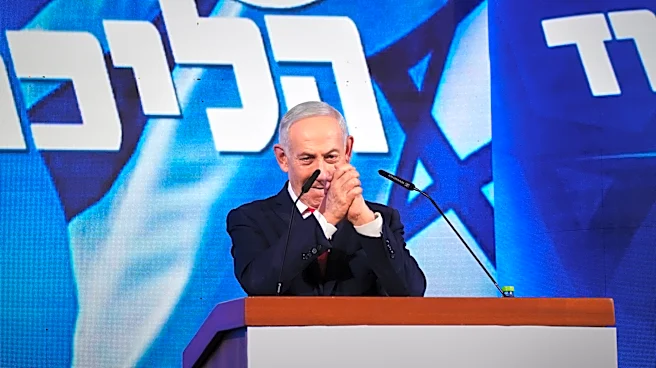
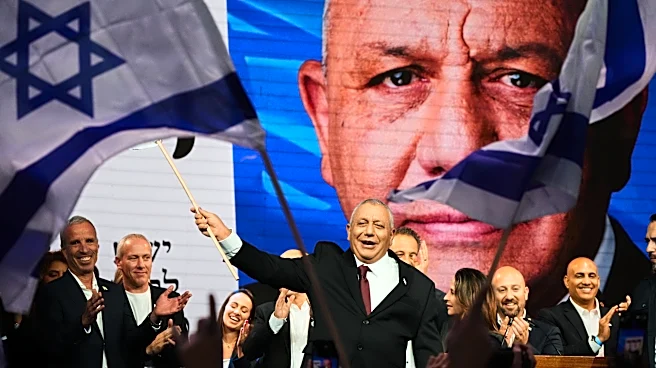


Israelis turned out in their highest numbers in decades on Oct. 27 to elect a new government, but the results have left the country in a stalemate.
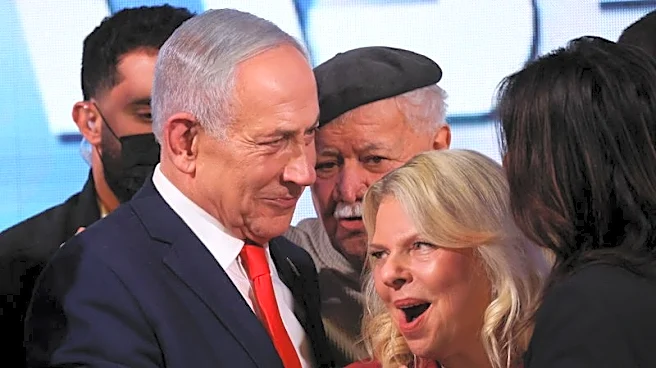
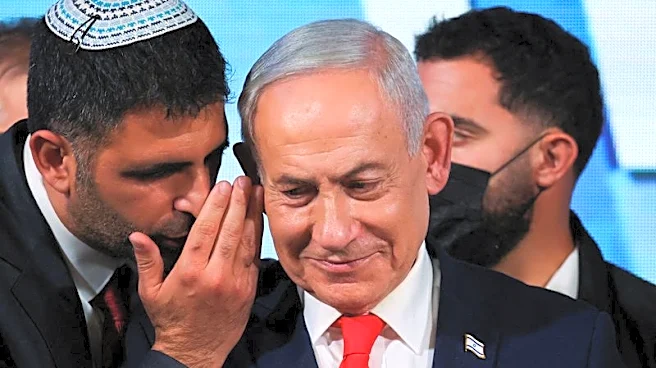
Prime Minister Benjamin Netanyahu’s governing bloc dropped precipitously, from 68 seats to 53, far short of the 61 needed for a Knesset majority. But the four opposition parties hoping to replace him are far from guaranteed to do so. They won 48 seats and would need the support of two predominantly Arab parties, which won a historic high of 19, to unseat Netanyahu’s government.
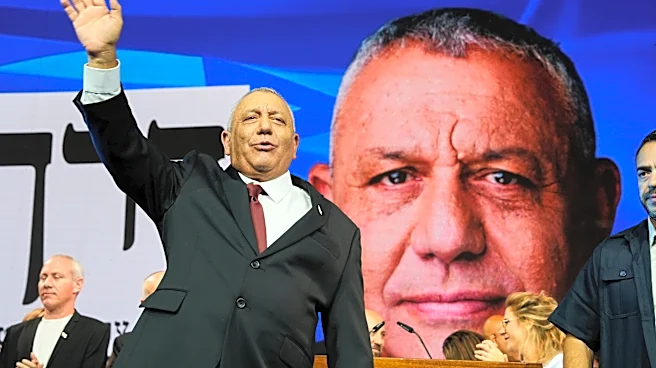
These opposition parties, led by former Israeli military chief of staff Gadi Eisenkot, now face a choice: They can form a government that relies on the votes of Arab and non-Zionist parties, which is particularly controversial
since the Oct. 7, 2023, Hamas attack; they can form a unity government with Netanyahu, on the condition that he sheds some of his ultra-Orthodox and far-right partners; or they can force a rerun of the election in the spring.
Why Israel's deadlock matters here

While the machinations of Israeli government formation may seem too esoteric or irrelevant to matter to most Americans, they should. Extended political chaos in Israel, and the makeup of whatever government eventually emerges, will have a real impact on American interests and foreign policy – not only on the trajectory of the U.S.-Israel relationship but also on the agenda of President Donald Trump and his administration for the rest of his term.
The United States has a wide-ranging set of goals in the Middle East: resolving the Iran conflict one way or another, stabilizing and safeguarding American allies and partners, and overseeing a transition in Gaza from Hamas rule to a new Palestinian administration. All of these goals require Israeli buy-in, which is far harder to get if Israel goes months without a new government and then heads into another election campaign.
With Netanyahu and his government still in place, that means a continued push from him for renewed military action against Iran to protect his hawkish bona fides with right-wing voters. It also means his continued block on arrangements designed to begin building alternative security and political institutions in Gaza.
Efforts across multiple administrations to better integrate Israel into the region will remain frozen so long as Israel has only a caretaker government. And it will be harder to get the United States and Israel on the same page on Lebanon and Syria if the Israeli government can’t afford flexibility while another election campaign is bitterly fought. Political instability in any American partner complicates U.S. foreign policy. In this case, it is unfolding in a particularly important partner, and in a particularly intractable way.
There is also the question of what a new government will look like once the deadlock is resolved, and that has important implications, too. The steep drop in Israel’s favorability and standing in the United States, cutting across both parties and different demographics, is primarily connected to the Netanyahu government and its policies.
Republicans are skeptical of Israel’s role in an increasingly unpopular Iran war that many see as only tangentially connected to core American interests, while Democrats overwhelmingly disapprove of Israeli military actions in Gaza and Israeli policies in the West Bank.
Congressional Democrats still bristle at the memory of Netanyahu’s 2015 address to Congress, aimed at derailing President Barack Obama’s nuclear negotiations with Iran. And they resent Netanyahu’s open embrace of Trump and Republicans, with barely a pretense of appealing to both sides of the aisle.
A Netanyahu lifeline would deepen the rift
Should the Israeli opposition fail to form a different government, or throw Netanyahu a political lifeline by joining him when he lacks the numbers to rebuild his coalition, it will accelerate the decline in the U.S.-Israel relationship.
With Democrats favored to flip the House in the Nov. 3 midterm elections, and possibly the Senate, a repeat of Netanyahu’s far-right government – whose prospects improve if the election is rerun – will mean constant friction over what Israel’s own security services have called Jewish terrorism against Palestinians, Israeli settlement policy that is de facto annexing the West Bank, and maximalist Israeli military positions in Gaza, Lebanon and Syria – not to mention the deep disagreement over strikes on Iran.
A unity government with Netanyahu as prime minister might take a slightly softer approach on some of these issues, but keeping Netanyahu as Israel’s face to the world will continue damaging Israel’s standing in the United States.
The tight relationship between Trump and Netanyahu masks the real debate over Israel churning in the Republican Party, and Israel’s standing among Democrats has never been lower.
The U.S.-Israel relationship is important to both sides. Israel’s reliance on the United States is obvious, but the United States benefits in many arenas, from military coordination and intelligence sharing to cooperation on technical and scientific innovation.
If the relationship erodes to the point where antagonism rather than friendship becomes the norm, both countries will pay for it. That is why Americans should pay close attention to how Israel’s election gets settled.
Michael J. Koplow is the chief policy officer of Israel Policy Forum and a senior research fellow at the Shalom Hartman Institute of North America.
This article originally appeared on USA TODAY: Why Israel's messy election should worry Washington | Opinion