








Energy costs have been steadily increasing over the last decade, with even sharper price hikes within the last few years. Government data shows a 23% upswing in electric rates since 2022, with 5% of that rise coming within the last year. With pricing now at 18.34 cents/kWh, homeowners are prioritizing savings on utility costs wherever they can get them.
One way to do this is by installing a smart thermostat in your home. With plenty of Energy Star rated options from numerous retailers, you'll be able to start saving in no time. Many of these products even offer relatively easy DIY installation if you have compatible wiring. Whether you're buying a new HVAC system or are simply adding this energy efficiency measure on, you can stand to save 8%
or more on annual expenditures.
See our breakdown of approximate dollar amounts and reasons why you'll save with this upgrade here.

Google Nest Smart Thermostat
This low-profile smart thermostat offers voice control via both Google Assistant and Alexa, and comes with efficiency monitoring and smart scheduling options.
Save on a Google Nest Smart Thermostat
What is a smart thermostat?
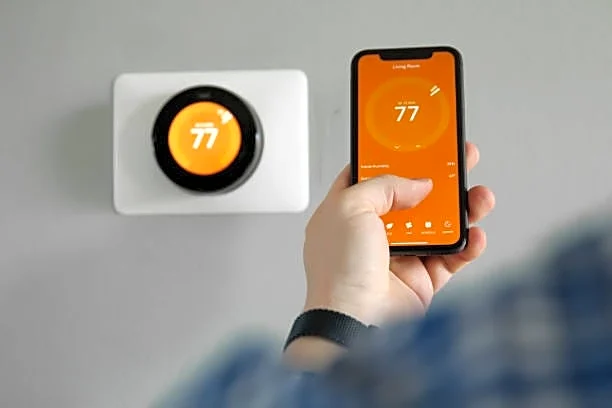
Smart thermostats are Wi-Fi integrated devices that regulate temperatures in your home. They can be used to lower energy expenditures while you're away, manage temperature preferences relative to time of day and home occupancy, and monitor your usage throughout each month.
Energy Star certified models from vendors like Ecobee, Honeywell, Amazon and Google offer versatility and mobile app operation for remote connectivity and efficient home use. You'll be able to set your own schedule for when you'll be away, remotely operate from your phone, program weather-responsive temperature adjustments and more to reduce wasted electricity, gas or oil.
How can a smart thermostat save you money?
Simply put, you don't need to have your home at the optimal interior temperature 24/7, 365 days a year. Continuously operating your HVAC system between 68 and 74 degrees Fahrenheit can place strain on your central air conditioner, heat pump or furnace, and lead to a premature replacement. A smart thermostat can crank up the temperature (or lower it) depending on settings you enter, or on predictive pattern recognition for home occupancy.
Check prices on smart thermostats
Depending on your home size and system type, a full replacement can cost anywhere from $6,000 to $35,000 or more, with different home sizes falling into the following ranges:
- 1,500 square feet: $6,000 to $10,000
- 2,000 square feet: $7,000 to $12,000
- 2,500 square feet: $8,000 to $14,000
- 3,000 square feet: $9,000 to $16,000
A heat pump handling both heating and cooling needs typically lasts 10 to 15 years, while a furnace lasts 15 to 20. Given the generalized price points outlined here, anything you can reasonably do to reduce strain on these units is a positive and can save you a great deal long-term.
Your potential savings with a smart thermostat
Your exact savings will depend on your climate zone and existing energy expenditures throughout the year. If your home is well-insulated with new fully-sealed windows, your percentage saved may be comparable to those in less energy-efficient homes. However, you might not notice it immediately since the dollar amount per month could be far lower.
We reached out to Elizabeth Shavers, the General HVAC and Plumbing Manager at Oncourse Home Solutions for her thoughts on smart thermostat effectiveness. "If you've got drafts around windows and doors, poor insulation or blocked vents, the HVAC system may still have to work harder than it should, regardless of what thermostat you're using," she said. While they're a good measure to save money and energy, they may not help if your home has other efficiency-related issues.
We used Energy Star's own savings calculator to get some annual price reduction figures for a standalone smart thermostat installation for varied system sizes. Note that this calculator is basic and does not take other factors like home age, ceiling height and insulation type or R-value.
- 1-ton heat pump: $10 in annual savings ($160 over the system's lifetime)
- 2-ton heat pump: $30 in annual savings ($320 over the system's lifetime)
- 3-Ton heat pump: $40 in annual savings ($500 over the system's lifetime)
- 4-Ton heat pump: $60 in annual savings ($660 over the system's lifetime)
If the above savings seem insignificant, the same calculator yielded an estimated figure of 460 pounds of greenhouse gas eliminated per year when a smart thermostat alone was installed on an existing 4-ton system. This can add up to a significant impact per household if your primary concern is minimizing your environmental impact.
Available rebates
Additionally, Energy Star rebates are available for homeowners who make the switch. These range from point-of-sale rebates of $50 to $75, to $200 and up rebates if you use specific licensed contractors for installation. These often come with specific purchase requirements, which you can examine via Energy Star's rebate search tool. Many of these rebates are also location-dependent.

Features available with smart thermostats
Many modern home upgrades trend towards convenience, and smart thermostats are no different. Shavers once again spoke on this product range, citing smart scheduling as a standout feature: "You can set the thermostat to lower the heat when you're sleeping or away, then bring it back up before you wake up or get home. That helps keep the temperature more consistent without having to constantly adjust it yourself."
Here are the stop features customers love:
- Smart phone control: Smart phone integration and available apps from most manufacturers make it easy to monitor your home and temperature while you're at work or on vacation.
- Geofencing: Many of these products can automatically switch to an energy-saver mode when you (and your phone) have exited a defined perimeter around your home.
- Smart scheduling: Through an app, or through the unit itself, you can program your HVAC system to reduce output during off-peak hours or when you're not at home.
- Self-programming: Some thermostats will program temperature changes on their own after compiling your thermostat adjustment habits to reduce energy use while you're away or sleeping.
Some of our favorite smart thermostats that are under $100
I've had a Google Nest for two years, and love how easy it is to use. We keep in on a heat and cooling cycle that keeps our home comfortable with little effort. When both my partner and I are away, it goes into eco-mode and saves us money on energy.
If you're in the market for some energy savings this year, we've got a few options that may pique your interest. Here are some of our top picks. At these prices, combined rebates and savings could make purchasing a smart thermostat a wise financial decision.

Honeywell Home RTH9585WF1004
This smart thermostat from Honeywell is Amazon Alexa compatible, comes in many different colors and options to make saving energy easy.
Save on a Honeywell smart thermostat
This smart thermostat from Honeywell is one of the most-reviewed options we could find, with more than 20,000 individual reviews averaging a 4.3 out of 5-star rating. It allows homeowners to pre-set temperatures for all hours with integrated weather forecast view through the large touchscreen.

Sensi ST55 Smart Thermostat
Sensi's smart thermostat comes with an easy installation process and guide, and is ready to run with many existing HVAC systems right out of the box.
Save on a Sensi ST55 smart thermostat
The Sensi ST55 comes with a three-year manufacturer's warranty and works well with most systems. It advertises energy savings of up to 23% using its collection of smart scheduling features, and can provide real-time data on HVAC unit efficiency.
Google Nest Smart Thermostat
This low-profile smart thermostat offers voice control via both Google Assistant and Alexa, and comes with efficiency monitoring and smart scheduling options.
Save on a Google Nest Smart Thermostat
Google's smart thermostat offers integration with Android and iOS, and has an easy installation process in most cases. With this option, you'll be able to monitor system efficiency and control your home temperature no matter where you are.
This article originally appeared on USA TODAY: How much does a smart thermostat save? We crunched the numbers
Our editors independently choose our recommendations. Some content is produced with paid support from a third party, however our editorial decisions remain independent. If you buy through our links, the USA TODAY Network may earn a commission. Prices and availability may change.