




COLORADO SPRINGS, CO – Could we die?
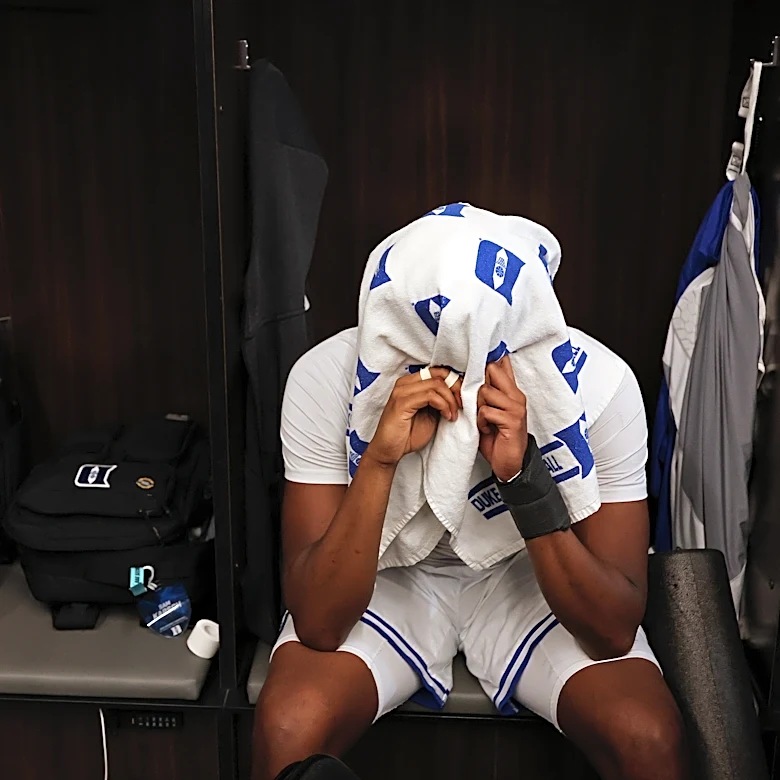
The question represents, according to Deborah Gilboa, a family physician and parenting and youth development expert, how our brain responds to any change. It’s trying to keep us safe.
It does so, she says, whether we hear a loud noise coming from a different part of the building, or we have just been named captain of our soccer team.
Stress can certainly be harmful. But Gilboa says it’s a tool we need not fear.
“Anybody who's ever tried to get a middle schooler who was uninterested to care about their academics knows that too little stress is also damaging,” says the mother of four sons (ages 18 to 24) who has been a comedian and become a nationally known public speaker. “And so, how do we help kids find their optimal
range where the pressure that they feel is aiming them towards the thing that matters to them and encouraging them to behave in really admirable ways without harming them?”
In one of her talks, she pointed to a time she spoke to 1,500 parents in a wealthy school district who acknowledged to her they had chores growing up. Four affirmed they gave their own kids chores.
Sound familiar?
“When I ask parents why, and I do, all over the country, they tell me kids today are too busy,” she said. “They're working their tails off on classes, and teams, and clubs, and groups, trying to excel at 100 different things. And as adults, we're willing to do whatever we can to help facilitate those goals. We drive them everywhere. We type their papers, help with research, buy them anything that they or we think might possibly increase their chance at success. We solve every problem. We bulldoze over every obstacle, and kids accept this as the natural order of things. But there's something else happening. …
“Are we, as a society, allowing students to take the path of least resistance towards success? Yes, we are. But kids deserve more accountability, and frankly, more respect than that.”
Gilboa hosted a panel earlier this month at the TrueSport Talks, held at the U.S. Olympic & Paralympic Museum, about social media pressures confronting young athletes. They’re caught up in today’s rat race of constantly putting themselves out there. A theme of the talks, which brought together sports figures, coaches, administrators, medical professionals and others to discuss mental wellness, was understanding the pressures they face.
However, we want our young athletes to learn to manage those pressures, not avoid them.

“Pressure is inevitable for our athletes, and also for coaches and ADs and other people that work with athletes, parents even,” says psychologist Kevin Chapman, who has worked extensively as a mental performance coach for athletes.
But, he posed, what do we do with it? USA TODAY Sports drew from Gilboa, Chapman and Olympic athletes to help us understand stress and how we can better control it to get more out of our athletic performances.
What is resilience and how do we build it?
Gilboa defines resilience as the ability to navigate change toward a positive goal. It’s something we want for our kids without having to make them suffer to get it.
The good news, she says, is that we don’t.
“You have to talk about, ‘What do you want? What are your goals?’ ” she says. “And sport is an incredible place for kids to do that. And to be fair, so is theater, or choir, or anything where you join a group of peers with an adult who's in charge, and you work towards a shared goal. But in the context of sport, you also have to put up with an amazing amount of discomfort. And that's really valuable.”
She says we can discover that stress isn’t the enemy, but the key to resilience.
How do we manage stress? Think preventative care, not triage
The first step, Chapman said during his presentation at the TrueSport Talks entitled “The Modern Pressure Playbook”, is noticing it.
“Many athletes that I've talked to believe their coaches haven't set up a culture where they’re safe to even say how they’re feeling,” Chapman said. “So they suppress it, which does what when you suppress it? Backfires, and now all of a sudden, we have a bigger problem than what was intended.”
The first step in this playbook is to notice. Chapman says you can't regulate what you haven't noticed. Acknowledge how you’re feeling without judgement by sitting on a bench or chair for 30 seconds before practice. It might help us with an exam or job interview, too.
If we’re the coach, make time with our players for a quick check-in. They don’t need to change anything, but just follow your instructions.
The athlete can turn the volume down on that emotion by naming it to himself or herself: “I’m anxious,” “I’m frustrated,” “I’m angry.” The last two are not the same, Chapman says. Frustration is directed toward yourself, while anger is directed toward a source.
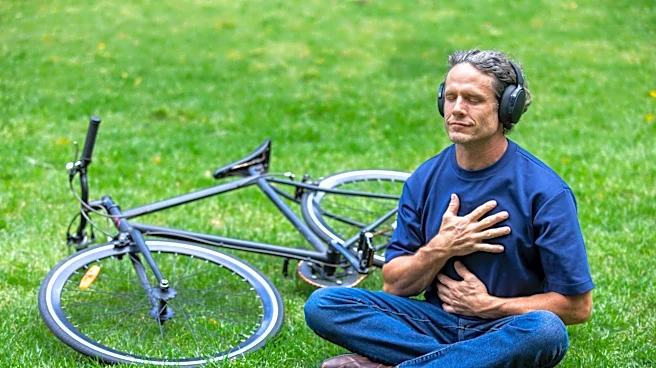
And once we name, we can reset. To reset, take one slow breath in through your nose for four seconds and out through your mouth for six seconds. Pick a word that will be your cue word to help lock you in: calm, next, steady. And then think about the next play. Practice it so it’s automatic in pressure situations.
We can then refocus with self-talk to bring attention back to the next controllable action. Be realistic. Don’t say you’re the best player in the league if you’re not, but tell yourself you’re a good shooter. And come up with a repeatable action – a ball bounce or two before a foul shot, a clenched fist and release – that helps lock you in.
After we play, we reflect. Take a couple of minutes to find one thing that went well (communication on defense) and one thing to practice next time (cutting down on turnovers). A parent or coach can convey this sentiment in postgame talk.
Manage distractions: Remember, stress isn't the problem; our response to it is
We can lower our stress levels by limiting exposure to our phones and social media use. We also can acknowledge a point Gilboa and her TrueSport panel made that such technology is an important part of our lives.
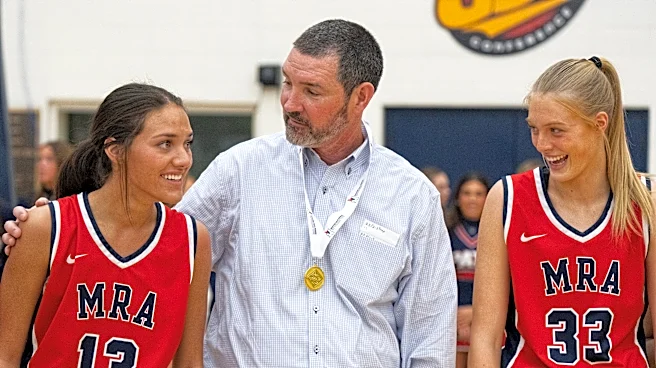
During their session, she asked University of Colorado-Colorado Springs basketball player Mya Wilson if it was realistic for a high schooler to say “no” to being online.
“Oh, I don't believe so,” said Wilson, a senior guard, “and I believe that if they did make that choice, it would probably send them into an area of what feels like pretty bad isolation. I feel like sometimes I've tried to step away from social media at a time when I felt that I needed it. And then you go to talk to your friends and it's like, what do we even have to talk about? So it's a choice that would affect something very important in your life and would probably send you to an uncomfortable place to be.”
Instead, limit your interaction around social media in and around sports events. Larissa Mills, a mental performance coach who directs the London, Ontario-based Mental Game Academy, prohibits athletes under her care from using their phones two hours before a game or practice and one hour before bedtime.
Otherwise, we can get distracted from our performance, even “tank” it, she says.
“Social media makes us compare ourselves to everyone else online,” Mills says.
But, Wilson says, we can use social media as a break, too, perhaps doing it with your teammates to convey the shared experience of a practice.
As parents, we can play an active role in our kids’ social media experiences without being critical of it.
Gilboa uses a four-step acronym (TEAM) to have a conversation with athletes.
“T” is to take a minute before you post or respond to a post. There is power in our pause, and it builds inside of us the longer we wait. Gilboa says our reaction may be correct, but it may not serve us well to react in that moment. Or our reaction might make us more vulnerable or set us up for criticism.
“E” is to evaluate it. Gilboa says online comparison comes externally, but then starts to live in our heads. Ask yourself: Is it accurate? Is it true? Is it worth your time? Do we care? Is it even real?
“A” is acting on it. Ask yourself: What did that person do to earn having influence over you? Is this right? Is this useful? Is this helpful?
“M” is message a trusted adult. Show them a screenshot of it. Or just tell them, Gilboa says, “social media is getting the better of me today.” Walk them through your thought process for posting. Are you acting according to your values? Are you acting according to your goals?
Get enough sleep: It's part of an athlete's development
Former Olympic gold medal cross country skier Jessie Diggins says at 9 p.m., the “do not disturb” on her phone automatically turns on until 7:30 in the morning.
“If you want to reach me, you're gonna have to call three times in a row,” Diggins said at the TrueSport Talks. “And I think, well, that is sometimes logistically challenging, (but) it has helped me sleep better.”
High-level athletes will tell you how closely sleep can be tied to their athletic performance. We can look at it as the beginning of our next day, and how it will unfold.
Michele LaBotz, a physician who has a background in pediatrics and sports medicine, presented data on elite youth tennis players who showed an 18% decrease in accuracy of their serves and 24% in their backhands after one night of restricted sleep (5 hours).
She also presented in her talk, “Wired and Tired”: The Mind-Body Cost of an Evolving Sports Landscape,” that college basketball players had a 9% increase in free throw and 3-point percentage when they added more sleep.
Sleep, according to LaBotz and her co-presenter, Jeffrey Durmer, a systems neuroscientist, neurologist, and sleep medicine physician, has an almost universal effect on not only executive function but emotional and psychological health.
“Sleep is the number one recovery tool,” Maxim Naumov, a Team USA Figure Skater, said at the TrueSport Talks. “And I forgot about that at times and I had to remind myself that it is so crucial and important. When I read, that makes me fall asleep, too. And that's a much healthier way than being on my phone. And I was able to be intentional with where I placed my attention.”
If we don’t get 7 to 9 hours of sleep per night, LaBotz and Dermur said, we can go into what’s known as sleep deficit or debt, when the brain gets more tired.
In short, you make a deposit into your sleep bank if you get a good night’s sleep or extra sleep. But if you don’t get enough sleep, you make a withdrawal.
However, LaBotz says, one hour of extra sleep per week (shown in research done in a high school population) can be helpful in reducing your risk for physical illness.
Not sleeping well potentially affects your physical and mental well being.
“You try to sleep on a consistent schedule for a week after not doing that, you’re gonna feel like a million bucks,” Naumov said.
Make efforts to succeed about the team, and about broadening yourself outside of sports
Gilboa has found, through her experiences as a mother and personal ones, that it’s often not how much we and our children take on that causes stress, but how we handle the stress.
We know our kids better than anyone, and we can observe them, in and out of adversity, to see how they are handling their lives before we interfere. Be a sounding board first and simply ask them how they are doing.
When they are playing sports, encourage them to set team goals over individual ones, which can decrease the pressure they put on themselves and increase their self worth.
She says one of her sons was in the military, and one of the guys in the unit, after a difficult day, made an offhand comment about, “Well you guys did great, but I didn't.”
“And everybody in the unit was like, ‘No, no, no, What was that about? Stop and talk about it,’ she says. “These are 21 year old guys.”
If you are a coach, use messages about process – one thing we did well, one thing we need to work on – whether your team wins or you get blown out.
As parents and coaches, operate with the knowledge that every athlete’s career will end at some point, but what we’re teaching can help them well beyond that moment.
“When you are the soccer player, or you are the runner, and that's how the people in your church know you, and in your school, and that's your whole identity, as soon as you're benched for a game, or you're out for a season or you're done, you don't know who you are,” Gilboa says. “That's a major issue that happens.
“So what adults need to do is not try and diminish kids’ sports identity. It's helped them make sure that they're raising their other identities to match it. Who are they as a student? Who are they as a community member? Who are they as a family member? So that people know them as three dimensional people.”
Steve Borelli, aka Coach Steve, has been an editor and writer with USA TODAY since 1999. He played baseball in high school, rowed in college and spent 10 years coaching his two sons’ baseball and basketball teams. He and his wife, Colleen, are now sports parents to a college and high school baseball player. For his past columns, click here.
Order his "Youth Sports Survival Guide" for athletes and parents here.
Got a question for Coach Steve you want answered in a column? Email him at sborelli@usatoday.com.
This article originally appeared on USA TODAY: How do we push back stress in youth athletes? Experts explain