






President Donald Trump says he will send $5,000 dividend checks to every adult in America if his Republican party retains full control of Congress in the midterm elections.
Economists warn, however, that a deluge of $5,000 checks could trigger unintended consequences for American consumers, including higher prices and steeper interest rates.
The more fundamental question is whether Trump and Congress would seriously consider dispatching $1.3 trillion in free money to American consumers.
The president is “promising something that almost certainly can’t be done, from a policy and political perspective,” said Garrett Watson, vice president of federal tax policy at the nonpartisan Tax Foundation.
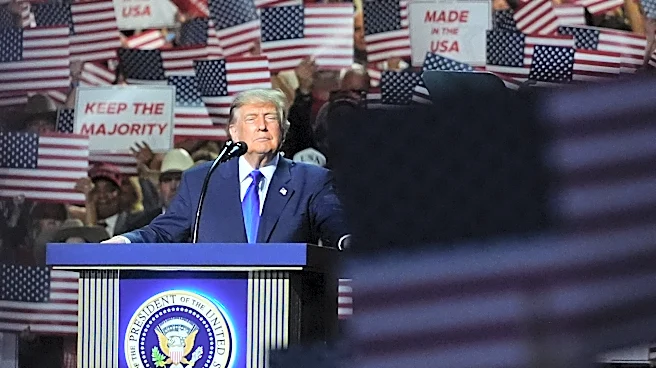
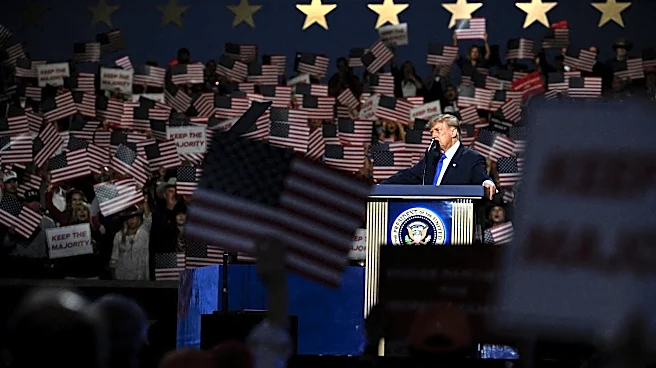
At the first-ever Republican midterm convention in Dallas,
on Sept. 9, Trump pledged that if the GOP retains control of the House and Senate in the November elections, he will issue $5,000 dividends to every American adult.
“If the Republicans win, you win with us, and you get $5,000. It will be called the Trump dividend,” Trump said. “Now, all we have to do is win.”

Will Trump really send out $5,000 dividends?
But some financial experts voiced skepticism that Trump’s pledge was sincere. The president has spoken repeatedly of sending $2,000 tariff dividend checks to American consumers, and they have yet to arrive.
Trump and his party already control both houses of Congress. If they wish to send $5,000 checks to American households, they don’t have to wait for the midterms.
“If they wanted to do this, they could do it right now,” said Bobby Kogan, senior director of federal budget policy at the left-leaning Center for American Progress.
“Let’s be clear: Donald Trump has promised checks a million times during his presidency,” Kogan said.
America’s national debt stands at $40 trillion. But Trump said the nation can afford roughly $1.3 trillion in dividend checks, one for each of the nation’s 270 million adults, because of the “tremendous strength and success” of the U.S. economy.
Trump did not say how the government might fund the dividends.
The tariff dividend checks Trump has floated over the past year were meant to steer revenue from Trump’s import taxes to the American public.
But tariffs will generate only $177 billion in 2026, according to the Tax Policy Center. That’s about $655 for every American adult: a far cry from $5,000.
“The math doesn’t come close to adding up,” Watson said.
In any case, Trump cannot send dividend payments to Americans without approval from Congress, Kogan said.
“It’s not clear to me there’s support,” he said.
A round of $5,000 checks could seed inflation and raise rates
If Trump and Congress were to agree on sending out $5,000 dividends to Americans – say, in the weeks before the winter holidays – the checks would rain down on the public like a universal year-end bonus.
But there would be consequences, economists said.
Remember the COVID-19 stimulus checks that presidents Trump and Biden sent to American households?
In March 2021, Biden signed a $1.9 trillion stimulus bill, directing payments of up to $1,400 to pandemic-stricken Americans. The Trump administration had already sent two rounds of stimulus checks, in March and December of 2020.
Biden went so far as to tell Georgia voters, in a January 2021 speech, that they should vote for Democrats if they wanted to get those stimulus checks. It was the same political message Trump is delivering now, said Watson of the Tax Foundation.
Many economists believe that final round of stimulus relief overheated the economy and fed inflation, which has vexed the American public for the past five years.
A new round of $5,000 dividend checks in 2026 could have even more dire effects, economists said.
Injecting that much money into the American economy “would automatically lead to higher prices,” said David Ditch, a policy analyst at the libertarian Cato Institute.
“You could end up pushing up inflation and eroding the value of the very check they’re giving you,” Watson said.
The federal government would almost certainly borrow money to fund the checks, Ditch said. Deficit spending on that scale could easily spook bond investors, who have already soured on the U.S. government “as a risk-free investment,” he said.
A jittery bond market would “put upward pressure on interest rates, not just for federal debts but for all kinds of loans,” Ditch said.
If a round of $5,000 dividend checks triggered inflation, the Federal Reserve might also decide to raise interest rates as a lever to cool it.
Either way, consumers might suffer.
This article originally appeared on USA TODAY: Trump's $5,000 'dividends' could upend the economy. Here's how