







President Donald Trump has long been obsessed with U.S. trade deficits. Most economists
say the trade deficit with any one country tells you very little. Trump has seen it for decades as proof that other nations are ripping off the United States. He wants them buying more American goods and services until trade evens out. But the gap in population and income between the United States and most of our trading partners undermines his goal.The United States has the world’s third-largest population, about 343 million. Canada, the target of Trump’s latest tariff tantrum, has fewer than 42 million. Given that gap, if every Canadian spent as much on American goods and services as every American spent on Canadian ones – per-person parity, in other words
– Americans would still spend about eight times as much on Canadian products as Canadians spent on ours.
Canadians also have less money. The World Bank puts national income per person at $88,810 in the United States in 2025, compared with $56,420 in Canada. So there are fewer Canadians, and each of them has less to spend.
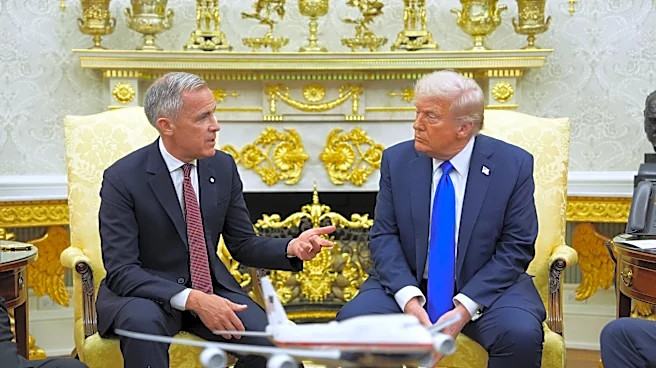
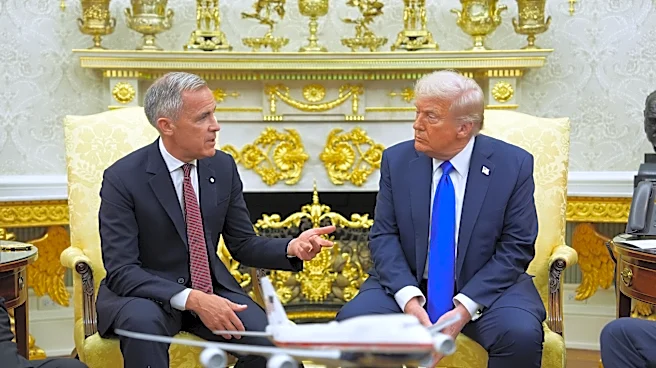
Even so, U.S. businesses and consumers spent $454 billion on Canadian goods and services in 2025, while Canadians spent $426 billion on ours. That left a U.S. trade deficit with Canada of about $28 billion. That means Americans spent only about 6% more on Canadian products than Canadians spent on American ones.
Arguably, given those disparities in population and income, Canadians are already spending more than their fair share on U.S. products and services. Yet neither gap ever seems to enter Trump’s calculations, or those of his trade advisers.
Mexico, Europe and Asia tell the same story

Trump is also grumbling about the trade deficit with Mexico. But again, Mexico has far fewer people than the United States – about 133 million, a little less than 40% of the U.S. population. And Mexico’s national income per person is only $13,730.
The United States imported about $581 billion in goods and services from Mexico in 2025, while Mexico imported about $390 billion from us, leaving a U.S. trade deficit of about $190 billion. So the United States spent 33% more on Mexican goods and services than Mexico spent on ours. Yet Mexico’s national income per person is only about 15% of America’s.
It’s a similar story with our major European trading partners. Germany, the most populous country in the European Union, has about 83.5 million people. The United States ran a $73 billion goods deficit with Germany in 2025, even though Germany has about a quarter of our population and a national income per person of $60,200. France, with 69.1 million people and national income per person of $48,630, accounted for an $18 billion deficit.
Of course, India and China both have far larger populations than the United States. But they also have far lower incomes. National income per person is $14,230 in China and just $2,760 in India. And China’s savings rate is among the highest in the world, which leaves less for consumption. As for India, it’s hard to buy many American products when national income works out to less than $3,000 a person.
What Trump is demanding is that countries with far fewer people, far less money, or both, buy as much from the United States as the larger, wealthier United States buys from them. That’s an unreasonable goal – and probably an impossible one.
Population and income aren't the only factors
To be sure, the United States runs trade surpluses with plenty of countries, and not all of them small ones. In 2025, we had goods surpluses with the Netherlands, the United Kingdom, Hong Kong and Brazil, among others. That’s because a lot of factors affect the balance of trade between two countries. Population and income are only two of them.
For one thing, the United States is a major exporter of services, such as transportation, finance, entertainment, telecommunications, tourism and software. It runs a services surplus with many countries, including Canada. But the U.S. deficit in goods is usually much larger than its surplus in services. In 2025, the goods deficit was $1.24 trillion and the services surplus was $339.5 billion, leaving an overall trade deficit of about $900 billion.
In addition, some products and services can be obtained from only one or a few countries. Some countries can also produce certain goods and services more cheaply, measured against what else they could be producing – what economists call “comparative advantage.” And many countries protect favored industries, often by putting tariffs on competing imports.
The point is that the United States, one of the world’s most populous countries and by far the wealthiest of the large ones, will often buy more from smaller, poorer countries than they buy from us. It’s not a “rip-off,” as Trump claims. It’s just demographics and economics.
Merrill Matthews is the Texas state chair of Our Republican Legacy.
This article originally appeared on USA TODAY: What Trump doesn't understand about trade | Opinion