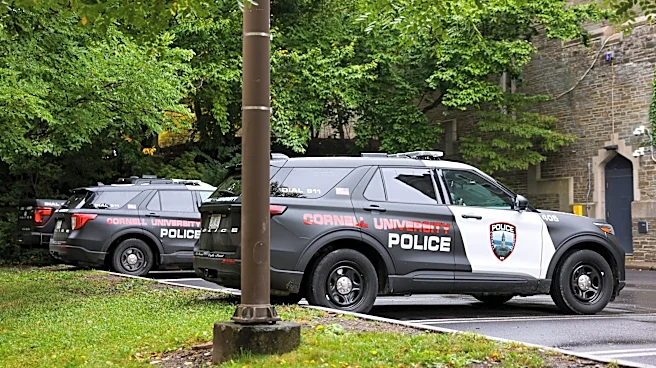






A former Cornell University student said in a lawsuit that she was the victim of a 2024 "gang rape" at a fraternity house, a shocking allegation that highlights a controversial component of New York sexual assault law — and similar laws across the United States.
The lawsuit says the alleged sexual assault happened after the victim had willingly consumed a large amount of alcohol, which in some states could mean she was legally unable to consent to sex.
Not necessarily in New York.
It's known as the "voluntary intoxication exclusion," and the legal nuance can have big implications for victims of sexual assault. It "prevents many survivors from receiving justice," according to the National Organization for Women's New York City chapter.
Roughly half
of U.S. states distinguish between sexual assault victims who were forced to become intoxicated and those who chose to drink or take drugs.
A 2022 review by USA TODAY found that at least 27 states had such provisions in their sexual assault laws. Since then, Texas has passed a law to close this gap, specifying that there is a lack of consent if a perpetrator knows or should know that the victim can't consent due to intoxication, regardless of how they became intoxicated.
The nuance likely played a role in prosecutors' decision not to file criminal charges in 2024, according to lawyer Ann Olivarius, who specializes in sexual assault law and pioneered a landmark 1977 lawsuit that first established sexual harassment as a form of sex discrimination.
"If you're voluntarily drunk or on ketamine or some other drug then the DA is going to say it didn't hit - and this is what his statement says - it didn't hit that standard," she said of the state's sex crime law.
That standard is out-of-step with how many people think about consent today. "Everybody knows that she's been on ketamine and she's been drinking," Olivarius said of the former Cornell student. It should have been clear to everyone involved that "she cannot possibly consent," Olivarius said.
The specifics of the law have been thrust into the limelight as commentators grapple with the case. "The View" co-host and former prosecutor Sunny Hostin cited the voluntary intoxication exclusion in a controversial statement of support for Tompkins County District Attorney Matthew Van Houten, who initially did not file charges in the case but has reopened it.
"While this is something that we have to take very seriously there is no way, according to her statement in 2024, that any prosecutor would have brought forth a case," Hostin said.
Lawmakers call for change
Many advocates view sexual assault laws that treat sexual assault survivors differently based on how they became intoxicated as a form of victim blaming, Lizzie Mafrici, former president of Preventing Sexual Assault, a student group at the University of Maryland, College Park, previously told USA TODAY.
"I think that we often talk about victim blaming in a societal way, in a cultural way, in a criminal way, but it’s also in our legal system, and it’s also a systemic problem that we have to face," Mafrici said.
Manhattan District Attorney Alvin Bragg has said current New York law makes it difficult to prosecute common sexual assault scenarios, noting that perpetrators often purposefully target highly inebriated victims or encourage them to drink to facilitate an assault.
"Drugging someone to rape them is clearly wrong. So is taking advantage of someone who became intoxicated voluntarily," Bragg and President of NOW New York Sonia Ossorio wrote in a 2024 opinion piece. "In either case, the person is incapable of meaningful consent, and our laws should clearly recognize sex under either circumstance as rape."
Some New York lawmakers in recent years have tried to amend the law to say that someone can be too intoxicated to consent to sexual activity regardless of how they became intoxicated.
Legislation sponsored by New York State Sen. Nathalia Fernandez and Assemblyman Jeffrey Dinowitz has passed the state Senate but hasn't been voted on in the Assembly yet. It would amend the law's language about consent while intoxicated to remove the distinction that the intoxicating substance was administered without the victim's consent.
State Sen. Lea Webb called for the passage of the legislation on Sept. 28 in reaction to news of the Cornell lawsuit.
"We must pass legislation... that makes the language used in these cases clear so there is never room for argument about someone being able to consent," Webb said.
Why no charges were filed in 2024 Cornell rape case
Van Houten initially declined to bring any criminal charges against the accused men in the Cornell case. He laid out his reasoning in a lengthy explanation published online.
His decision relied, he said, on a sworn statement written by Jane Doe in November 2024, which "described her participation in drug use and sexual conduct as voluntary, conscious, and consensual." According to a summary of the statement released by Van Houten, the woman described her level of intoxication at times as being up to an eight out of 10, and said she couldn't remember portions of what happened.
According to the civil suit, Doe consumed about "10 standard drinks" in the hours before she arrived at the fraternity house and "in her drunken state, Plaintiff was incapable of consenting" to proposed sexual activity, the lawsuit said. She was then "pressured" into doing ketamine and "plied" with marijuana and liquor before the alleged assault began.
Doe’s attorney, Thomas P. Giuffra, told CNN the allegations in the lawsuit are "much more detailed and lengthy" but "not materially different" from the initial police report.
This article originally appeared on USA TODAY: Too drunk to consent? Cornell case highlights legal controversy