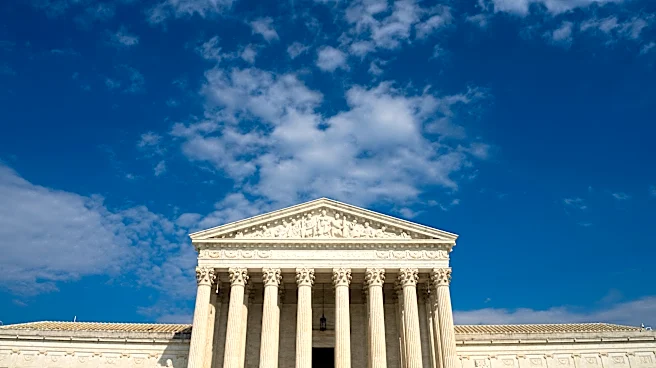








WASHINGTON – The Supreme Court declined to get involved in a high-profile surrogacy dispute over a baby born with a serious heart condition.
McKenna West, the surrogate who gave birth to the baby, had asked the court to suspend a California ruling that gave parental authority of the newborn boy solely to his genetic parents.
West’s lawyers said she should be able to stay involved “through this critical time in his young life.”
The boy could be removed from a Texas hospital and taken to hospice in California “despite his treatable condition,” West said in her emergency appeal.
The boy's genetic parents told the court they're ensuring the baby "receives the life-saving care he needs."
Justice Elena Kegan, who handles appeals from California, rejected
West's request on Sept. 22.

The baby was born in Dallas on Aug. 12 in the midst of the legal fight over surrogacy, abortion and parental rights.
After a 20-week scan revealed the fetus’ heart condition, the biological parents – Omar Ahmed and Nausheen Gilkar – wanted to terminate the pregnancy. West did not.
She flew from Alaska to Texas, where abortions are largely banned, to deliver the baby.
Texas Attorney General Ken Paxton intervened in the case before the baby's birth, and a Dallas County judge issued an emergency order requiring hospitals to provide medically necessary care when he was born.
The baby has hypoplastic left heart syndrome, a life-threatening congenital heart condition.
The California court’s ruling that Ahmed and Gilkar are the parents went into effect after the baby was born.
West argues that the dispute should have been heard by the courts in Alaska, not California, under the terms of the original surrogacy agreement.
Unless the Supreme Court swiftly intervened, West’s attorneys argued, Ahmed and Gilkar could stop life-saving care for the baby without West’s knowledge.
In response, lawyers for Ahmed and Gilkar said they're "providing the precise medical care for their child" that West also wants.
"A right to life is not at issue here," the lawyers told the court.
Pausing the California court's ruling, they argued, "would serve only to cause chaos and confusion" over who is making the medical decisions.
This article originally appeared on USA TODAY: Supreme Court rejects appeal from surrogate in high-profile custody fight