




An 8-year-old girl in Louisiana died after she was infected with a rare brain-eating amoeba, leaving her family devastated.
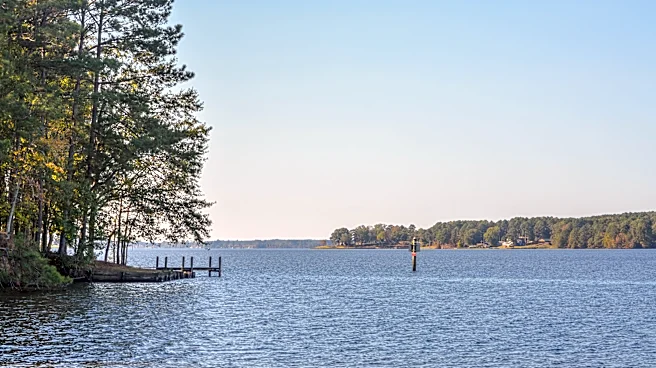
Lillian Smart died the day after her birthday, on Sunday, Aug. 22, her family shared on social media. She likely contracted the infection after she went swimming in Lake Claiborne, a lake located in the northern part of Louisiana, about 250 miles east of Dallas.
"Last night Lillian ran from our arms to the arms of Jesus," her family said in a post on Facebook on the "Love for Lillian" page. "The injuries to her brain were too severe for her little body to recover from. Everyone did everything they could to keep her here. We are heartbroken and honestly do not know what to do next."
On Aug. 19, the Louisiana Department of Health
confirmed the case of Naegleria fowleri, which is often referred to as the "brain-eating amoeba," and is almost always fatal.
Politicians send their condolences to the family
Louisiana Gov. Jeff Landry and Attorney General Liz Murrill both offered condolences with social media posts Sunday.
"Heartbroken over the news of Lillian’s passing," Landry said in a post on X. "Please join Sharon and me in prayer for the Smart family and the entire Ruston community during this time."
What is Naegleria fowleri, the brain-eating amoeba?
Naegleria fowleri is an amoeba commonly found in warm freshwater lakes, rivers, canals and ponds throughout the U.S. and can cause primary amebic meningoencephalitis, a brain infection that may result when water containing the amoeba rushes up the nose and reaches the brain.
Naegleria fowleri can't infect people if swallowed and isn't spread from person to person. The brain-eating amoeba is not found in salt water or in properly maintained and chlorinated pools.
Between 1937 and 2025, there have been 180 known cases of amebic meningoencephalitis, with three of those cases being in Louisiana.

5 dead in Louisiana from flesh-eating bacteria
Lillian's death comes after five people in Louisiana died from Vibrio vulnificus bacteria, a rare "flesh-eating bacteria," USA TODAY previously reported. Like the amoeba, the bacteria are commonly found in water. It is found in coastal waters and can be contracted when open wounds are exposed to saltwater or brackish water.
In 2026, nine cases of Vibrio vulnificus bacteria were reported in Louisiana, according to the Louisiana Department of Health. All nine patients who contracted the infection were hospitalized after exposure to seawater.
Vibrio vulnificus can cause necrotizing fasciitis, a rare bacterial infection that can destroy tissue and lead to severe scarring, loss of limbs and death, according to the Centers for Disease Control and Prevention.
While anyone can get infected by the bacteria, certain medical conditions, such as having a preexisting condition like liver disease, cancer, diabetes or HIV, can increase a person's chance of an infection, per the CDC. The bacteria can also be contracted through eating raw or undercooked shellfish, especially oysters.
The bacteria are more likely to be found from May to October, with the most infections being reported in the Gulf Coast states.
Contributing: Mike Snider, Mary Walrath-Holdridge; USA TODAY
Julia Gomez is a Trending reporter for USA TODAY and covers space phenomena, scientific studies and natural disasters. Connect with her on LinkedIn, X, Instagram, and TikTok: @juliamariegz, or email her at jgomez@gannett.com
This article originally appeared on USA TODAY: 8-year-old girl dies from brain-eating amoeba day after her birthday