








The U.S. measles outbreak continues to grow, with 3,887 cases reported nationwide in 2026, according to Centers for Disease Control and Prevention data.
On Oct. 5, New York Gov. Kathy Hochul issued a statewide disaster emergency over the spread of measles cases. The state has reported 108 measles infections this year through Oct. 3, including 92 since July 15, according to her executive order.
Pennsylvania reported its fifth measles-associated death in Lancaster County on Sept. 30. Pennsylvania has confirmed 1,004 measles cases across 39 counties this year. Despite additional fatalities reported by states, the CDC's website currently lists only two measles-related deaths.
Where measles cases are climbing
Measles isn't spreading evenly across the country. Some states have reported
no cases, while others have seen outbreaks, defined as three or more linked cases in a particular area. In 2026, 42 outbreaks have been recorded so far, representing about 95% of all reported infections, according to the CDC.
Health officials say outbreaks are more common in communities with lower measles vaccination rates, where the virus can spread more easily in densely populated areas once it is introduced. So far this year, three states have reported more than 500 measles cases: Pennsylvania, South Carolina and Utah.
2026 measles cases are rising in the US
According to Johns Hopkins University, which complies its own data on measles cases, infections have surpassed 4,000 cases nationwide this year, and transmission is continuing across the country.
Why is measles so contagious?
The CDC says nine in 10 unvaccinated people exposed to an infected person will catch the virus, and the World Health Organization estimates one case can infect up to 18 people.
Measles' R₀, or basic reproduction number, measures how many people one infected person is likely to infect in a population with no immunity. Measles has an R₀ of about 18, making it one of the most contagious diseases on Earth.
Declining herd immunity leaves US communities vulnerable to measles
Think of vaccination as a shield for the entire community. When most people are vaccinated, measles has a harder time finding new people to infect. That community-wide protection helps safeguard even those who aren't immune.
Herd immunity, also known as population immunity, happens when enough people in a community are protected against a disease through vaccination or previous infection. This makes it harder for the disease to spread from person to person, reducing the risk of outbreaks.
The bad news is that herd immunity isn't permanent. As long as a disease still exists somewhere in the world, there's a chance it can return. If someone without immunity becomes infected while traveling, they can bring the disease back and pass it on to others who are also unprotected, allowing new outbreaks to start.
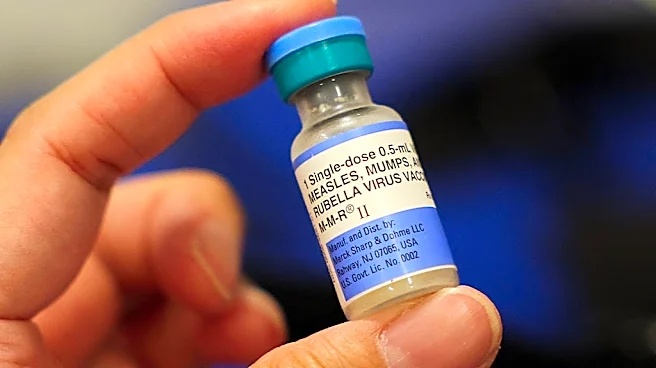
"The measles, mumps and rubella vaccine is the best protection — protecting nearly all people against disease who receive the recommended doses," said Dr. James McDonald, New York State's Department of Health commissioner.
States that could be at risk
When vaccination coverage exceeds 95% in a community, herd immunity helps protect most residents from measles, according to CDC data. However, 17 states had MMR vaccination rates below 90% during the 2025-2026 school year.
The CDC says maintaining high vaccination coverage is essential to containing measles outbreaks and safeguarding vulnerable populations, especially infants, who face a higher risk of serious complications from the disease.
SOURCE: Centers for Disease Control and Prevention, Johns Hopkins University, The World Health Organization, Cleveland Clinic and British Society of Immunology
This article originally appeared on USA TODAY: This disease has now been declared an emergency. Maps show where it's spreading