



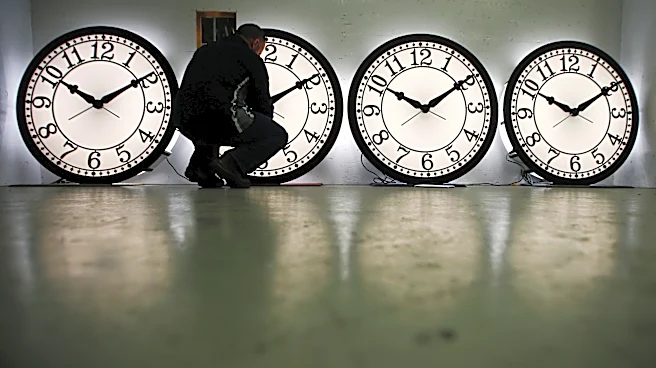


Americans hoping to stop changing their clocks twice a year are still waiting. Despite President Donald Trump's push to make daylight saving time permanent, the Senate returned from a five-week recess on Sept. 14 with no vote scheduled on legislation that would end the twice-yearly time change.
That means Americans should still plan to turn their clocks back on Sunday, Nov. 1. The House has already approved the Sunshine Protection Act, and Trump has urged senators to act, but with less than two months before daylight saving time is scheduled to end, the bill's future remains uncertain.
Here's what you need to know about daylight saving time coming to an end.
When does daylight saving time end in 2026?
Unless Congress acts, daylight
saving time will end at 2 a.m. local time on Sunday, Nov. 1.
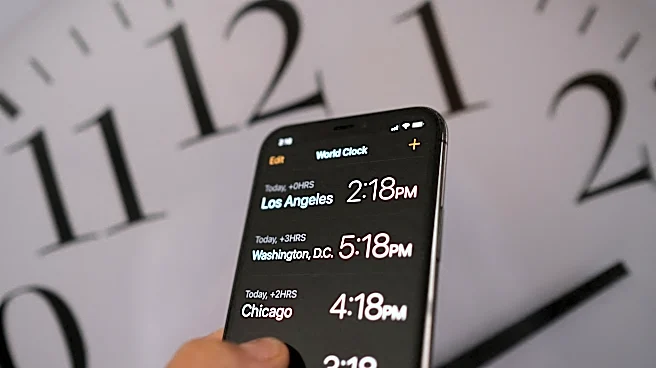
At that time, clocks will move back one hour to 1 a.m., giving most Americans an extra hour of sleep while bringing earlier sunsets for the winter months.
Why are Americans still changing their clocks?
The answer is simple: no new law has been enacted.
The Sunshine Protection Act, which would make daylight saving time permanent and eliminate the spring and fall clock changes, passed in the House earlier this summer by a bipartisan vote. But the legislation still must clear the Senate and be signed by Trump before it can take effect.
Until then, current federal law remains in place.

Will the Senate vote on the bill?
It's unclear.
The Senate returned to Washington on Sept. 14 after a five-week recess, but a vote on the Sunshine Protection Act was not immediately listed on the chamber's agenda.
Even with support from Trump and lawmakers in both parties, Senate Majority Leader John Thune has previously questioned whether enough senators support the proposal to move it across the finish line.
With Nov. 1 approaching, the legislative window is narrowing.

What does Trump want?
Trump has repeatedly called for ending the twice-yearly clock change and keeping the nation on daylight saving time year-round.
In an Aug. 4 Truth Social post, Trump described changing clocks twice a year as "foolish, inconvenient and, in some cases, very costly."
"People are sick and tired of having to change their clocks twice a year," Trump wrote, arguing permanent daylight saving time would reduce traffic accidents, lower crime, save energy and give families more daylight in the evening.
"In other words, leave it as it is now, and never change again," he wrote. "LET'S PASS THE SUNSHINE PROTECTION ACT, ASAP."
Not everyone agrees on the solution
While many Americans support ending the clock changes, experts remain divided on what should replace them.
Sleep and health researchers generally agree that switching clocks twice annually can disrupt the body's circadian rhythm and affect sleep patterns. But many experts argue that permanent standard time, not permanent daylight saving time, would be healthier because it better aligns with the body's natural clock.
The debate has left lawmakers weighing whether the bigger problem is changing clocks or which time system the country should adopt permanently.
Which states don't observe daylight saving time?
Most Americans change their clocks twice a year, but several places already stay on standard time year-round:
- Hawaii
- Most of Arizona (except the Navajo Nation)
- American Samoa
- Guam
- Northern Mariana Islands
- Puerto Rico
- U.S. Virgin Islands
Do Americans want clock changes to end?
Polls suggest many do.
A 2023 YouGov survey found 62% of Americans favored eliminating the time changes, while a January 2025 Gallup poll found 54% wanted to end the practice. Americans remain divided, however, on whether the country should adopt permanent daylight saving time or permanent standard time.
For now, the twice-yearly ritual remains in place, meaning Americans should mark their calendars for Nov. 1, when clocks are scheduled to "fall back" once again.
Contributing: Reuters; Bart Jensen, Zachary Schermele, Jorge L. Ortiz, Fernando Cervantes Jr., Emily DeLetter, Julia Gomez, Kinsey Crowley, Marc Ramirez / USA TODAY
Saman Shafiq is a trending news reporter for USA TODAY. Reach her at sshafiq@gannett.com and follow her on X and Instagram @saman_shafiq7.
This article originally appeared on USA TODAY: Time change 2026: Are we still changing clocks this fall?