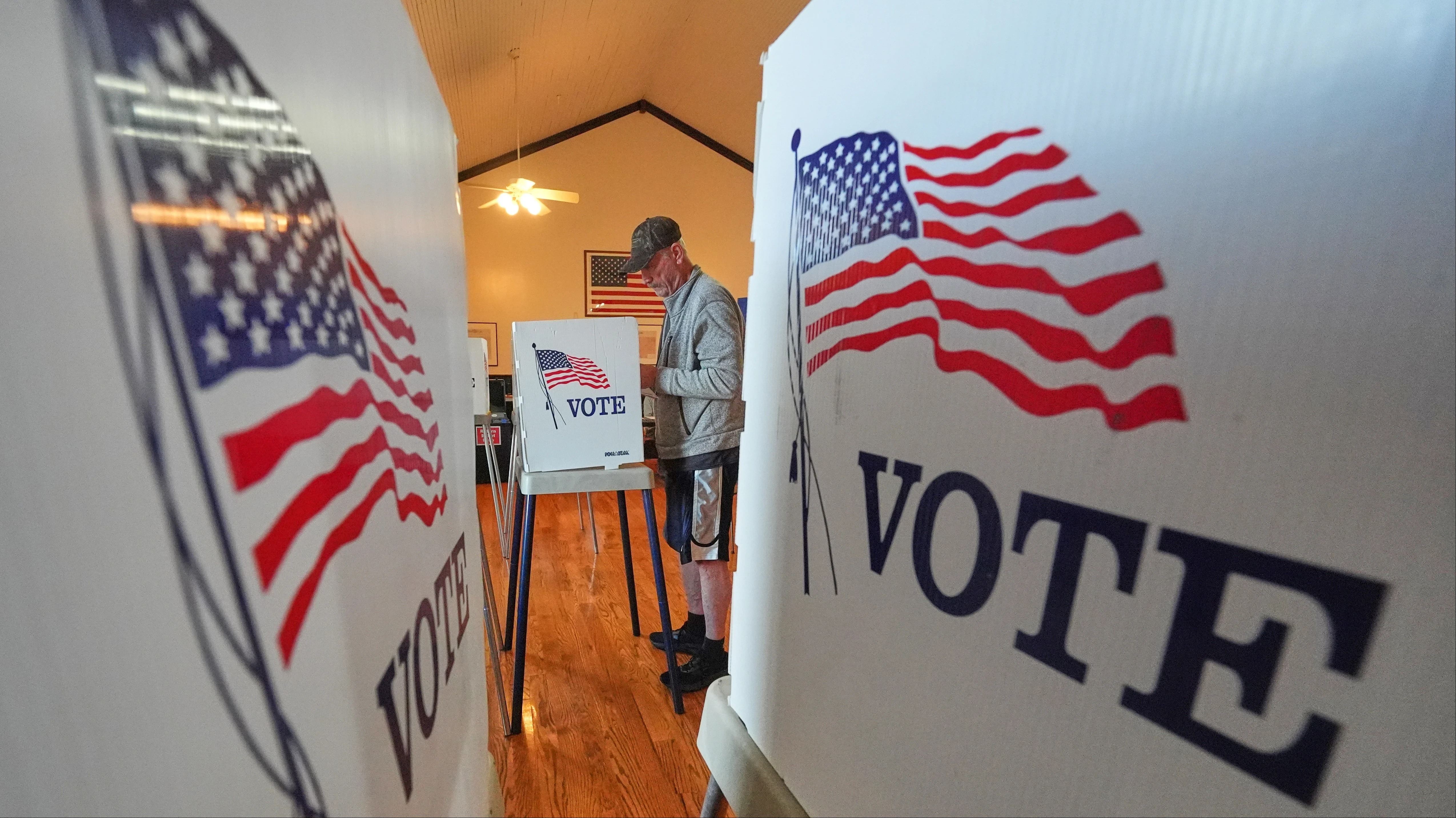




Black voter support for Democrats in the Tuesday, Nov. 3 midterms approached what former President Barack Obama captured in 2008, with exit polling showing the Supreme Court’s voting rights decision, GOP redistricting and the economy were major factors.
On Tuesday, 93% of Black women and about 86% of Black men voted for Democrats, said Jonathan Cox, who leads research and policy analysis at the Congressional Black Caucus Foundation. In contrast, Obama won support from 96% of Black women and about 95% of Black men in 2008, when he was elected as the nation's first Black president.
"Black women are out here holding down Democrats in ways that really needs to be shouted from the rooftops," Cox told USA TODAY.
The Trump administration's attacks on diversity
initiatives and Black history in his second term, combined with economic policies that have hit Black families particularly hard and Supreme Court decisions that effectively gutted part of the Voting Rights Act were a shock to the system, said political commentator Avis Jones-DeWeever.
"It's awakened something in us, a memory of what we've seen before," she told USA TODAY.
Republicans in southern states raced to redraw congressional district boundaries in the wake of the April 29 Louisiana v. Callais Supreme Court decision, which threw out Louisiana's voting map and effectively gutted section 2 of the Voting Rights Act.
The maps diluted Black voting power, raising fears among activists that about 60 years of civil rights gains are being destroyed. After the Voting Rights Act became law in 1965, Black representation in the U.S. House rose rapidly.
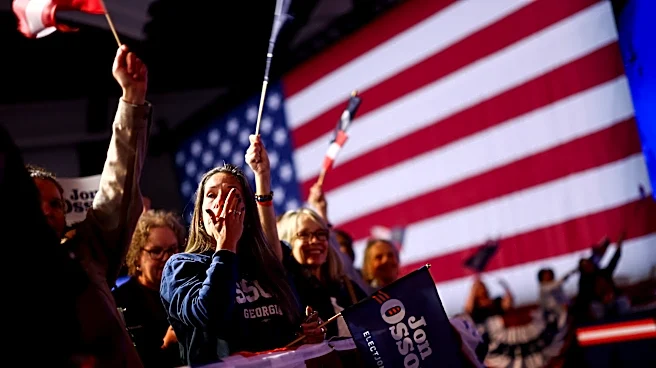
Thousands of organizers nationwide quickly united to build a wave of Black voters they hoped would drive home their outrage over the court's decision and the move to redraw districts that reduced Black voting power.
Black early and absentee voting was up this year
Black early and absentee voting ran well ahead of 2022 numbers in some states, including Florida, Georgia, Michigan and Texas, according to the NAACP. Early and absentee voting was up 20% in Georgia and 53% in Texas compared to the same point in 2022.
It was once unthinkable that Obama would win North Carolina in 2008, when he generated the highest Black turnout in U.S. history. With the surge in Black turnout, Republicans now face a reality where voters fundamentally shifted the political landscape, nudging swing states left and making red states suddenly competitive.
In Mississippi, Scott Colom is on the verge of flipping a Senate seat that hasn’t been held by a Democrat since 1978. If he wins, Colom would be the first Black statewide official in Mississippi since Reconstruction.
The Louisiana Senate race was also much closer than expected, with the Republican winning by less than 26,000 votes. Several House Democrats managed to hold on despite being drawn into unfriendly districts. The race in Louisiana's Sixth District, at the center of the Callais decision, did not flip to Republicans outright and will head to a Dec. 12 runoff.

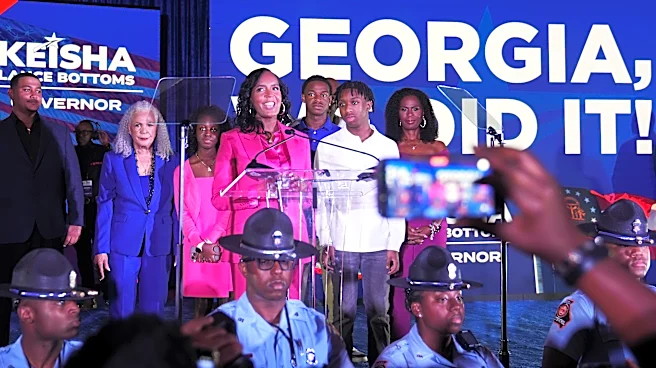
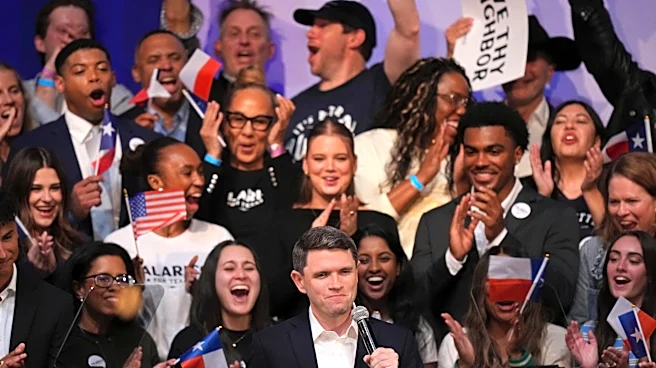
In an election night media briefing held by the National Coalition on Black Civic Participation, organizers were ecstatic. Melanie Campbell, the coalition's president, referred to the election as a "Blacklash" to the last two years.
"Black people are turning up and turning out all over this country to try to save this democracy from becoming an authoritarian state and that is what was on the ballot," Campbell said.
LaTosha Brown, co-founder of the voting rights group Black Voters Matter, said Black communities came together after the Callais decision to protect voting rights.
"What we saw in this country is that our political power has been hit, our economic power has been hit... we've seen white nationalism, all those things. So, they hit us, we're hitting them back," she said.
The coalition unveiled exit surveys conducted in Southern polling locations on Election Day that found voting rights, reducing racism and lowering living costs were the top reasons Black voters turned out.
'Stop writing us off'
Grassroots groups have organized in Black communities for decades, but began building coalitions after the Supreme Court ruled in 2013 that states with a history of race discrimination could implement voting changes without federal approval. A flood of new laws requiring voter identification and placing limits on absentee voting followed.
But they've mostly had to do it on their own. The South has been a Republican stronghold for so long that Democratic donors have focused on easier-to-sway seats.
Activists wondered how much larger turnout could have been or how much tighter margins would have been in close races, if national donors had recognized the unique opportunity to turn out Black voters after the Callais decision.
"I hope that what it means politically is that people start paying attention to the South and stop writing us off. There really is (an) opportunity here," said Ashley Shelton, founder and president of the nonprofit Power Coalition for Equity and Justice, an original plaintiff in the case that led to the Callais decision.
This article originally appeared on USA TODAY: A 'blacklash' happened at the polls in response to redistricting