







Newly reported cases of cyclosporiasis, a parasitic infection known for causing explosive diarrhea, may be slowing – though not by much – as the investigation into the unprecedented outbreak that affected thousands drags on.
The Centers for Disease Control and Prevention said in a weekly update on Aug. 11 that 13,895 cyclospora infections have been confirmed across 47 states plus Washington, D.C., since May 1. That's an uptick of more than 3,400 since its previous report on Aug. 4. There have been two deaths and 740 hospitalizations, 223 of which were reported since last week.
At least 10,455 additional cases have not yet been confirmed by laboratories, the CDC said. The agency's case count lags about six weeks behind state-by-state numbers due
to the process required to confirm and officially report an infection back to the federal level.
Michigan, which has been at the center of the largest case cluster, reported 13,909 total cases as of Aug. 13, up from 12,485 on Aug. 6. The state's health department previously said in an Aug. 6 notice that the pace of new case reports and related emergency department visits was slowing, though experts told USA TODAY it may be a bit too early for Americans to let their guard down in the produce aisle.
"Since we don't know the source or what the cause is, we don't know that it's not an ongoing problem. In fact, we don't even know for sure what fruits and vegetables are causing the disease," Dr. Dana G. Mordue, associate professor of pathology, microbiology and immunology at New York Medical College, told USA TODAY. "I think we really don't know enough about the source of it to be able to say that it's safe to go back and drop those precautions."
See map of states with cyclosporiasis cases
Only three states, Delaware, Hawaii and New Mexico, have been spared thus far from the outbreaks. Michigan and Ohio remain the hardest-hit states, and Washington, D.C., has also reported a handful of cases.
The CDC reports only lab-confirmed cases that occurred on or after May 1 in people who did not travel internationally within 14 days of the onset of illness. Its numbers often lag behind those cited by state health officials because of tracking, verification and reporting processes. There's typically a six-week reporting lag between an illness and the case being reported to the CDC.
What is cyclosporiasis? What are the symptoms?
Cyclosporiasis is a parasitic infection that causes gastrointestinal symptoms often associated with food poisoning, such as diarrhea, nausea and vomiting. It is caused by the parasite Cyclospora cayetanensis, also known simply as cyclospora, and is usually contracted through contaminated food or water.
Though unpleasant, it is not generally known to cause death, and in many cases it goes unreported because people recover at home without visiting a doctor. It can cause more serious complications in people with compromised immune systems or other underlying health problems.
The most common symptom is watery, frequent and sometimes "explosive" diarrhea, according to the CDC and Cleveland Clinic, though other troubles can include:
- Vomiting
- Loss of appetite
- Bloating, including burping and gas, or stomach cramps
- Extreme tiredness (fatigue)
- Fever
- Nausea
Largest outbreak linked to lettuce hits 15 states as Michigan reports 11,000 cases
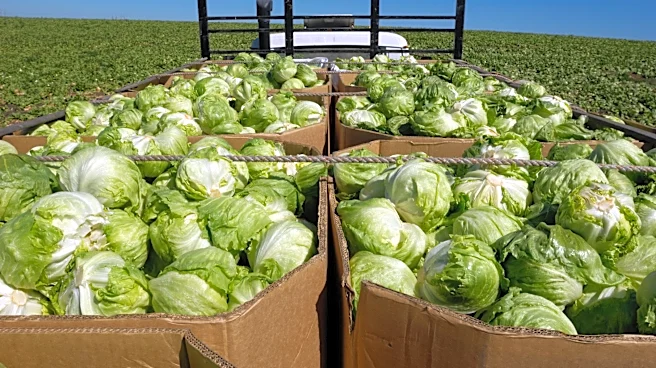
The Michigan-centered outbreak was linked by the Food and Drug Administration to recalled iceberg lettuce grown by produce giant Taylor Farms in Mexico. Illnesses from the lettuce outbreak have been confirmed in 15 states: Illinois, Indiana, Kansas, Kentucky, Michigan, Ohio, Oklahoma, Pennsylvania, West Virginia, Missouri, Arkansas, Iowa, Nebraska, New Hampshire and North Carolina.
These states were identified after health officials tested sick people and traced the "DNA," so to speak, of the infections to determine whether they were related. Those that are related are considered part of the same outbreak, likely stemming from the same source. Thus far, these states are the only ones the CDC has been able to confirm as related to one another and trace back to the lettuce.
The source of a cyclosporiasis outbreak is more difficult to track than foodborne illnesses because of a long incubation period, difficulty obtaining samples and the inability to use the same genetic tracking tools available for pathogens like E. coli and listeria.
Several separate case clusters have been identified by the CDC and FDA, but no common cause has been identified.
This article originally appeared on USA TODAY: Are cases of explosive diarrhea parasite slowing down? See the numbers.