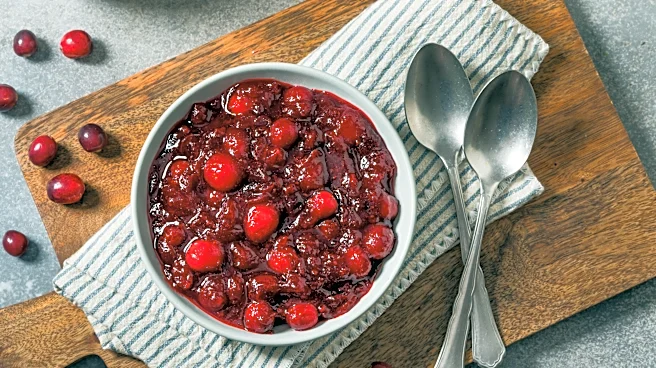

Cranberries, among the nation’s most iconic Thanksgiving sidekicks, may be at risk – and their future could rely on their wild ancestors.
The extreme temperatures of climate change increasingly threaten
cranberry production, researchers say. Heat waves can damage berries, while surprise cold snaps can nip budding flowers and reduce yield.
Wild cranberry genes, however, could help create more resilient crops. By identifying genes linked to climate resilience, scientists hope crossbreeding domesticated cranberries with their wild relatives will ultimately produce berries not only more environmentally adaptable but perhaps better tasting, too.
“Cranberries everywhere are experiencing the pressures of changing climate,” said Todd Michael, a research scientist at the Salk Institute in La Jolla, California. “This is a real opportunity to create more resilient cranberries, maybe even bigger and not as tart.”
Though cranberries come to mind primarily as a late-year holiday staple, they’re the third most produced berry in the U.S., used in juices, dried form or in dietary supplements. In fact, Michael said, it’s only in the last decade that their close sister species, the blueberry, edged them out for the number two spot.
The cranberry sauce sitting alongside your turkey and mashed potatoes likely represents one of about a dozen cultivated varieties at least a half-century and perhaps two centuries old.
“Today’s varieties are decades old, developed by the USDA in the 1950s or earlier,” said Jeffrey Neyhart, a research geneticist at the U.S. Department of Agriculture. “Some were selected from native stands in the late 1800s or early 1900s. There’s a fairly narrow genetic base for the varieties grown widely today.”
One of the few commercially produced fruits native to North America, cranberries grow on low-lying vines and have year-round health benefits, high in antioxidants and vitamin C. In the early 1800s, they helped British sailors avoid scurvy on long voyages back home from New England.
The United States and Canada are the world’s largest cranberry producers, according to the World Population Review. In the U.S., they’re mostly cultivated in Wisconsin, New Jersey, Massachusetts and Oregon.

The berries especially thrive in those areas because of their mix of acidic soils, low temperatures and plentiful water, conditions that help produce the flooded bogs necessary for cultivation.
Threats posed by changing climate
However, cranberries are especially sensitive to climate changes, which can affect both the amount and quality of harvested fruit.
“Timing matters as much as temperature,” said Mike Dubuc, interim executive director of The Cranberry Institute, a nonprofit supporting the cranberry industry and its growers.
A warm spring can coax buds out early, Dubuc said, while a late frost can damage them. Summer heat can scald berries, while warm nights as harvest approaches can hamper development of their signature deep red shade.
According to Climate Central, a nonprofit, independent group of scientists and communicators focused on climate change, record heat in cranberry-growing East Coast states “frequently trigger fruit scalding, where berries literally bake on the vine before they can be harvested.”

Meanwhile, increased humidity and rainfall lead to “stagnant, moisture-rich environments” that promote fruit rot. In Massachusetts, farmers have already altered their practices to adapt to changing conditions. A 2024 Boston College study said modifications include more efficient irrigation systems and adjustments to improve drainage of the bogs where cranberry vines grow
Tara Pisani Gireau, the study’s lead author and director of the school’s environmental studies program, said in a school news post that while more accurate weather forecasts are helping growers respond to extreme changes, “it’s unknown how long technology can stave off the forces of a changing climate.”
Tapping the wild cranberry gene pool
With that in mind, researchers began to consider whether sequencing wild cranberry genomes might allow for the isolation of genes responsible for their resilience to harsher weather.
“Wild cranberries give breeders a wider pool of traits to work with,” Dubuc said. “By crossing wild plants with commercial varieties, researchers can look for plants that stand up better to stresses like cold or fruit rot while still producing good yields and high-quality fruit.”
Neyhart said in addition to the four states that are the primary sources of domesticated cranberries, wild varieties grow as far afield as the mountains of North Carolina and British Columbia. He and his USDA team have gathered genome sequencing information during plant collection expeditions in places ranging from Virginia, Delaware, Maine and upstate New York.
“None of those wild cranberries have been utilized in the gene pool for breeding,” Neyhart said.

The researchers aim to identify genes responsible for higher stress tolerance and disease resistance while evaluating their potential for higher quality and yield.
“We do see from preliminary results some promising new offspring that could become new varieties down the road,” Neyhart said.
Genome sequencing, which enables researchers to pinpoint genetic traits at the DNA level instead of waiting for a plant to physically mature, has allowed for quicker crossbreeding that they hope will help them develop the cranberry of the future before it’s too late.
The threat isn’t imminent. The USDA’s 2026 Fruit and Tree Nuts Outlook estimated cranberry production would rise this year to 7.87 million barrels, or 787 million pounds – a 5% increase over 2025 production, which had fallen 9% from the previous year.
“It’s not a dramatic situation,” said Michael, who works in Salk’s plant molecular and cellular biology lab. “We’re just planning ahead. We’re anticipating that we may need to protect the future of the plant.”

Michael said his team is currently working with the USDA and the San Diego Botanic Garden, experimenting with a cranberry variety grown in Alaska.
An initial hybrid showed promise under simulated cold snaps, boosting its photosynthesis – its ability to capture light and turn it into chemical energy. However, researchers discovered the hybrid’s ability to do so diminished under normal weather conditions.
“Each hybrid has had a different response, bringing in different ways of being resilient,” Michael said. “The power of using sequencing technology is preserving and conserving them for the future. I can imagine a future where if we have this library of genes, maybe we don’t even need to make a cross…. We can dial in a combination.”
The process of creating a consumer-ready berry available in your local supermarket isn’t a fast one. Neyhart said it takes at least a decade to introduce a successful hybrid to growers whose durability and consistency can be tested for several years before making it commercially accessible.
“We’re using genome sequencing to narrow down the timeline,” he said.
By failing more quickly, shaping future models can be achieved sooner that can undergo field trials and then be distributed to growers, Neyhart said.
Aside from producing cranberries more resistant to severe weather and disease, Neyhart said added benefits could include better tasting fruit as researchers study wild varieties with different sugar or acid levels.
“Way down the road,” he said, “we might see improved flavor, where one day you might be able to snack on raw cranberries. That’s my long-term goal.”
For now, consumers can feel free to get lost in the sauce.
This article originally appeared on USA TODAY: Let's talk turkey: Wild cranberry genome could save Thanksgiving