






Burmese pythons — destructive and invasive snakes with few natural predators in Florida — have developed a new foothold outside the Everglades.
A population of the pythons is "established" in South Florida, "historically ... centered within Everglades National Park in Miami-Dade County," according to the Florida Fish and Wildlife Conservation Commission (FWC).
Additionally, Burmese pythons are considered "established from just south of Lake Okeechobee to Key Largo and from western Broward County west to Collier County." Pythons are usually "cryptic," so it can take some time to collect enough evidence to "confirm new areas of establishment," according to the FWC's website.
Still, a spokesperson told ABC News that a "new satellite population" has
taken hold in a western part of Charlotte County, to the north of Naples and Fort Myers.
Burmese pythons pose a threat to Florida's native species
Adult Burmese pythons have few predators, according to the FWC, and frequently prey upon native species, including those that are threatened or endangered.
Burmese pythons can also threaten the safety of human beings, although they ultimately pose the biggest danger to the ecosystems they become established in. They can also prey on household pets, such as cats and dogs. They can consume meals equivalent to 100% of their body mass.
How to identify Burmese pythons
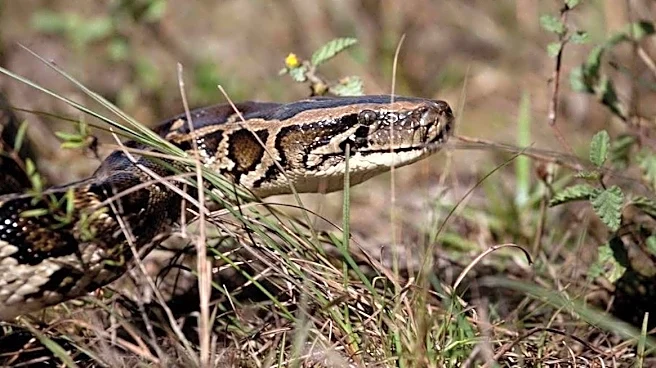
Though Burmese pythons can grow to over 20 feet in length, those captured in Florida are usually between six and 10 feet long, says the FWC. In adulthood, they’re larger than almost all native snakes, and are usually tan with dark blotches along their backs and sides.
Additionally, the dark patches along their bodies usually fit together like puzzle pieces, and can look similar to the patterns on giraffes. They also have dark wedges along the tops and bottoms of their heads, as well as behind their eyes.
Florida's Python Challenge previously led to the removal of hundreds of snakes
Florida's 2026 Python Challenge loosed a wave of Burmese python hunters onto the Everglades, all looking to kill as many of the state's most invasive snakes as possible. A $10,000 reward was promised to first place.
More than 200 of the invasive pythons were removed from South Florida during last year's hunt, according to the FWC. In 2026, the agency is again incentivizing participants with cash — there are separate categories for novices and professionals, each with their own prizes.
This year, the hunt will lasted from July 10 to July 19. No winner has been announced yet.
Who won the 2025 Florida Python Challenge?
Taylor Stanberry is a professional python hunter from Naples. She caught a total of 60 pythons during the 2025 challenge, securing the $10,000 grand prize during her first year participating. According to National Geographic, Stanberry used the money to turn her backyard into a full-fledged sanctuary — the Wild Stanberry's Sanctuary, a Naples-based nonprofit.
Over 900 participants worked together to remove 294 pythons from the Everglades ecosystem during the competition.
Stanberry was the first woman to win the challenge since it began in 2013.
Sarah Perkel is a South Florida Connect Reporter for the USA TODAY Network's Florida Connect team. You can get all of Florida’s best content directly in your inbox each weekday day by signing up for the free newsletter, Florida TODAY.
This article originally appeared on USA TODAY: Burmese pythons have new foothold outside Everglades. Who won 2025 hunt?