
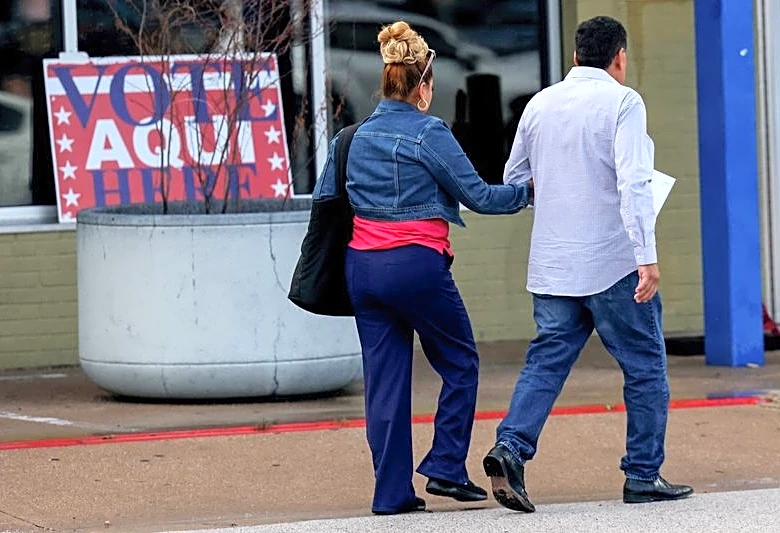

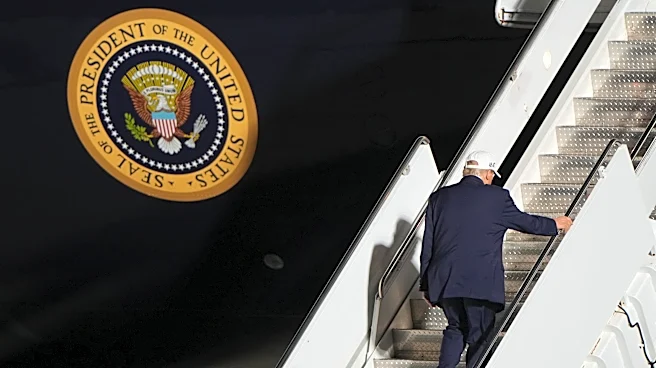
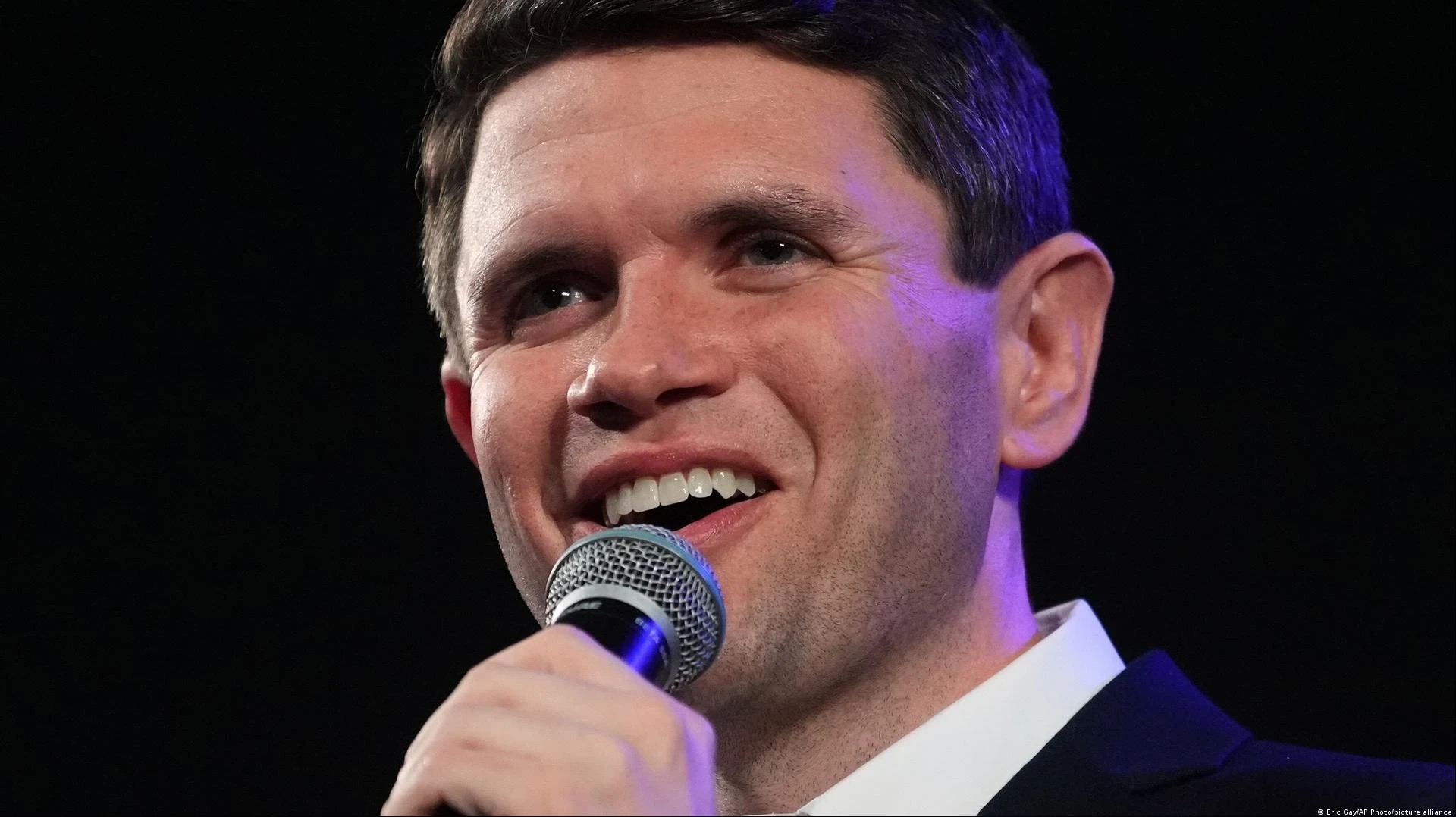

Two years after Latino voters helped Donald Trump return to the White House, they swung back toward Democrats in a major midterm upset in the Texas governor’s and congressional races that also left two longtime Miami Republicans in contests too close to call.
The economy and the cost of living drove much of the shift, strategists on both sides of the aisle said. But they also point to immigration and President Donald Trump's enforcement campaign that reached deep into Latino neighborhoods over the past year.
Those political factors weighed heavily on Latino voters in Texas and Florida. Large swaths of voters along the U.S.-Mexico border in Texas are multi-generation and of mixed-status families, many of whom are stuck in limbo due to the long and expensive
immigration process.
Many of Florida’s Latino voters trace their roots to Cuba, Venezuela and Nicaragua, countries from which their families fled to escape political persecution under leftist governments. Historically that helped make South Florida a Republican stronghold, due to a clearer path to obtaining legal status.
But more recent immigrants live on temporary footing, through Temporary Protected Status, humanitarian parole or pending asylum cases, protections the administration has moved to strip away.
“I don’t think I can overestimate the level of pain and harm, economic pain, harm from the extreme immigration enforcements, that translated into anger,” said Janet Murguia, president of UnidosUS, a nonprofit Hispanic civil rights and advocacy organization. “There was real anger, resentment, and frustration in our community.”
Many Latinos don’t hold the deep partisan loyalties other voters do. Plus, worries about the economy and immigration enforcement helped pull them left.
“People called us the sleeping giant for so long, and now it’s clear that we’re the swinging giant,” said Stephanie Valencia, president of Equis Research.
Latino voters sent “a middle finger to Trump Republicans and their broken promises and misplaced priorities,” Valencia said, noting they were fed up with gas prices, cost of living, wars abroad and immigration policies. Democrats received the same message two years ago, she said.
Few places have felt the administration’s immigration crackdown as acutely as Texas and Florida. Between January and August of this year, ICE made more than 63,000 arrests in Texas – more than any other state – and about 29,000 in Florida, according to data by the Deportation Data Project.
Over the summer, Florida averaged more than 200 arrests a day, nearly double its pace earlier in the year, and more than half of those detained had no criminal charges or convictions.
Local police have been central to that push. The two states account for nearly half of the more than 47,000 arrests made nationwide under 287(g), a program that deputizes state and local officers to enforce federal immigration law, between January 2025 and early August 2026.
Florida has more than 9,000 such officers and Texas at least 4,000, according to an analysis by FWD.us, which found the program now drives roughly 15% of ICE arrests nationwide, up from 2.5% in early 2025.
Daniel Garza, president of the conservative-leaning LIBRE Initiative, said some center-right Latinos likely stayed home, discouraged by stubborn prices, tariffs and the conflict with Iran. Others soured on immigration enforcement operations that he said went too far and weren’t balanced by ways for longtime immigrants to get right with the law.
"Yes, let’s do border security, but at the same time, you’re indiscriminately deporting people in the interior of the country who are working,” Garza said. “I think that really upset a lot of folks.”
Texas Hispanic voters feel immigration enforcement pain
South Texas saw one of the most significant flips back to Democrats in the Nov. 3 general election, after every county in the Rio Grande Valley backed Trump during the 2024 presidential election.
Trump in 2024 garnered 55% support from Latino voters in the state, a record-high figure for a Republican that was a 13-percentage point increase from 2020 and a 27-point increase from 2016, according to data from the Texas Politics Project.
Those gains were most apparent in the predominately Latino region of the Rio Grande Valley, an area nestled at the southernmost tip along the U.S.-Mexico border. In 2024, he won all four counties that make up the Rio Grande Valley, which Democrats had a decades-long hold on: Cameron, Hidalgo, Starr and Willacy.
Trump became the first Republican presidential candidate in the 21st century to win Hidalgo County in 2024. Democrat Gina Hinojosa carried it by double digits on her way to winning the governor’s race against Republican three-term incumbent Greg Abbott, 70.5% to 28.5%. Democrats surpassed their 2018 high-water mark in Hidalgo County, which is the most populous county in the Rio Grande Valley region.
Democrats also saw successes in several redrawn congressional district in the heavily Latino South Texas, which were created at Trump's behest in hopes that they would create more Republican seats.
A string of aggressive immigration operations across Texas in recent months stuck with voters, Valencia said, and came to look like another broken promise.

Eric Holguín, the Texas state director for UnidosUS, said that economic issues and immigration concerns were tied together for Hispanic voters in the Rio Grande Valley region.
“Before the extreme ICE crackdowns began, our immigrant community didn’t live with this kind of fear that we have now,” Holguín said, adding that while there was economic concerns during the 2024 election, “there wasn’t this added layer of cruelty we’re seeing play out now” in regard to immigration enforcement.
Texas has been a locus of Trump’s crackdown on illegal immigration. According to an analysis by the Texas Tribune, one out of every four arrests by Immigration and Customs Enforcement happened in the state.
Several instances have also drawn national backlash. Earlier this year, Lorenzo Salgado Araujo, 52, was shot and killed in Houston by an ICE officer. Many voters decorated Salgado Araujo’s memorial with their “I Voted” stickers on Tuesday.
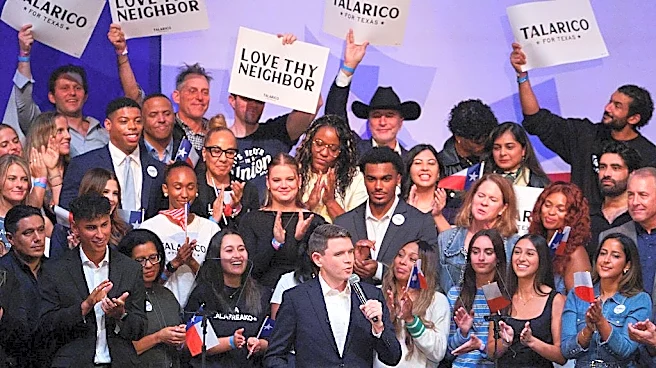
Tammy Lozano, who lives in Harlingen, Texas, said immigration concerns were among her top issues during this midterm election. Lozano, who backed Democrats James Talarico, who defeated GOP state Attorney General Ken Paxton for Senate, and Gina Hinojosa, who defeated three-term Republican incumbent Greg Abbott for governor, said members of her family had begun walking around with their passports out of fear of Trump’s immigration policies.
“Here on the border, I think it’s a little different. I feel that not everybody understands how complex immigration is. Nobody’s really gotten it right,” she said, before adding that she believes Talarico and Hinjosa “really understand the complexities that we see every day in the immigration process.”
Latino voters trims margins in Florida
In Florida, where Latino voters have anchored Republican gains for years, the split by national origin was stark.
In majority-Hispanic precincts where Cubans are the largest group, Republican senatorial candidate Ashley Moody won by 7.5 points. Democrat Angie Nixon carried those where South Americans are the largest group by nearly 12 points, mixed or other Hispanic precincts by 23 points and Puerto Rican precincts by 33 points, according to an analysis by VoteHub. Central Florida has a large Puerto Rican population who tend to vote Democratic.
Even in Miami-Dade’s Republican strongholds, margins collapsed. Rep. Carlos Gimenez won by 7 points against the same Democrat he beat by 29 points in 2024. Reps. María Elvira Salazar and Mario Díaz-Balart, who won their districts by 21 and 42 points two years ago, led by less than a point Wednesday in races that had yet to be called.
Since 2025, Florida has carried out about 60,200 immigration arrests – the second highest of any state and roughly 10.5% of the national total. This year, no other state has performed more 287(g) arrests than Florida. About a third of the state's immigration arrests come through the program, compared with 12% nationwide.
Garza said the incumbents were caught in a hostile climate for the party in power, but being quality candidates and Latinos themselves, with deep ties to their communities and sharper messaging, likely kept them in the fight.
"They connect with the community a little bit better. Their messaging was a little bit better than the rest of the Republicans across the country," he said.

Díaz-Balart’s district includes Doral, a hub of the Venezuelan diaspora so closely tied to the community that it’s nicknamed Doralzuela, where arepa restaurants and Venezuelan businesses dot the streets. The city became a focal point of immigration sweeps this fall, and on Nov. 3 it leaned Democratic and mostly backed Nixon.
María Fernanda Pérez, a lifelong Republican in Doral, said she voted for Democrats all the way down the ballot this year without even looking at who was running. “I honestly voted with a bit of vengeance,” she said.
Pérez credits Republicans with helping oust Nicolás Maduro, Venezuela's authoritarian leader who was taken by U.S. forces in January to face charges in New York. But she said they then left Venezuelans with his deputy, Delcy Rodríguez, whom they praised, and ended the Temporary Protected Status that allowed her friends and family live here safely.
"And if that wasn't enough, the cherry on top was them putting us under weeks and weeks of ICE raids in what I can only describe as a witch hunt against Venezuelans," she said. "Trump and the Republicans turned their backs on us, so I'm paying it back to them."
Garza said voters who feel their concerns are being brushed aside will turn to the other side to be heard, even ones who never imagined doing so.
Latino voter shift not expected to last
Both Valencia and Garza said Latino voters’ demands on immigration – having a secure border and also a pathway for people to come to the country legally – aren't contradictory.
“Voters have actually been pretty clear with what they want on immigration,” Valencia said. “They want order at the border. They also want an orderly process that is realistic for people to come to this country legally. They want to know that immigration enforcement is right-sized and is actually targeting criminals and violent threats.”
They also want fairness, she said, meaning people who have lived and worked here for years shouldn’t be targets of ICE and could have a chance to legalize. The current approach, she said, has left even green card holders and U.S. citizens feeling less safe.
Garza said voters watched one administration lean toward letting everyone in and the next toward pushing everyone out, when most of them sit somewhere in between.
“Just because you’re for strong security doesn’t mean you’re anti-immigrant, and just because you’re pro-immigrant doesn’t mean you’re anti-border security,” he said.
The shift among Latino voters isn't expected to last on its own.
Murguia said that Hispanic voters "want action and they want change," including seeing Congress address bringing down costs, making housing more affordable and addressing immigration concerns.
Valencia said Democrats are entering a “probationary period” and will need to deliver quickly on prices, immigration and the wars. Garza said Latinos are frustrated with both parties and warned Democrats against reading the results as a mandate for open borders.
“They’ll turn on you fast,” he said, “when they feel they’re being ignored.”
Contributing: Ignacio Calderon
This article originally appeared on USA TODAY: 'Swinging Giant': Hispanic voters went hard left in Texas, Florida