




When I was 13, I wanted to be Frank-N-Furter for Halloween. I imagined myself in that iconic black getup with my face painted as campily as that character from "The Rocky Horror Picture Show," performing for an imaginary crowd of my trick-or-treating peers. A year later, I imagined myself as Lady Gaga in the “Telephone” music video, dressed in nothing but police tape.
Obviously, I had no idea what was age-appropriate for a 13-year-old boy. Perhaps never celebrating Halloween as a child allowed me to ideate so unabashedly – I wanted to be so much, but I knew it would never happen.
Growing up as a devout Seventh-Day Adventist – my mother had my brother and me in church almost every week – I was taught that Halloween was something to be afraid of.
And not in an innocent fun-through-fear way, but an evangelical satanic panic way. Halloween was an incarnation of a world lost in its own demonic desires. It was a sacrilegious event disguised as a benign holiday to convert worldly folks into satanists.
But when I went to school, I couldn’t understand what was so bad. I would overhear my classmates giddily discuss their costumes and trick-or-treat plans. In an attempt to fit in, I would lie and say I planned on celebrating, too, just in a different city so the neighborhood kids wouldn’t question my absence and empty front yard.
I just wanted to be a kid, but I never even wore a Halloween costume

How could a holiday that brings so much joy be akin to evil? There I was, too young to understand certain facets of my own identity, feeling alienated even further. I wanted to be a kid like everyone else.
To assuage our exclusion from secular Halloween customs, my church, like many others, hosted a supplemental celebration they called a "fall festival." Costumes were allowed, encouraged even, but limited to animals, Bible characters and certain superheroes (even that was controversial).
I never wore a costume. Coming as Tim Curry would’ve turned the festival into an exorcism. If I couldn't be what I wanted, I’d rather be nothing at all.
The festival was a nice-ish gesture, but all it did was remind me of what I was missing. It wasn't actually Halloween. There were no jack-o'-lanterns or spooky lawn decorations to admire during our trick-or-treating adventure. There was no trick-or-treating at all, just a room full of children and adults pretending we weren't partaking in a watered-down version of a holiday we persuaded ourselves to hate.
Eventually I aged out of the fall festival, and my dreams of going trick-or-treating dwindled to fleeting apparitions of a life I never got to live. As I grew up, I grew out of my religious upbringing.
How I made Halloween my own
Still, Halloween was out of reach. I was too old for the childish things but too uncool for the teenage things like parties and passing out candy. Even if I were cool enough, I couldn’t imagine my mother letting me attend anything to do with Halloween.
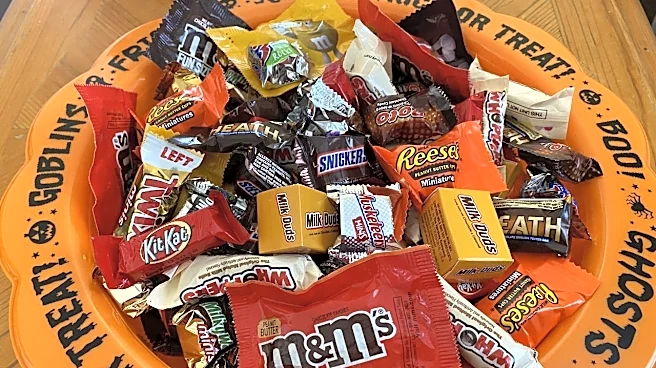
So, I created my own festivities. I would buy some candy (my own weird combination of Twix bars, Reese’s cups, Skittles and candy corn – the pumpkin ones if I could find them. My stomach hurts just thinking about it now). And I'd watch Halloween classics in my room. It wasn’t everything I wanted, but it was mine. A personal reparation for all the times I missed out on.
I didn’t properly celebrate Halloween until college.
My freshman and sophomore years were marred by the COVID-19 pandemic, so we opted for small hangouts over large gatherings. For my first ever Halloween party, I dressed up as Phoebe Bridgers. Her 2020 album “Punisher” was still in heavy rotation. Life-changing stuff. I wore a skeleton onesie with a gray zip-up hoodie over the top. I was elated when all of three people got the reference.
The following year I dressed up as the iconic paparazzi photo of Princess Diana in a purple Northwestern crewneck. (I hate gay Halloween. What do you mean you're the iconic paparazzi photo of Princess Diana in a purple Northwestern crewneck?) No one got the reference.
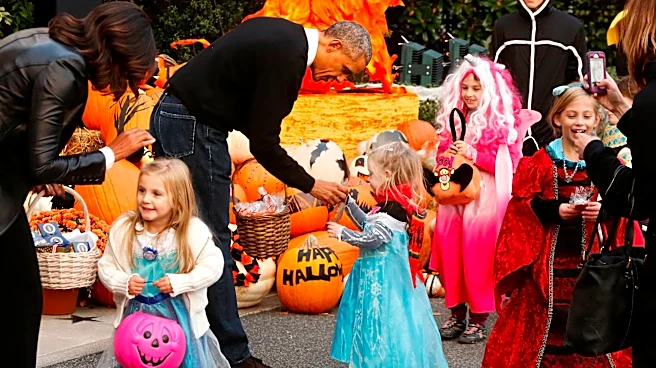
My senior year, I spent Halloween passing out candy at a friend's house and attended a citywide parade down the street. As I walked through the neighborhood, admiring the elaborate lawn decorations and parade floats, I was awash with bittersweet catharsis at all the children experiencing the Halloween I always wanted. But there I was, too, experiencing it with them.
My love for Halloween has only blossomed since college, and I promise my costumes have gotten much better. Every year I find a new way to express myself, a new childhood wound to heal. I’ve yet to be Tim Curry or Lady Gaga, though I’m already looking at police tape for next year.
I’ve accepted myself for who I am. My mother has, too. And I understand my childhood for what it was. What was lost can’t be regained; I’ll never be able to trick-or-treat in the traditional sense, but I can build a future where my Halloweens can be as campy, ridiculous, gay, slutty or simple as I’d like.
It’s funny how a holiday centered on fear leaves me completely unafraid, now.
I can be anything I want.
Kofi Mframa is an entertainment and culture columnist at USA TODAY.
This article originally appeared on USA TODAY: Halloween was forbidden as a kid. Now I celebrate every year | Opinion