




On Sept. 15, a federal judge in Missouri sentenced Siddharth Jawahar to 11 years in prison for using his Texas-based investment company to run a Ponzi scheme that swindled millions of dollars from investors including Kansas City Chiefs tight end Travis Kelce.
Kelce was named as one of 64 victims in court by prosecutors during Jawahar's sentencing hearing, as first reported by a KMOV St. Louis reporter who was in the room and later confirmed by USA TODAY Sports, which obtained a court transcript of the hearing. It is not known how much money Kelce lost to the scheme. Along with Kelce, several NBA players were listed as investors in Jawahar's Swiftarc fund in a 2021 Forbes article.
Jawahar declined to be interviewed by USA TODAY Sports for this
story but provided a comment through his attorney, Doug Passon.
"My client is ultimately responsible for making Travis Kelce a victim of fraud," Passon wrote in an email. "But the government has re-victimized Mr. Kelce by unnecessarily invoking his name at sentencing, which is the direct cause of this media frenzy. For an entity that purports to respect the rights of victims, the choice made by AUSA Derek Wiseman is difficult to understand."
Detroit Pistons guard Gary Harris Jr. and former NFL player Ross Travis (a close friend of Kelce) are plaintiffs in a separate federal civil lawsuit filed against Jawahar and obtained by USA TODAY Sports, in which Harris and Travis both allege that they invested money with and were defrauded by Jawahar.
Representatives for Kelce, Harris and Travis did not respond to messages from USA TODAY Sports seeking comment.
Before Jawahar's high-profile conviction, he rubbed elbows with professional athletes and a former U.S. president, and was involved in various philanthropic fundraisers – all while, prosecutors say, he was spending his investors' money on luxury hotels and private jets.
How did a 38-year-old venture capitalist from India orchestrate a multimillion-dollar Ponzi scheme that, over the course of almost a decade ensnared scores of people, including NFL and NBA players?
According to a federal indictment obtained by USA TODAY Sports, from about July 2016 through December 2023, Jawahar took in more than $35 million from Swiftarc investors but invested only about $10 million. He used to rest to pay off previous investors and fund "extravagant lifestyle expenses, including payments for flights on private planes, stays at luxury hotels, and expensive outings at lavish restaurants," the indictment said.
Jawahar pleaded guilty to three counts of wire fraud in January. On Sept. 15, he was ordered to pay a total of $31.35 million in restitution to "non-public victims."
At his sentencing hearing, Jawahar apologized to his victims and promised to pay restitution.
"The past two and a half years of my life have not been a joke," Jawahar said according to the court transcript. "I have looked at myself in the mirror, and I faced my darkest, deepest truths. It is not a coincidence that I have come to terms with them."
How Sid Jawahar orchestrated a Ponzi scheme
The Department of Justice described Jawahar as residing in the United States illegally, though it is unclear when he first arrived in the country.
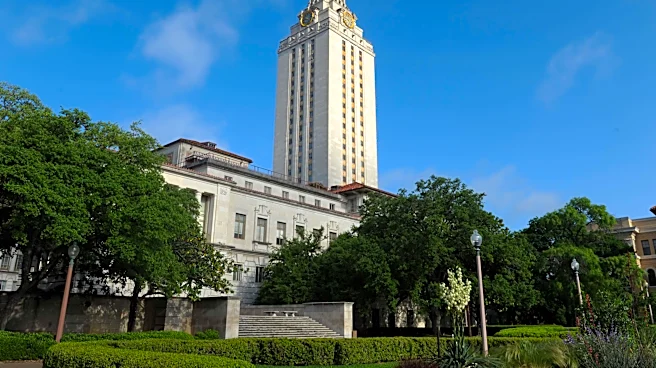
The University of Texas at Austin has online records of a student named Siddharth Jawahar attending from fall 2005 to spring 2012, though there is no record of him earning a degree.
Jawahar, who sometimes signed his first name as "Sid" on official documents, first registered Swiftarc Capital LLC with the Texas Secretary of State in 2010 and listed a business address in Austin, according to state records. As recently as 2022, according to an annual franchise tax report, he listed his personal mailing address as an address belonging to the upscale Four Seasons Private Residences in downtown Austin.
Jawahar created Swiftarc Capital with another man, Siamc Kamalie, who was listed as the company's registered agent in Texas Secretary of State documents. On May 20, 2021, Kamalie resigned as Swiftarc Capital's registered agent but remained listed as a member/manager in the company's last public information report filed in October 2022. Kamalie, who has not been accused of wrongdoing and now works for Austin-based investment management firm Skycatcher, did not respond to a USA TODAY Sports message seeking comment for this story.
By 2015, according to court documents, Jawahar began investing the majority of his clients' money into a single overseas company, Philip Morris Pakistan. When that company's value fell, Jawahar covered up the losses and claimed to his clients that they were making profits. He continued to solicit funds from new investors to pay off his earlier investors.
As part of the alleged scheme, Jawahar also operated several other related business entities based in Texas, Florida and Ohio.
'My biggest loss ... is my reputation'
In 2019, Jawahar co-founded venture capital firm Swiftarc Ventures with Norwood Investments CEO Frank Krasovec and angel investor Zohar Ziv, according to an executive overview of the company filed as evidence in court. The firm's main growth equity fund touted investments in Uber, Domino's China, Planet Fitness and more.
In June 2022, state records show that the Texas State Securities Board sent Jawahar a cease and desist notice warning him to stop "engaging in fraud" and revoked Swiftarc Capital's authority to conduct investment activities. But Jawahar did not tell his investors about the disciplinary order and continued to take their money until he was arrested in early 2024, according to the indictment.
Kravosec and Ziv, the Swiftarc Ventures co-founders, say they were victimized by Jawahar's scam and are now suing Jawahar in civil court. On Sept. 15, Kravosec spoke at Jawahar's sentencing hearing and urged the judge to impose a maximum sentence.
"My biggest loss – forget my financial loss – is my reputation," Kravosec said, according to a court transcript. "That's all I have. You can't buy it. It's priceless. I feel that my reputation has been tainted along with others. And for that, I recommend the maximum sentence you can provide, Your Honor."
After Jawahar's indictment, the Department of Justice said that, "Jawahar tried to obstruct justice by trying to coach a victim into giving a favorable statement to the FBI, lying about his immigration status and finances and trying to get his sister to remotely wipe his iPhone to hide evidence."
Before his sentencing, Jawahar agreed to pay $10,000 to hire Jeff Roe, the founder of Republican political consulting firm Axiom Strategies, to secure favorable media coverage and letters of support to influence the judge. Prosecutors obtained a recorded jail call from Aug. 31 in which Jawahar asked Roe about a Jefferson City News Tribune article published two days earlier and asked about the consultant's progress in getting a politician to vouch for him.
Three days after the recorded jail call, on Sept. 3, Missouri congressman Sam Graves sent a letter to the judge urging him to impose a four-year prison sentence for Jawahar. Roe worked as Graves' chief of staff from 2001-2005, according to his LinkedIn profile. Roe and Graves did not respond to requests for comment.
Jawahar later swore in court that he never actually paid Roe. In an email to USA TODAY Sports, Passon described the Roe arrangement as "noise" and objected to the government slinging "mud" at sentencing.
"Sid Jawahar is a very good man, who has made some very serious mistakes and is taking ownership of all of it," Passon said in a statement to USA TODAY Sports. "He has made every effort from a jail cell in St. Genevieve to recoup restitution for victims and plans to continue to do. His efforts at helping other inmates improve their lives at St. Genevieve speak the loudest about his true character and heart for service. He is, like all of us, more than our worst mistakes.”
Sid Jawahar's known associates
Although the full list of people victimized by Jawahar's scheme is not public, he has ties to many famous figures in sports and politics.
Posts on Jawahar's public X account show him posing alongside President Bill Clinton, former tennis star Andy Roddick and NFL player turned television host Michael Strahan.
Tax return filings for the nonprofit Andy Roddick Foundation, which is based in Austin, list Jawahar as a board member for the organization from 2017 through 2019. A foundation representative did not respond to a USA TODAY Sports email inquiring about Jawahar's role.
According to a 2021 Forbes article, professional athletes who invested in Swiftarc include Kelce, Harris, Miami Heat guard Tim Hardaway Jr. and NBA free agent center Mason Plumlee. It is unclear if Hardaway or Plumlee were victims of Jawahar's fraud, and neither responded to USA TODAY Sports' attempts to reach them.
In a 2024 complaint filed in U.S. District Court for the Northern District of Ohio, Harris and Travis – a former Kansas City Chiefs teammate of Kelce's who last played in the NFL in 2021 – describe being defrauded by Jawahar. According to the lawsuit, Harris invested a total of $300,000 in one of Jawahar's funds based on Swiftarc's promised partnership with product innovation firm Nottingham Spirk, but the partnership never happened.
Harris eventually received $125,000 back after making numerous demands, while Travis invested $12,000 into the same fund and never received any return, the complaint said.
The Forbes article described Jawahar as having a "strong relationship" with Harris, who was quoted as saying, "Being around Sid has helped me grow so much as a person, especially looking to do more things than just basketball.”
The article also quoted Jawahar as saying, “For a lot of people, (venture capital) is something they have in their portfolio and they're wealthy enough to where it may or may not matter. But regardless of how important it is from a wealth component, I feel like Gary makes an effort to read all the quarterly updates, ask questions about them and be as engaged as one could ask for."
The Forbes article said Swiftarc had raised about $25 million at the time and was targeting investments in roughly a dozen consumer technology and health and wellness companies.
Jawahar has admitted to stealing money from investors, but why he did it remains a mystery.
At Jawahar's Sept. 15 sentencing hearing, FBI agent Craig Snider testified that he interviewed Jawahar in 2024. When asked why he perpetuated the fraud scheme, according to Snider, Jawahar, "said his motivation was greed, and any other adjective would be incorrect."
Jawahar's attorney, Passon, described his client in court as a man who lost his way while striving for success.
"He built this lifestyle for himself, from a boy in India to a student in UT, all the way in America, to all the reputation," Passon said, per the court transcript. "Not because he is a fraudster. Not because he is greedy. It's because he was hungry to make a life for himself. He was hungry for success. And success brings material trappings."
When Jawahar himself spoke at the hearing, with his mother, sister and fiancée in the courtroom, he said he took full responsibility for his actions but simultaneously blamed his own "deeply rooted traumas."
"My moral compass was misguided," Jawahar said, according to the court transcript. "Things happened in my childhood that I was not able to deal with in an adult fashion. I tried to outperform to run away from those fears. I drank too much. I put on these false guises of success, while the real issues were within me from my past."
He continued, "I learned also, Your Honor, that in order to heal a hurt, you have to feel a wound. And I realize that my ghosts are mine, and I have to encounter them in earnest and in honesty and truth. And I have begun that journey."
This article originally appeared on USA TODAY: He conned Travis Kelce, athletes and others out of millions. Who is Sid Jawahar?