






GREENSBORO, VT – On Mateo Kehler’s family farm, at the end of a dirt road about an hour from the Canadian border, the cheesemaking starts before darkness lifts over the pastures and pines of northern Vermont.
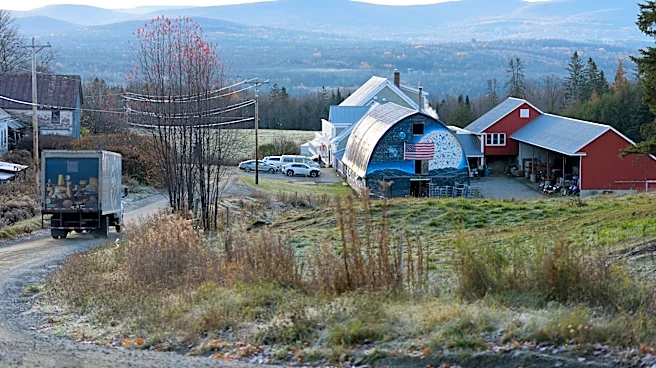
A truck with fresh milk from cows that graze in nearby fields rumbles toward Jasper Hill Farm’s big blue barn, painted with a mural of a starry nighttime sky and a blue-cheese moon. An American flag stretches over the entrance.
Two hours to the north, in a small, leafy, French-speaking village, Jean Morin steps into the former Catholic church he bought for one Canadian dollar and turned into part of his cheese factory. The pungent smell of aging cheese fills a temperature-controlled room as Morin surveys shelves holding hundreds of wheels
of the fromage he produces at the old rectory next door.
Kehler’s and Morin’s cheesemaking businesses sit on opposite sides of the U.S.-Canada border. But both are feeling the same pain of the tariff war between the United States and Canada.
“The reality is that there’s nobody that is winning,” Kehler said. “Everyone in these border communities is losing.”
Click below to watch cheesemakers discuss the tariffs
Kehler, who co-founded the company with his brother Andy, worked for a decade to penetrate Canada’s highly regulated dairy market to sell his artisan cheeses north of the border. He had finally made inroads and was looking to expand when PresidentDonald Trump slapped tariffson billions of dollars’ worth of Canadian products, including cheese.
Canada retaliated by placing tariffs on U.S.-made cheese as well as hundreds of other American goods. Trump inflamed the tensions with a barrage of insults and suggestions that Canada become the 51st state.
All of a sudden, Kehler said, Canadians were no longer interested in buying American-made cheese.
“The inflammatory rhetoric and the backlash absolutely killed our (Canadian) market overnight,” he said. “And it hasn’t recovered.”

In Quebec, Morin and his neighbors in Sainte-Élizabeth-de-Warwick, halfway between Montreal and Quebec City, felt the sting of Trump’s tariffs and taunts. Trump’s outbursts and punitive measures forced Morin into a difficult decision. He stopped exporting the cheeses he produces at Fromagerie du Presbytère to the United States. The tariffs, he said, made it too expensive.
“I'm closer to Vermont than Vancouver, Toronto,” Morin said. But right now, he said, the border separating the two counties feels like “a big wall in China.”
For cheesemakers on both sides, “it’s a terrible moment,” he said.

A passion for cheesemaking
Morin, a fourth-generation dairy farmer, grew up in a small house across the street from the church he turned into part of his cheese production center.
His mother attended services regularly at the church where he now ages his cheese. He remembers her coming home after Sunday services and complaining about how cold and damp it was inside. “Oh mom,” he told her, “it’s perfect for cheese.”
He bought the church in 2015 on the condition that he make it available for community events. A small chapel is still available for Mass.

Morin, 65, didn’t master the art of cheesemaking until he was 50. He had been looking for other uses for the milk from his farm, which he runs with his four children. He learned by studying cheesemakers in France and Switzerland.
Now, “my passion is cheesemaking,” he said.
Every morning, around 3 a.m., workers collect the milk from the farm’s 168 Holstein cows. In a damp room filled with large copper vats, it’s pressed into wheels of cheddar, blue cheese, triple cream and other varieties. The cheese is aged next door for up to five years beneath the church steeple.
Morin looked at other places to make his cheese but decided to stay where he was – the farm where he grew up, surrounded by his family.
“That’s, for me, the best place,” he said in English, with a hint of Québécois. “The best place in the world.”

Across the border, Kehler and his brother knew nothing about making cheese. They were carpenters, not cheesemakers.
“We have no business doing any of this,” Kehler jokes.
Both were born and raised in Bogota, Colombia, where their parents had moved to work with the Ford Foundation, a charitable nonprofit. In 1998, the brothers made what Kehler calls “an irrational, emotional decision": They bought an abandoned 200-acre farm on a rocky hillside in the heart of Vermont’s dairy country.
The decision was driven by a love for this land. Their family had vacationed for nearly a century at Vermont’s Caspian Lake, known for its crystal-clear water. The area felt like home, Kehler said. But it was changing. Dairy farms were disappearing. New homes were going up in what were once cow pastures.
The brothers pooled their savings, got a loan and bought the farm, which had been subdivided and slated for development. They had no idea what to do with it but eventually decided to make cheese. Kehler got an education in cheesemaking by working with a local producer and a company in London. He studied cheesemakers in Italy, France and Spain, and took classes in community economic development at the London School of Economics.
The brothers spent five years restoring their property, using their carpentry skills to fix up the old barn and to build a modern cheese plant. In 2006, they blasted a hole in a hill to make a cellar with underground vaults for aging their cheese.
And they made cheese. Just under a million pounds a year.
Rounds of perfectly marbled blue cheese, with a fudgy texture and nutty sweetness. Cloth-wrapped cheddar, with a crumbly consistency and a caramel finish. Alpine-style cheeses, in the style fashion of Gruyère. Soft-ripened, fondue-like cheeses so gooey they can be eaten with a spoon.
They won awards. And in 2014, their reputation got a boost from an unexpected place: the White House. Their blue cheese made it onto the menu, alongside dry-aged ribeye and charred shallots, oyster mushrooms and braised chard, at a State Dinnerwhere Barack and Michelle Obama hosted French President Francois Hollande.
Back in Quebec, Morin’s reputation was growing, too. He opened a general store across the street to sell his fromage, as well as charcuterie, wines and fresh bread. An entire shelf is filled with awards his cheeses have won in Canada and the United States.
One Friday in 2018, Morin set up a few tables on the church lawn and invited his neighbors over for a free community picnic focused on cheese. Twenty-five people showed up.
Now, every Friday from June through September, between 2,000 to 5,000 people – up to 10 times the community’s entire population – arrive for Festive Fridays from neighboring towns. They set up blankets, lawn chairs and their own tables to eat cheesy curds, dance and sing along to folk tunes, jazz music and pop covers performed by a live band.
Kehler’s and Morin’s cheese adventures were exceeding their expectations.
Then Trump’s tariffs hit.
A crushing and quick fallout
Just days into his second presidency, Trump ordered tariffs on goods imported from Canada and Mexico, saying the move was intended to pressure the countries into halting the flow of migrants and fentanyl across their borders. Americans were taxed with paying higher import fees for Canadian products like lumber, plastics, charcoal, aluminum, paper books, and iron and steel appliances.
The U.S. Supreme Court struck down those duties last Feb. 20. Undeterred, Trump followed in July with a new round of 50% tariffs on $20 billion in Canadian goods, including vehicles, wood, wine, and dairy products like cheese.
Trump delivered his tariffs with insults. He called Canada and its leaders “nasty,” said they had “screwed” and “ripped off” the United States, and challenged the longtime ally’s independence by arguing it should become the 51st state.
For businesses along the border, the fallout was crushing and quick.

Kehler had been exporting his cheese to Canada since 2024, after spending a decade developing contacts to get his product into restaurants and supermarkets across the Great White North. During the fourth quarter of that year alone, he sold a quarter-million dollars’ worth of cheese in Canada. Within three years, he projected that his sales in Canada would top $1 million a year.
Trump’s tariffs ended that. Right away, Kehler said, his sales in Canada went “from gangbusters to zero.” His distributor canceled a $25,000 order. Canadians no longer had an appetite for American-made cheese, the distributor told him. An order placed over the summer for the upcoming holiday season was canceled.
Ironically, it wasn’t the cheese tariff that caused Kehler the most pain. “It was the rhetoric from the president that inspired resistance by consumers and by Canadian businesses who were not interested in being belittled, insulted or bullied,” he said.
Tariffs on other products hit him in unexpected ways.
The paper used to wrap cheese, the corrugated boxes used to ship it – both were subject to Trump’s tariffs because they were made from Canadian wood pulp. The stainless steel brine tank, fermenters and cleaning systems he purchased from Canada now carried tariffs of 15% to 100%. The cost of a ladder and platform used in the milk fermenting process doubled to $50,000.
All of that added to the cost of doing business – and means customers pay three times more for a five-ounce cheese wheel.
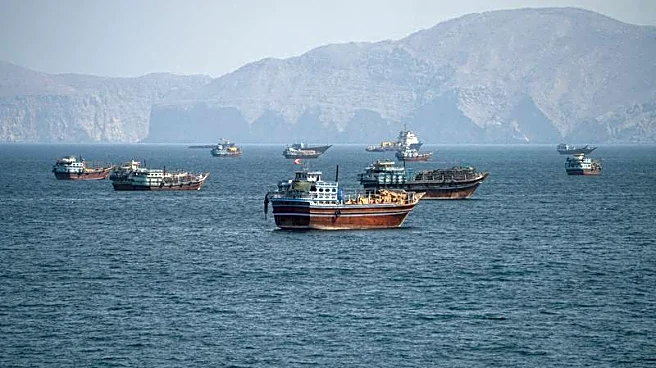
The war in Iran made things worse. The price of fuel for Kehler’s farm equipment jumped. His cheese shipments to Australia and Asia dried up because they traveled through Dubai, a major east-west global trade port disrupted by the war. Tariffs that Trump had placed on products from Europe, including cheese, led to retaliatory duties that caused Kehler’s sales in those markets to disappear.
Kehler’s international orders had historically made up roughly 8% of his sales. All of that is gone now. The only market left for his cheese is the United States.

The tariffs haven’t delivered as big a wallop to Morin at Fromagerie du Presbytère – exports to the United States accounted for just 2% of his sales, about $100,000 annually.
Instead, Trump’s tariffs made him see the United States differently. He used to enter his cheeses in a competition in the United States. But next year, he plans to skip the contest. And he decided to stop selling to the United States.
He no longer travels across the border to vacation or visit friends. If they want to see him, he said, they can come to Quebec.
'What is this man doing?'
Canadians remain fond of Americans, Morin said, but they don’t understand Trump bullying his neighbors.
“Every morning, we read about it,” Morin said. “What is this man doing? What is he doing to your nice country?” He added, “the guy is crazy.”
Kehler doesn’t blame Canadians for fighting back. “I don't have any ill will or animosity or hold any grudges or bitterness toward Canadian consumers for doing what they can to respond to rhetoric that I think is absolutely out of line,” he said.
Trump announced on Nov. 1 he is close to striking a deal with Canada to end the trade dispute and lift the tariffs. Canadian Prime Minister Mark Carney, however, said more work needs to be done.
“We’re not quite there,” Carney said.

Even if the tariffs are lifted, Kehler said, “it’s going to take us a generation to recover from the damage that’s been done in the last two years.”
For now, Kehler and Morin keep doing what they’ve done for years on their farms in Vermont and Quebec.
They make cheese.
Michael Collins writes about the intersection of politics and culture. A veteran reporter, he has covered the White House and Congress. Follow him on X: @mcollinsNEWS
This article originally appeared on USA TODAY: Feeling bleu: Cheesemakers caught in Trump’s tariff dispute