

From the Pulpit to Public Office
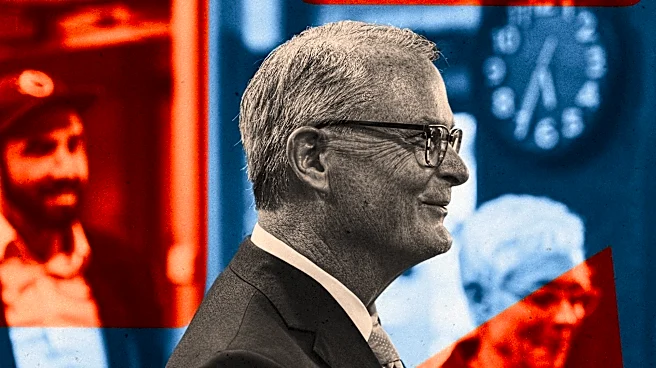
Born in Waxahachie, Texas, in 1944 and raised in public housing, Emanuel Cleaver's journey began far from the halls of power. After earning a degree in sociology from Prairie View A&M University, he moved to Kansas City, where his path would be defined by two callings: ministry and public service. He received a Master of Divinity from St. Paul School of Theology and, in 1972, became the pastor of St. James United Methodist Church. Under his leadership, the congregation grew from just a few dozen members to over 2,000. His work was not confined to the church walls. Inspired by the Civil Rights Movement, Cleaver founded a local chapter of the Southern Christian Leadership Conference (SCLC) in Kansas City, using his position to advocate for his community.
This deep engagement in community affairs naturally led him into politics, and in 1979, he was elected to the Kansas City Council, where he would serve for 12 years.
Leading Kansas City as Mayor
In 1991, Cleaver made history by becoming the first African American mayor of Kansas City, Missouri, an office he held for two terms until 1999. His tenure focused heavily on economic development and urban renewal. He was instrumental in bringing major corporations like Harley-Davidson and Citi Corp to the city, creating jobs and stimulating growth. His administration also oversaw significant infrastructure projects, including the 18th and Vine redevelopment, the beautification of Brush Creek, and the construction of the Bruce R. Watkins Roadway, a major thoroughfare project that had been delayed for decades. As mayor, he was seen as a moral leader, notably when his calming speech following the Rodney King verdict in Los Angeles was credited with helping to prevent riots in Kansas City. His leadership earned him national recognition, and the city later honored him by renaming a major road Emanuel Cleaver II Boulevard.
A Long Career in Congress
After his mayorship and a brief stint as a radio host, Cleaver set his sights on national office. In 2004, he was elected to the U.S. House of Representatives for Missouri's 5th Congressional District, a seat he has held ever since. In Washington, he quickly established himself as a serious legislator, securing a seat on the influential House Committee on Financial Services. His work in Congress has often mirrored his priorities as mayor: housing, community development, and economic opportunity. He served as Chairman of the Congressional Black Caucus from 2011 to 2013, advocating for issues affecting minority communities on a national scale. He currently serves as the Ranking Member of the Subcommittee on Housing and Insurance, where he plays a key role in shaping federal housing policy.
Key Policies and Legislative Focus
Throughout his congressional career, Cleaver has championed legislation aimed at improving the lives of working families and urban communities. A central focus has been affordable housing; he has sponsored and supported bills to enhance the Housing Choice Voucher program and has worked to secure federal funds for housing projects in his district, such as the rehabilitation of Parade Park Homes, the nation's oldest Black-owned housing cooperative. He was instrumental in creating the Green Impact Zone in Kansas City, an initiative that used federal recovery funds to revitalize a 150-block area of the urban core with sustainable technology and infrastructure improvements. More recently, he has focused on consumer protection, such as with the Ratepayer Protection Act, designed to shield families from costs associated with energy grid upgrades for large data centers. His voting record reflects his consistent support for Democratic party priorities on issues ranging from economic policy to social programs.