





From Pine Bluff to MIT
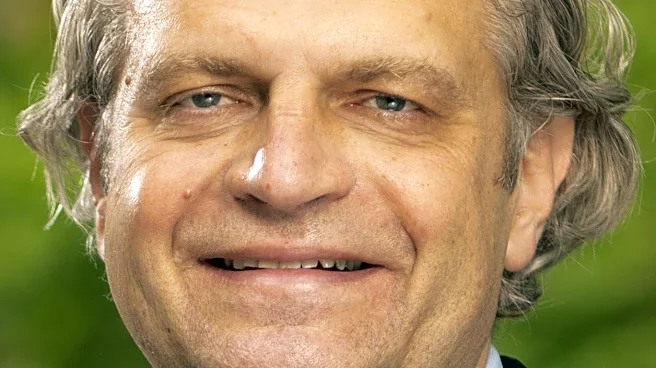
Christopher Michael Jones was born in Pine Bluff, Arkansas, on October 13, 1976. Growing up as the son of two preachers, faith and community were central to his upbringing. He has described himself as a seventh-generation Arkansan whose family history in the state predates its official designation as a territory. An early inspiration was the Challenger space launch, which sparked a desire to become an astronaut, though he was ineligible due to hearing loss in one ear. Jones excelled in school, graduating at the top of his class from Watson Chapel High School, where he was active in sports and choir. His academic prowess earned him a NASA scholarship to attend Morehouse College, an opportunity he credits as essential since his family could not
have otherwise afforded it. He graduated with bachelor's degrees in both mathematics and physics before continuing his education at the prestigious Massachusetts Institute of Technology (MIT).
A Career in Science and Education
At MIT, Jones’s academic journey was nothing short of remarkable, ultimately earning him a master's degree in nuclear engineering, another in technology and policy, and a Ph.D. in urban studies and planning. His professional life began to reflect this diverse expertise. He worked as a physicist and researcher, delving into topics from plasma fusion to the societal impacts of large-scale energy infrastructure. For a time, he returned to the classroom, teaching algebra in a Boston public school. He later served as an assistant dean for graduate education at MIT, where he led initiatives that significantly increased minority enrollment in the university's graduate programs, earning him the Irwin Sizer Award for Significant Improvements to MIT Education. His work outside academia included leading large federal projects as a principal at BCT Partners, a consulting firm.
The Return to Arkansas
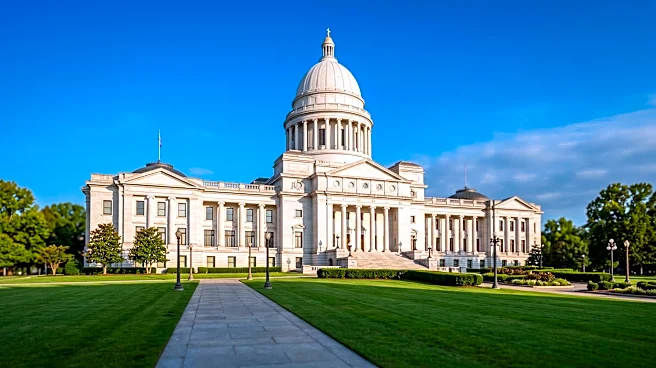
Despite a thriving career on the East Coast, Jones always intended to return to his home state. That opportunity arose when his wife, Jerrilyn, an emergency room physician, accepted a position at the University of Arkansas for Medical Sciences. In 2018, Jones was appointed the executive director of the Arkansas Regional Innovation Hub in North Little Rock. The nonprofit, affiliated with Winrock International, is dedicated to fostering innovation and entrepreneurship. During his tenure, Jones launched numerous programs, including a mobile makerspace called Hub on Wheels, workforce development initiatives, and a task force that produced PPE during the COVID-19 pandemic. His leadership at the Hub solidified his reputation as a community-focused leader dedicated to creating tangible opportunities for Arkansans. He stepped down from the role in April 2021, setting the stage for his next chapter.
The 2022 Gubernatorial Campaign
In June 2021, Chris Jones announced his candidacy for Governor of Arkansas. His campaign launch video, titled "About Time," went viral for its compelling narrative, blending his personal story with a message of hope and progress for the state. Running on a platform of "Faith, Hope, and Hard Work," Jones embarked on a listening tour across all 75 counties in Arkansas. He became the first Black candidate to secure a major party's nomination for governor in the state's history, winning the Democratic primary with over 70% of the vote. His campaign focused on spreading "PB&J"—Promise, Belonging, and Justice—and advocated for policies like universal preschool and expanding broadband access. In the general election on November 8, 2022, he faced Republican Sarah Huckabee Sanders and ultimately lost, receiving 35.2% of the vote to her 63%.
What's Next for Chris Jones?
Though his gubernatorial bid was unsuccessful, Jones's political career did not end there. His energetic campaign and unique profile raised his public visibility significantly. After the election, he continued to speak on topics of faith and politics. In 2025, he filed to run for the Democratic nomination for the U.S. House of Representatives in Arkansas's 2nd congressional district. As of early 2026, he had secured the primary nomination and is positioned to challenge the incumbent in the general election on November 3, 2026. His congressional campaign continues his focus on building a more prosperous and inclusive Arkansas, framing himself as a builder, fighter, and visionary for the state's future.