
The Era of Republican Comfort
The 1990s and early 2000s cemented Kansas's reputation as a GOP stronghold in the Senate. Races featuring titans like Nancy Kassebaum and Pat Roberts were often foregone conclusions. In 1990, Kassebaum sailed
to reelection with over 73% of the vote. Six years later, Pat Roberts won the open seat with a comfortable 62%. During these periods of predictable outcomes, turnout often settled into a familiar, lower-energy rhythm. Midterm elections, without the draw of a presidential contest, saw particularly subdued participation. The lack of serious Democratic challengers meant many voters, regardless of party, saw little reason to prioritize the Senate race. This created a baseline of lower, but reliably Republican, turnout that defined the state’s political landscape for years.
The Presidential Election Surge
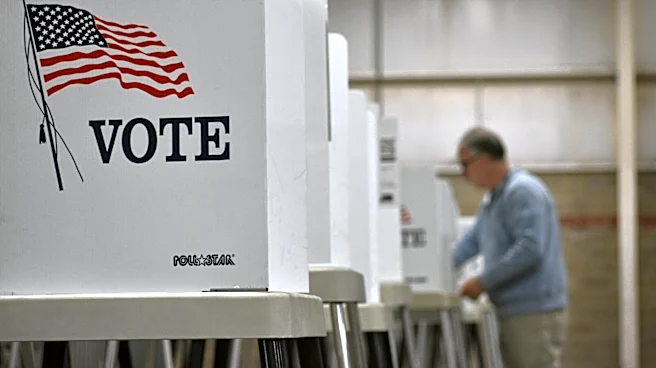
Like clockwork, Kansas voter turnout consistently jumps during presidential election years. The national drama and higher media attention surrounding a White House race simply bring more people to the polls. This was evident in Senate elections held in 1996, 2004, 2008, 2016, and 2020. In 2020, general election turnout among eligible voters in Kansas hit 65.1%. By contrast, the 2022 midterms saw that figure drop to 47.6%. This 'coattail effect' is a national phenomenon, but in Kansas, it often served to amplify the GOP's existing advantages. Higher turnout didn't necessarily mean more competitive races; it often just meant more Republicans casting ballots for the entire ticket, from the president down to the local dogcatcher.
When Competition Ignites the Electorate
The most dramatic shifts in Kansas's turnout story happen when a Senate race becomes genuinely competitive. Two recent elections stand out. In 2014, incumbent Pat Roberts faced a surprisingly strong challenge from independent candidate Greg Orman. After the Democratic nominee dropped out, Orman consolidated anti-Roberts sentiment, creating a true toss-up. Polls showed a tight race, and outside money poured in. The result was a surge of interest in a midterm election, with Roberts ultimately winning 53% to Orman's 42.5%. Even more striking was the 2020 race for an open seat between Republican Roger Marshall and Democrat Barbara Bollier, a former Republican. Bollier mounted a formidable campaign, testing the theory of whether a moderate could break the GOP's long-standing hold. The high stakes, combined with a presidential election, drove turnout to modern highs, with over 1.37 million votes cast in the Senate race. Marshall won, but Bollier secured nearly 42% of the vote, a remarkable showing for a Kansas Democrat.
What It Takes to Move the Needle
Looking back over three decades, a clear pattern emerges. Baseline turnout in Kansas is driven by its large, loyal Republican base, which makes unseating a GOP incumbent a monumental task. Since 1932, Kansas has not elected a Democrat to the U.S. Senate. Turnout reliably increases during presidential cycles but often just swells the majority party's vote totals. The true wildcard is competition. When a credible challenger—whether an independent like Orman or a well-funded, moderate Democrat like Bollier—emerges, voter engagement spikes. These races capture public attention, drive media coverage, and give voters a sense that their ballot truly matters. They force both sides to mobilize their supporters and persuade the state’s significant bloc of unaffiliated voters. While these competitive moments haven't yet broken the Republican winning streak, they demonstrate that Kansas's electorate is far from monolithic and can be activated under the right circumstances.