
The Race: A Political Titan vs. a Young Upstart
The year was 1972, and the race was for the U.S. Senate. The Republican incumbent, J. Caleb Boggs, was a Delaware institution. Having served as a U.S. Representative, a two-term Governor, and a two-term Senator,
Boggs was a political giant considering retirement. To avoid a messy Republican primary, President Richard Nixon personally encouraged Boggs to run for a third term. His challenger was a 29-year-old New Castle County Councilman with boundless energy but very little money or name recognition: Joe Biden. Given Boggs's stature, no other prominent Democrat was willing to enter the race, and Biden was considered a massive underdog.
A Campaign of Contrasts
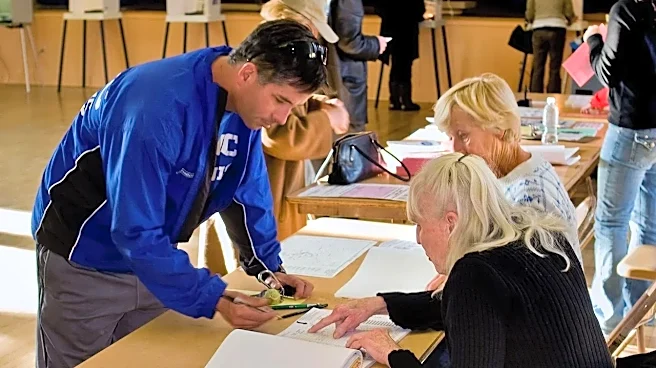
Biden's campaign was a family affair, run by his sister Valerie Biden Owens, with a shoestring budget. It relied on meeting voters face-to-face across the small state and distributing detailed position papers, often printed on newsprint to contrast his views with Boggs's. While Boggs was a respected, popular figure, Biden's campaign framed the election as a choice between the past and the future. One advertisement highlighted the contrast, stating: 'To Cale Boggs an unfair tax was the 1948 poll tax... To Joe Biden an unfair tax is the 1972 income tax'. Biden’s platform focused on the environment, withdrawal from Vietnam, and other contemporary issues, tapping into a public desire for change.
The Surprising Upset
During the summer, polls showed Biden trailing Boggs by nearly 30 points. However, his energetic style and ability to connect with voters began to close the gap. The election was held on November 7, 1972, the same day President Nixon won Delaware in a 20-point landslide over George McGovern. Despite the massive Republican tide at the top of the ticket, the Senate race was extraordinarily close. When the votes were tallied, the young challenger had done the unthinkable. Joe Biden defeated J. Caleb Boggs by a mere 3,162 votes, out of more than 228,000 cast. His final tally was 116,006 votes to Boggs's 112,844.
The Tightest Race of the Year
Biden's victory, with a margin of just over 1%, was the closest U.S. Senate election in the entire country in 1972. He won with 50.5% of the vote, launching a Senate career that would span seven terms before he became Vice President and, eventually, President. The race became a legendary example of a grassroots campaign overcoming a political heavyweight. The irony was not lost on observers that Biden effectively used his opponent's age and perceived lack of enthusiasm as a campaign issue, a tactic that would be mirrored in political races for decades to come.